Palaces and heritage
Forts Near Kota: 10 Hadoti Forts Worth the Drive in 2026
Written by Kota Rajasthan Editorial Team · Updated
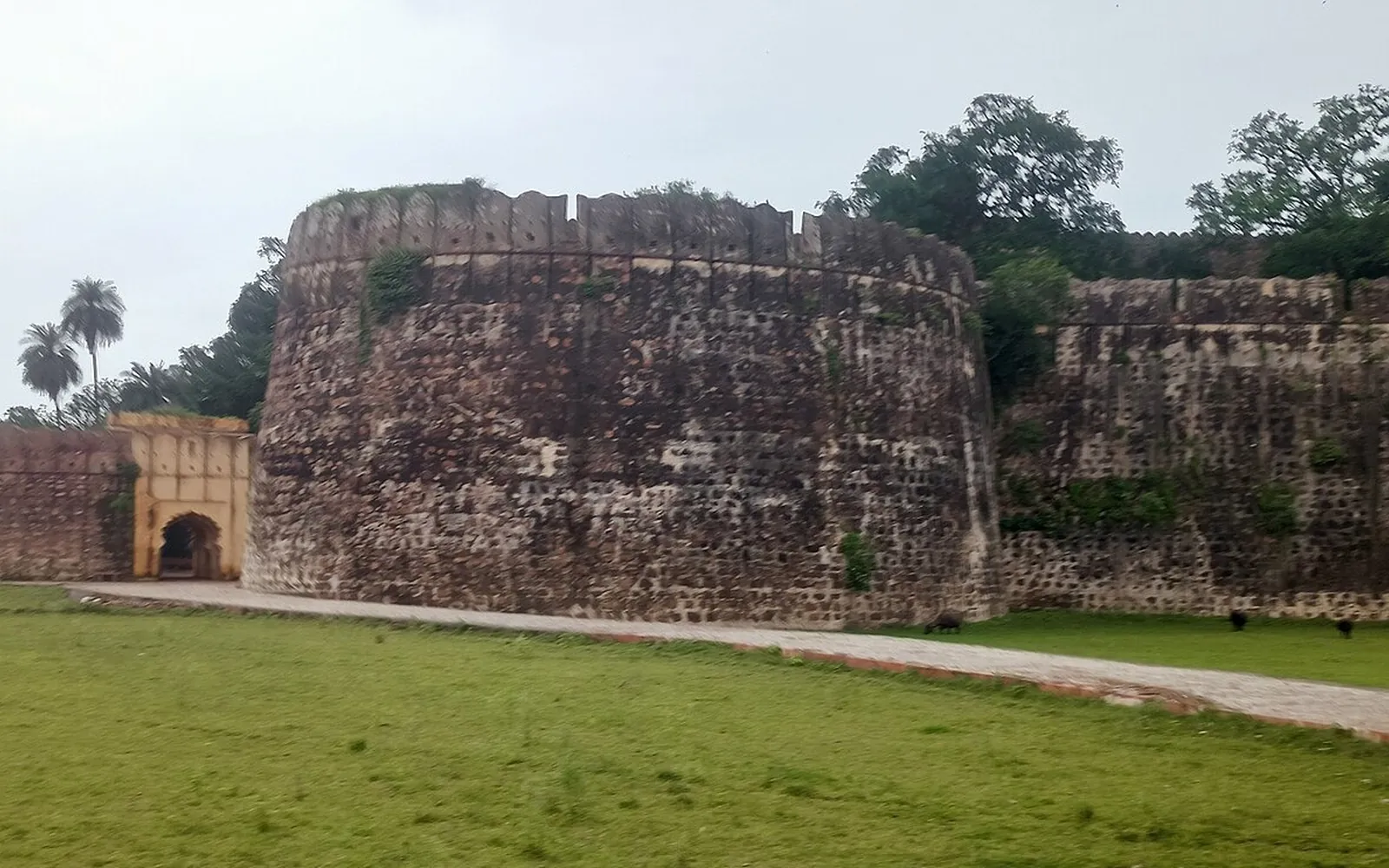
The forts near Kota tell the story of the Hadoti country better than any museum: the Hada Chauhan rulers of Bundi and Kota, the Khichis of Gagron, the Jhala regents of Jhalawar, Mughal and Malwa armies passing through, and Mewar nobles on the Chambal. Some are grand and well kept, like Kota’s own Garh and the palace below Taragarh in Bundi. Others, such as Shahabad and Shergarh in Baran district, are forest ruins you may have almost to yourself. This guide picks ten worth the drive, with what to see and how to group them into day trips.
The forts at a glance
| Fort | District | Rough distance | Best for |
|---|---|---|---|
| Garh (City Palace), Kota | Kota | In the city | Museum and murals |
| Taragarh and Bundi palace | Bundi | about 36 km | Views and paintings |
| Gagron | Jhalawar | about 90 km | UNESCO water fort |
| Jhalawar Garh | Jhalawar | about 85 km | Museum and theatre |
| Naulakha fort, Jhalrapatan | Jhalawar | about 90 km | Late fort, town views |
| Bhainsrorgarh | Chittorgarh | about 65 km | River setting |
| Shergarh | Baran | about 65 km from Baran | Riverside ruin |
| Shahabad | Baran | about 80 km from Baran | Forest hill fort |
| Nahargarh | Baran | about 73 km from Baran | Red stone, Mughal style |
| Gugor | Baran | 8 km from Chhabra | Hill above the Parvati |
Distances are approximate road distances from Kota unless stated; the Baran figures are Rajasthan Tourism’s distances from Baran town.
Kota and Bundi
1. The Garh (City Palace), Kota
Rajasthan Tourism calls the Garh the foremost attraction in Kota: a large complex of suites and apartments built in Rajput style by successive rulers beside the Chambal. Kota became a separate state from Bundi in the 17th century (sources give 1624 or 1631), and the palace grew with it. Inside, the Rao Madho Singh Museum holds Kota-school miniatures, sculpture and arms. Read the Garh Palace guide and the wider history of Kota.
2. Taragarh and the Bundi palace
Taragarh, the Star Fort, crowns the hill above Bundi. Rajasthan Tourism dates it to 1354, and it is usually credited to Rao Raja Bar Singh. Inside are the Bhim Burj bastion and large rock-cut reservoirs, much of it overgrown. On the slope below, the Garh Palace of Bundi holds the Chitrashala murals. Read Taragarh fort, Bundi Palace and the history of Bundi.
Jhalawar district
3. Gagron, the water fort
Gagron sits where the Ahu and Kali Sindh rivers meet, so water protects it on three sides and a moat on the fourth. It was held for centuries by the Khichi Chauhans; in 1423 its ruler Achal Das Khichi died resisting the army of Hoshang Shah of Malwa, and the fort later passed to Sher Shah and Akbar. In 2013 it was inscribed on the UNESCO World Heritage list as one of the six Hill Forts of Rajasthan. Nearby are the dargah of Mitthe Shah and the monastery linked with Sant Pipa ji. See Gagron fort.
4. Jhalawar Garh palace
In the centre of Jhalawar, the Garh was built by Maharaj Rana Madan Singh and his successors between 1838 and 1854, according to Rajasthan Tourism, with frescoes and mirror work added later. The Government Museum here dates from 1915, and the Bhawani Natyashala theatre stands beside it. Read Jhalawar fort.
5. Naulakha fort, Jhalrapatan
Rajasthan Tourism says this fort was built in 1860 by Prithvi Singh, ruler of Jhalawar, and counts it among the last forts built in Rajasthan. It overlooks the temple town of Jhalrapatan, famous for its Sun temple. See also Jhalawar tourist places and the history of Jhalawar.
The Chambal near Rawatbhata
6. Bhainsrorgarh
On a cliff where the Bamani joins the Chambal, about 7 km beyond Rawatbhata, Bhainsrorgarh was granted in 1741 by Maharana Jagat Singh II of Mewar to Rawat Lal Singh, a Chundawat noble. The present fort dates largely from the 1740s and is now a heritage hotel, so most visitors see it from the road and bridge. Read Bhainsrorgarh fort and our Rawatbhata tourist places guide.
Baran district
7. Shergarh
On the bank of the Parvan river, about 65 km from Baran, Shergarh was once called Koshavardhan; Rajasthan Tourism links the present name to its capture by Sher Shah Sur. An inscription of 790 CE records its early history. The forest around it is a wildlife sanctuary. See Shergarh fort.
8. Shahabad
Rajasthan Tourism calls Shahabad one of the strongest forts in Hadoti. Built in the 16th century by Mukatmani Dev, a Chauhan Rajput, it stands in dense forest above the Kunda Koh valley and is said to have held 18 cannons, one of them 19 ft long. Aurangzeb is said to have stayed here, and the Shahi Jama Masjid in the town dates from his reign. Read Shahabad fort.
9. Nahargarh
About 73 km from Baran, Nahargarh is built of red stone, and Rajasthan Tourism describes it as an excellent example of Mughal architecture. It is a good add-on to a day at Shahabad. It should not be confused with the better-known Nahargarh above Jaipur.
10. Gugor
Gugor fort stands on a hillock about 8 km from Chhabra, beside the Parvati river, according to Rajasthan Tourism. It is remote and little visited, so ask locally about the approach. For more of the district, see Baran tourist places.
Planning fort trips from Kota
- Day 1, Kota and Bundi: the Garh in the morning, then Taragarh and the Bundi palace. Our Kota vs Bundi guide helps if you are choosing a base.
- Day 2, Jhalawar: Gagron, Jhalawar’s Garh and museum, and Jhalrapatan.
- Day 3, Baran: Shergarh, or Shahabad and Nahargarh; these are long drives, so pick one pair.
- Half day, Rawatbhata: Bhainsrorgarh with the Baroli temples.
A hired car is the practical way to reach all but Kota’s Garh and Bundi. October to March is the best season; summer heat on exposed ramparts is hard work.
Tips for visiting
- Wear shoes with grip; ramps and steps are worn smooth.
- Carry water and a hat, especially at Taragarh, Shahabad and Gugor.
- Keep away from open edges, step-wells and reservoirs inside forts.
- Be careful with monkeys at Taragarh; do not carry visible food.
- Check opening hours and fees at staffed sites, as they change.
Related guides
For the temples that often stand beside these forts, see protected monuments in Hadoti and Hadoti temple architecture. For the rulers who built them, read rulers of Kota.
Frequently asked questions
Which is the most famous fort near Kota?
Gagron, near Jhalawar, is the best known because it is one of the six Hill Forts of Rajasthan on the UNESCO World Heritage list. It is a water fort, surrounded on three sides by the Ahu and Kali Sindh rivers.
Is there a fort in Kota city?
Yes. The Garh, or City Palace, is a fortified palace complex beside the Chambal in the old city. It houses the Rao Madho Singh Museum with Kota-school paintings, arms and other collections.
Which forts can I see in one day from Kota?
Kota's Garh in the morning and Taragarh with the Bundi palace in the afternoon is the easiest pairing. Gagron with Jhalawar's Garh palace and Jhalrapatan's Naulakha fort makes another full day.
Are the Hadoti forts safe to visit?
Generally yes in daylight, but many are unrestored, with broken steps, open drops and overgrown paths, and some have monkeys. Go with company to the remote ones, such as Shahabad and Shergarh, and leave before dusk.
Which fort near Kota is a UNESCO World Heritage Site?
Gagron fort in Jhalawar district, inscribed in 2013 as part of the Hill Forts of Rajasthan along with Chittorgarh, Kumbhalgarh, Ranthambore, Amber and Jaisalmer.
Sources
Editorial team
The KotaRajasthan.net team writes about the places, history and festivals of Kota and Hadoti, and corrects pages when readers point out changes.