Hadoti day trips
Jhalawar Tourist Places: Forts, Temples and Caves Guide
Written by Kota Rajasthan Editorial Team · Updated
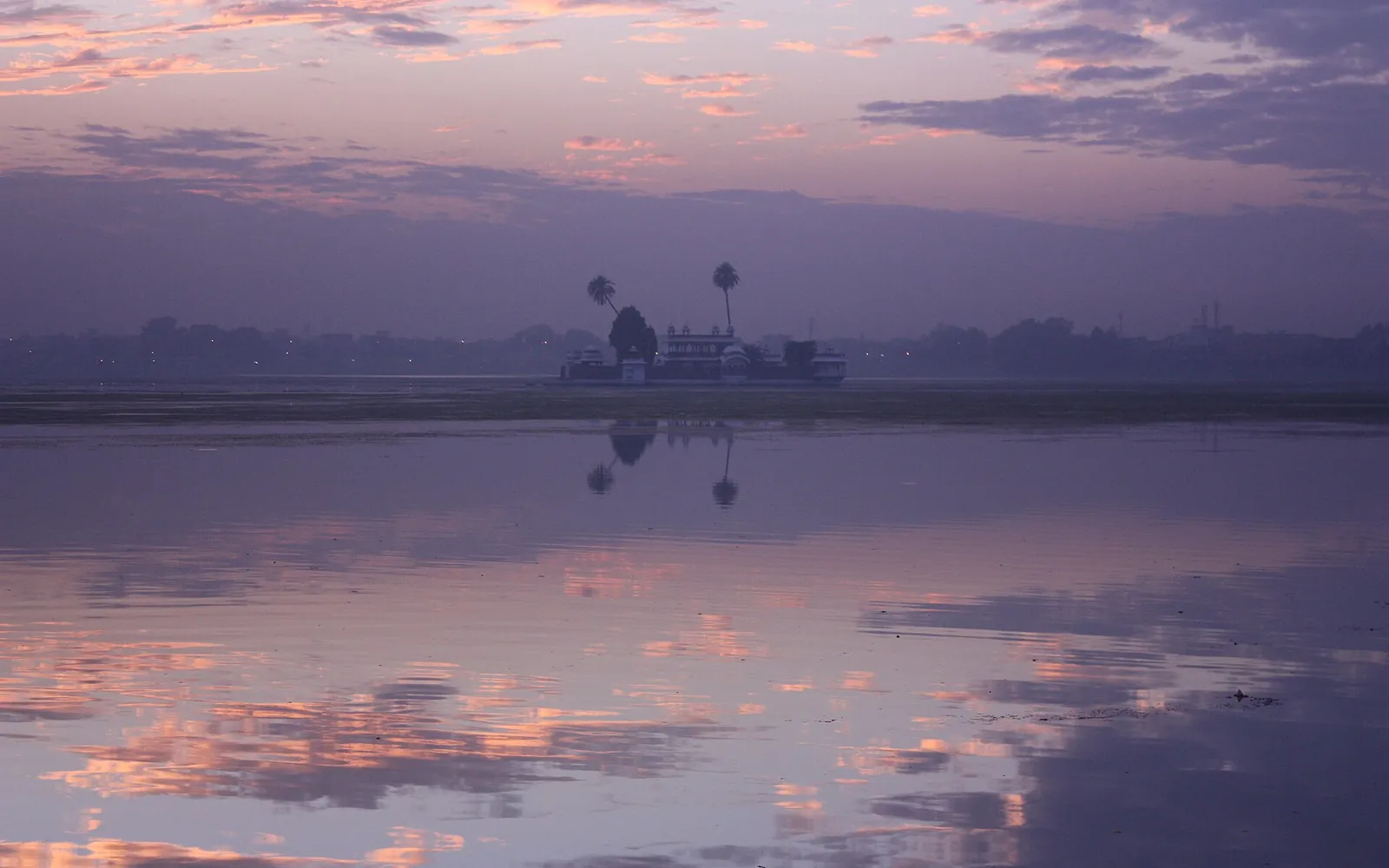
The most rewarding Jhalawar tourist places sit within a few kilometres of each other: a water fort on the UNESCO World Heritage list, a 19th-century palace with one of Rajasthan’s oldest museums, an early 20th-century theatre, and the temple town of Jhalrapatan with its towering Sun Temple. Jhalawar lies in the far south of the Hadoti region, about 88 km from Kota, on the edge of the Malwa plateau. It is greener and quieter than most of Rajasthan, with orange orchards and, in winter, poppy fields along the roads.
The landscape
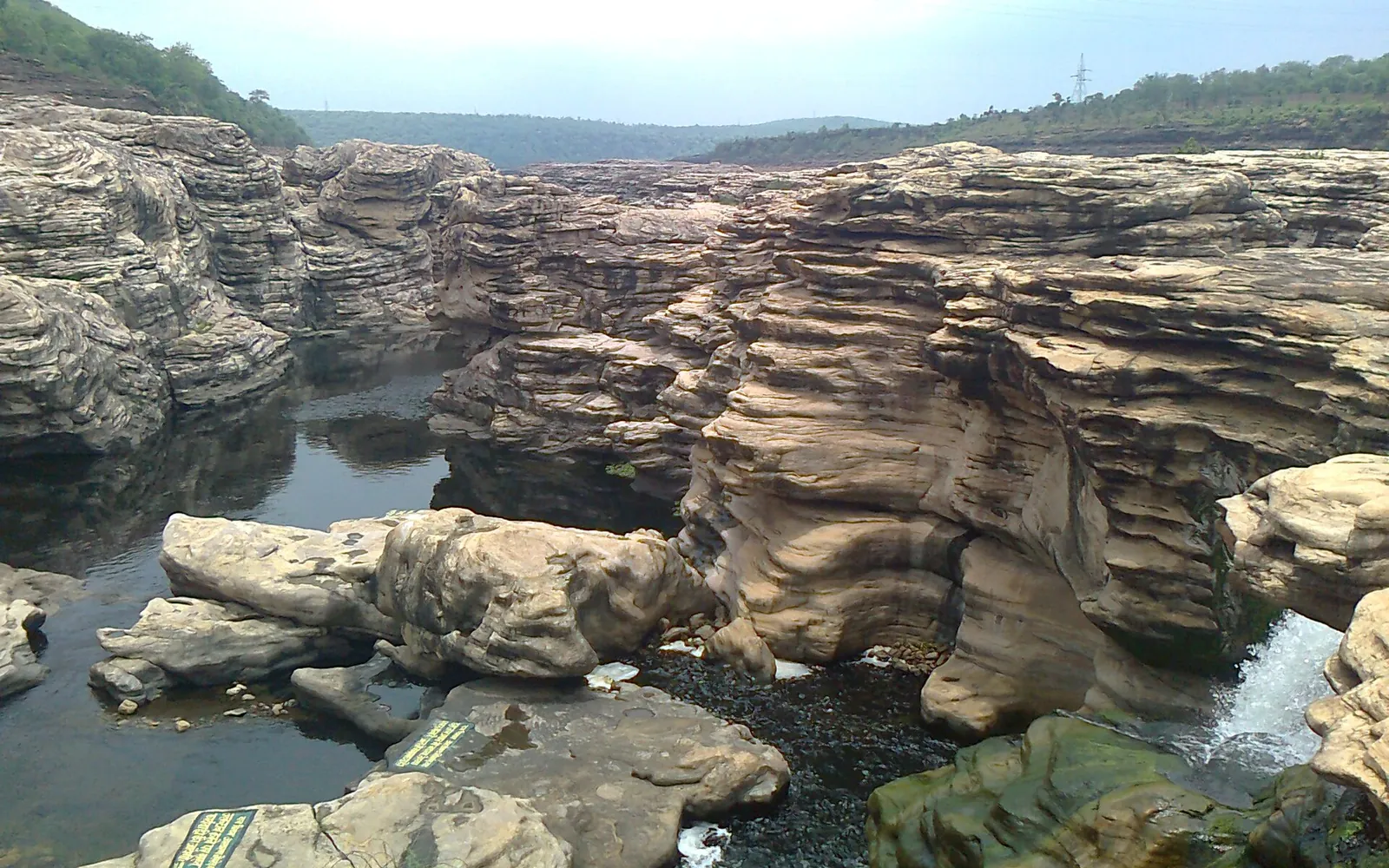
Rajasthan Tourism notes that Jhalawar was once called Brijnagar and describes a rocky but well-watered landscape quite unlike the desert districts: orange orchards, red poppy fields in season, and many rivers. The district is a major producer of citrus. For travellers this means pleasant drives through farmland and forest, and in winter a good chance of seeing water in the rivers around Gagron.
A short history of Jhalawar
Jhalawar is young by Rajasthani standards. In the late 18th century Zalim Singh Jhala, the regent who governed Kota for decades, set up a cantonment here, then called Chhaoni Umedpura, near the existing fort at Jhalrapatan. He also founded the town of Jhalrapatan in 1796, close to the ruins of the older city of Chandravati.
In 1838 the British, to settle the long dispute between the Kota rulers and Zalim Singh’s family, carved a new state out of Kota’s territory for his descendants. It was named Jhalawar after the Jhala clan of Rajputs, and Zalim Singh’s grandson Madan Singh became its first ruler with the title Maharaj Rana. The history of Kota explains the background.
Jhalawar town
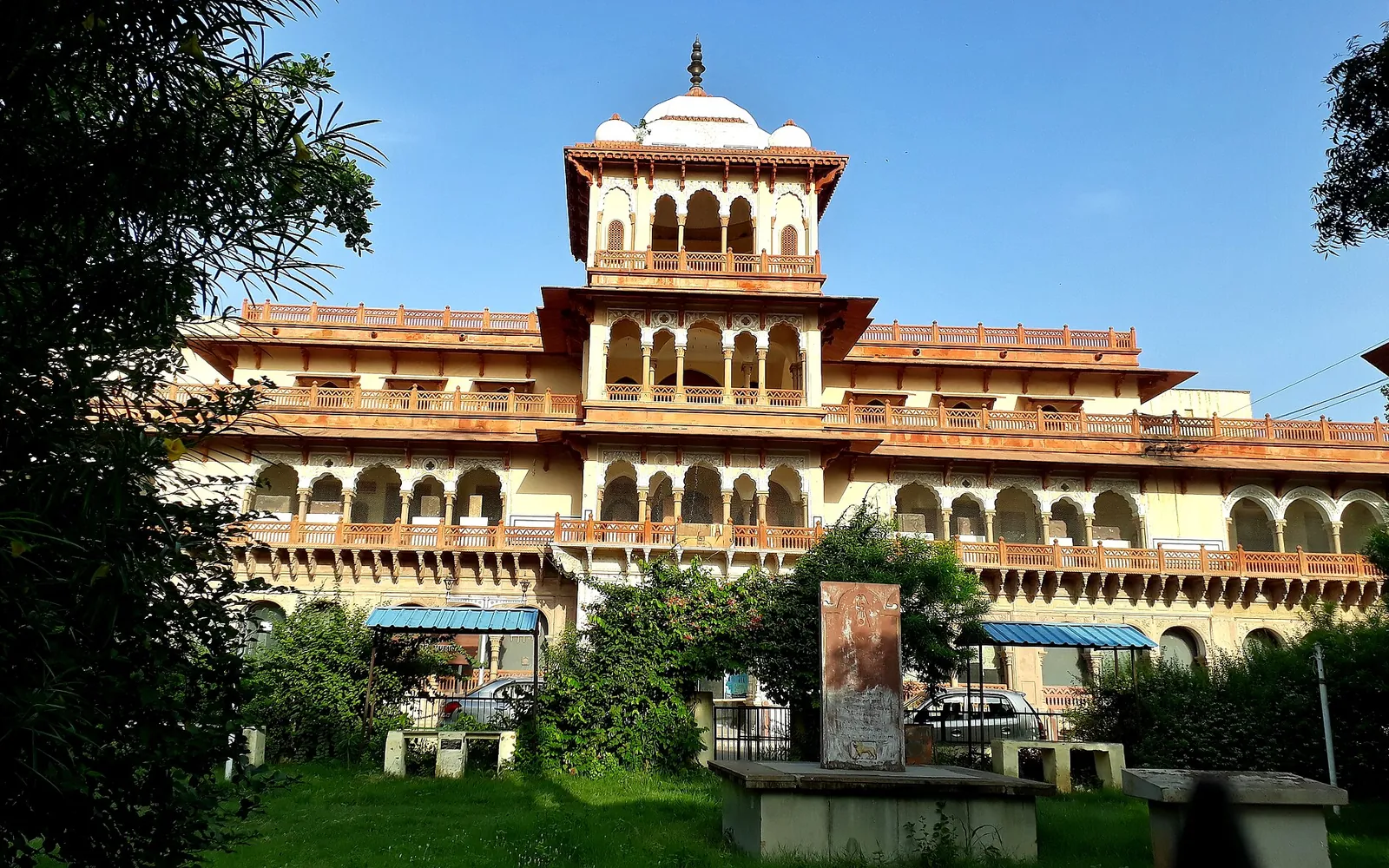
Garh Palace (Jhalawar Fort). The palace in the centre of town was built by Maharaj Rana Madan Singh and his successors between 1838 and 1854. Some rooms have painted walls and mirror work added later.
Government Museum. Part of the Garh Palace complex and established in 1915, it is one of the oldest museums in Rajasthan, with paintings, manuscripts, sculpture and inscriptions from the 5th and 7th centuries. See museums in Kota and Hadoti.
Bhawani Natyashala. A theatre built in 1921 by Maharaja Bhawani Singh, unusual for having an underground passage that let horses and chariots appear on stage. Plays from Kalidasa’s Abhijnanashakuntalam to Shakespeare were staged here.
Naulakha Fort. A hilltop fort built in 1860 by Prithvi Singh of Jhalawar, among the last forts built in Rajasthan.
Dwarkadheesh temple and herbal garden. The Krishna temple on Gomati Sagar lake was built by Zalim Singh in 1796, with the image installed in 1806. The herbal garden next to it is maintained by the forest department.
Gagron Fort
Gagron Fort, a few kilometres from town, is the headline sight. It stands where the Ahu and Kali Sindh rivers meet, protected by water on three sides and a moat on the fourth, which earned it the name jaladurg (water fort). In 2013 it was inscribed on the UNESCO World Heritage list as one of the six Hill Forts of Rajasthan. It was a Khichi Chauhan stronghold for about three centuries and was besieged by the Malwa sultan Hoshang Shah in 1423. Just outside are the dargah of the Sufi saint Mitthe Shah, scene of a fair during Muharram, and a monastery of Saint Pipa, the Gagron king who became a disciple of Ramananda.
Jhalrapatan: the temple town
Jhalrapatan is about 6 km from Jhalawar and makes a natural half-day.
- Sun Temple (Padmanabha temple). A 10th-century temple about 97 feet high, dedicated to Vishnu and known locally as the Sun Temple, with a spire built up of clustered miniature towers. It was restored in the 16th and 19th centuries.
- Shantinath Jain temple. Close to the Sun Temple, an 11th-century temple about 92 feet high dedicated to the Tirthankara Shantinath.
- Chandrabhaga temples. A group of old temples with carved pillars and gateways on the banks of the Chandrabhaga river, including the Chandramouleshwar, Lakulish, Harihar and Devi temples. This is also the site of the Chandrabhaga fair.
Further afield
- Kolvi Buddhist caves. Rock-cut caves and stupas with a large figure of the Buddha, about 90 km from Jhalawar, with more caves at Vinayaka and Hathiyagaur. Rajasthan Tourism calls them perhaps the biggest group of Buddhist rock-cut caves in Rajasthan. The site is protected by the ASI.
- Chandkheri Adinath Jain temple, Khanpur. A 17th-century temple with a seated image of Adinath about six feet tall.
- Nageshwar Parshvanath, Unhel. A Jain pilgrimage centre with a statue of Parshvanath said to be about a thousand years old.
- Dalhanpur. Scattered temple ruins with carved pillars and toranas on the Chhapi river, near an irrigation dam.
Suggested day from Kota
- Leave Kota early by car (or take the morning train).
- Gagron Fort first, while it is cool, then the Mitthe Shah dargah and Pipaji monastery across the water.
- Garh Palace, museum and Bhawani Natyashala in town (check museum opening days locally).
- Lunch, then Jhalrapatan: Sun Temple, Shantinath temple and the Chandrabhaga temples late in the afternoon.
- Return to Kota after dark, or stay overnight and visit Kolvi the next morning.
Getting there and when to go
Jhalawar is on the national highway south of Kota and is linked by bus to many towns in Rajasthan; there is a daily passenger train from Kota. The nearest airports listed by Rajasthan Tourism are Indore (about 240 km) and Jaipur (about 345 km). See how to reach Kota for onward connections. October to March is the best time to visit. For other routes from Kota, see the Hadoti region guide and Baran tourist places.
For Kolvi in the context of Binnayaga, Hathiagor and other Buddhist sites, see Buddhist caves in Rajasthan.
Frequently asked questions
How far is Jhalawar from Kota?
Rajasthan Tourism gives the road distance as about 88 km. There is also a daily passenger train between Kota and Jhalawar.
Can I see Jhalawar in one day from Kota?
You can see the core sights (Gagron, the Garh Palace and museum, the Sun Temple and the Chandrabhaga temples) in a full day. Kolvi caves and Chandkheri need a second day or a private car and an early start.
What is Jhalawar famous for?
Gagron, a water fort on the UNESCO World Heritage list, the 10th-century Sun Temple at Jhalrapatan, its Buddhist rock-cut caves at Kolvi, and its orange orchards. Rajasthan Tourism notes the district is a major producer of citrus.
When is the Chandrabhaga fair held?
During the Hindu month of Kartik (October-November), around Kartik Purnima, on the banks of the Chandrabhaga river at Jhalrapatan. Exact programme dates are announced each year.
Sources
Editorial team
The KotaRajasthan.net team writes about the places, history and festivals of Kota and Hadoti, and corrects pages when readers point out changes.