History and people
The history of Kota, Rajasthan
Written by Kota Rajasthan Editorial Team · Updated
The history of Kota is the story of a frontier fief that became a kingdom, a kingdom that was run for half a century by its regent, and a royal town that remade itself three times after 1947: as an industrial city, as India’s best-known coaching town and, most recently, as a tourist destination on the Chambal. This page follows that story in order, with a timeline at the end.
Before Kota: Bhils, temples and the Hadas
The land along this stretch of the Chambal was settled long before any palace was built. Local tradition says the city takes its name from Koteya, a Bhil chief whose stronghold stood near the present old city. The temple at Kansua, on the edge of modern Kota, carries an inscription dated to the 8th century CE, which shows that the area was a place of worship more than a thousand years ago.
The Hada Rajputs, a branch of the Chauhan clan, established themselves in the region from around the 12th and 13th centuries with Bundi as their capital. The whole region is still called Hadoti, the land of the Hadas, and today covers the districts of Kota, Bundi, Baran and Jhalawar. For several centuries Kota was a fief of Bundi, guarding the kingdom’s eastern side along the river.
1631: Kota becomes a state
The decisive moment came in 1631. The Mughal emperor Shah Jahan granted Kota as a separate principality to Rao Madho Singh, a son of Rao Ratan Singh of Bundi, in recognition of the family’s service in Mughal campaigns. From then on Kota had its own ruling line of Hada Chauhans, first with the title Rao and later Maharao.
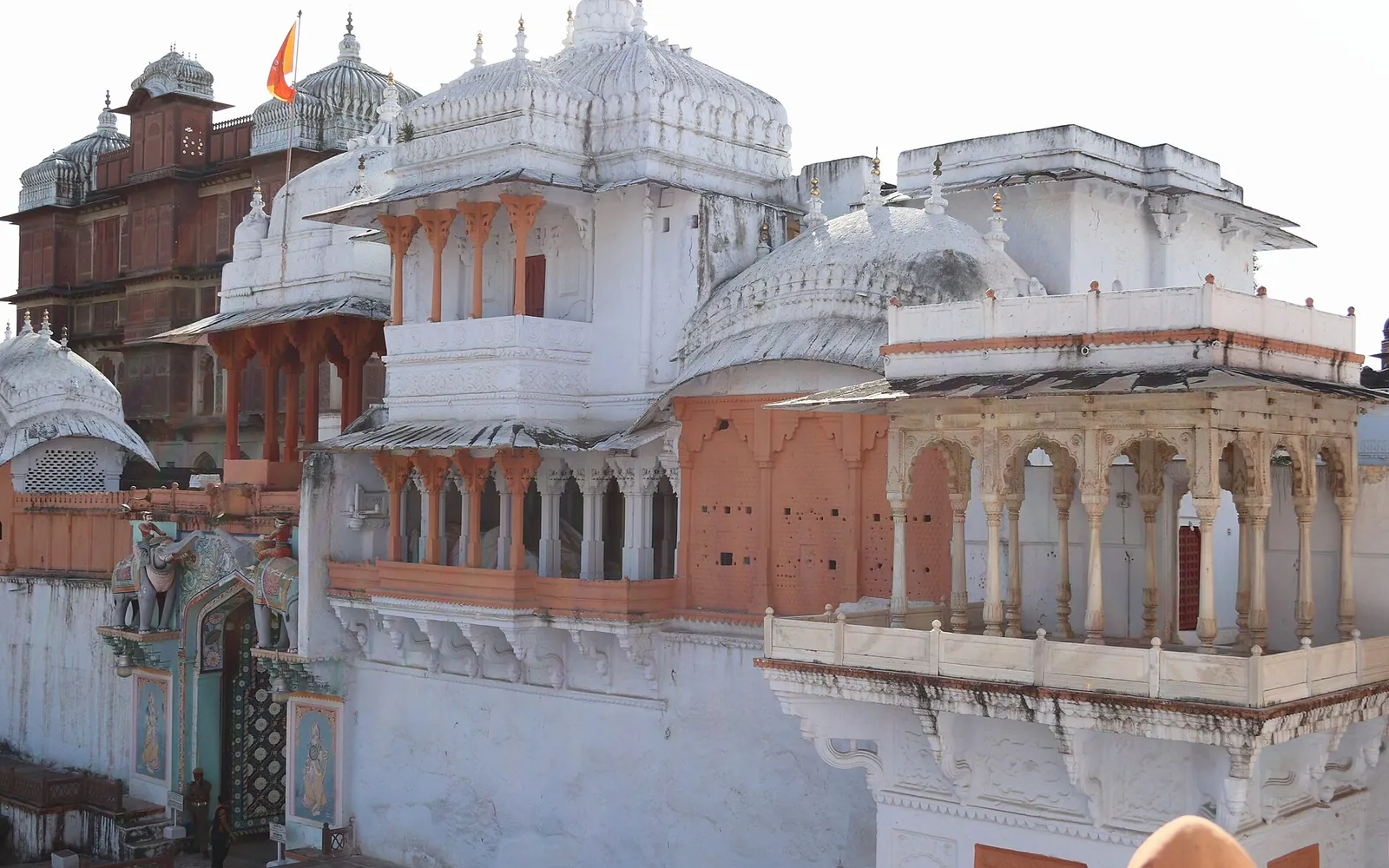
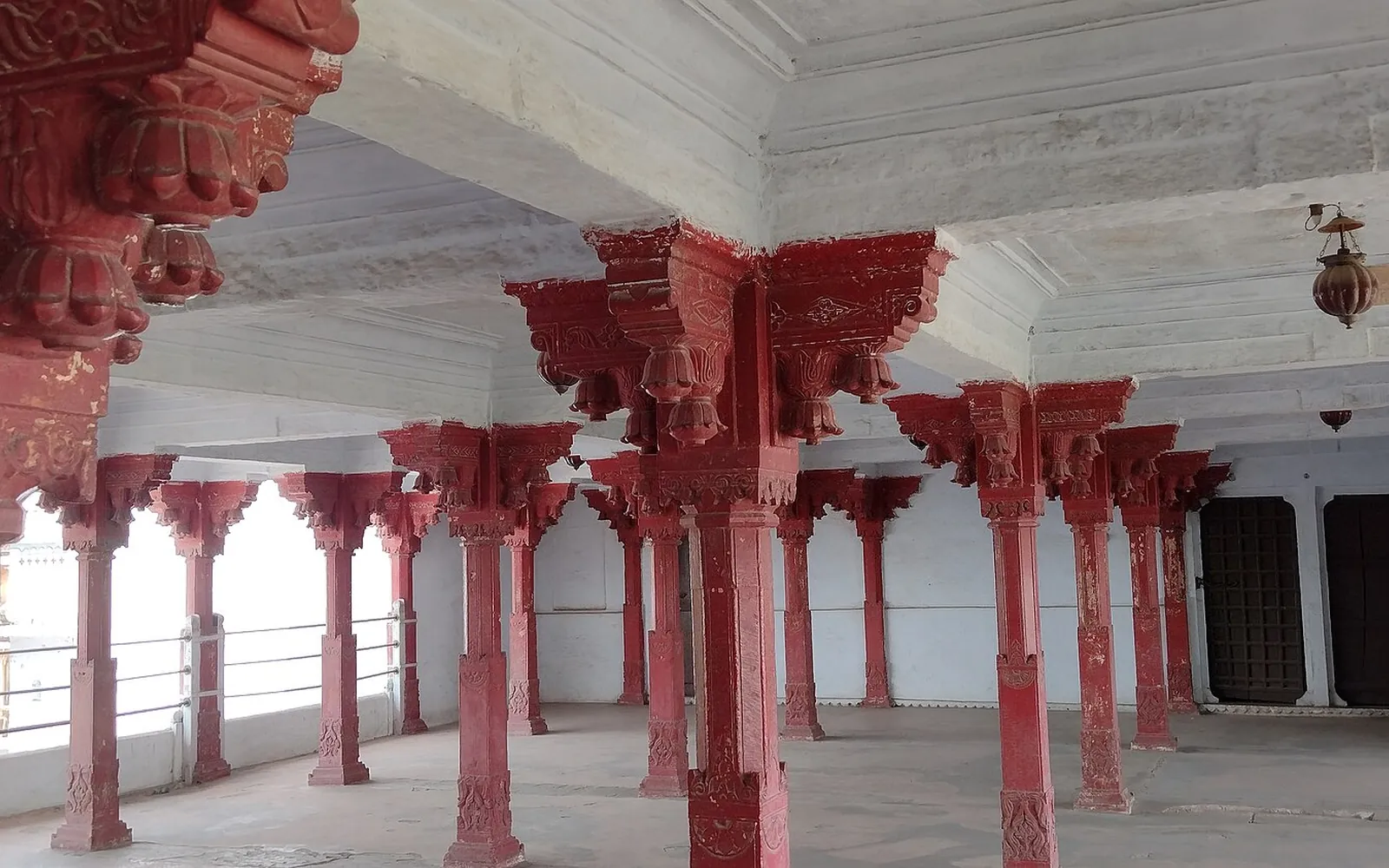
Madho Singh and his successors built up the fortified palace on the east bank of the Chambal, the Garh Palace, which grew over the next two centuries into one of the largest palace complexes in Rajasthan. Kota’s rulers served the Mughals in the Deccan and elsewhere, and within a few generations the younger state rivalled the kingdom it had been carved from.
Painting, gardens and the court
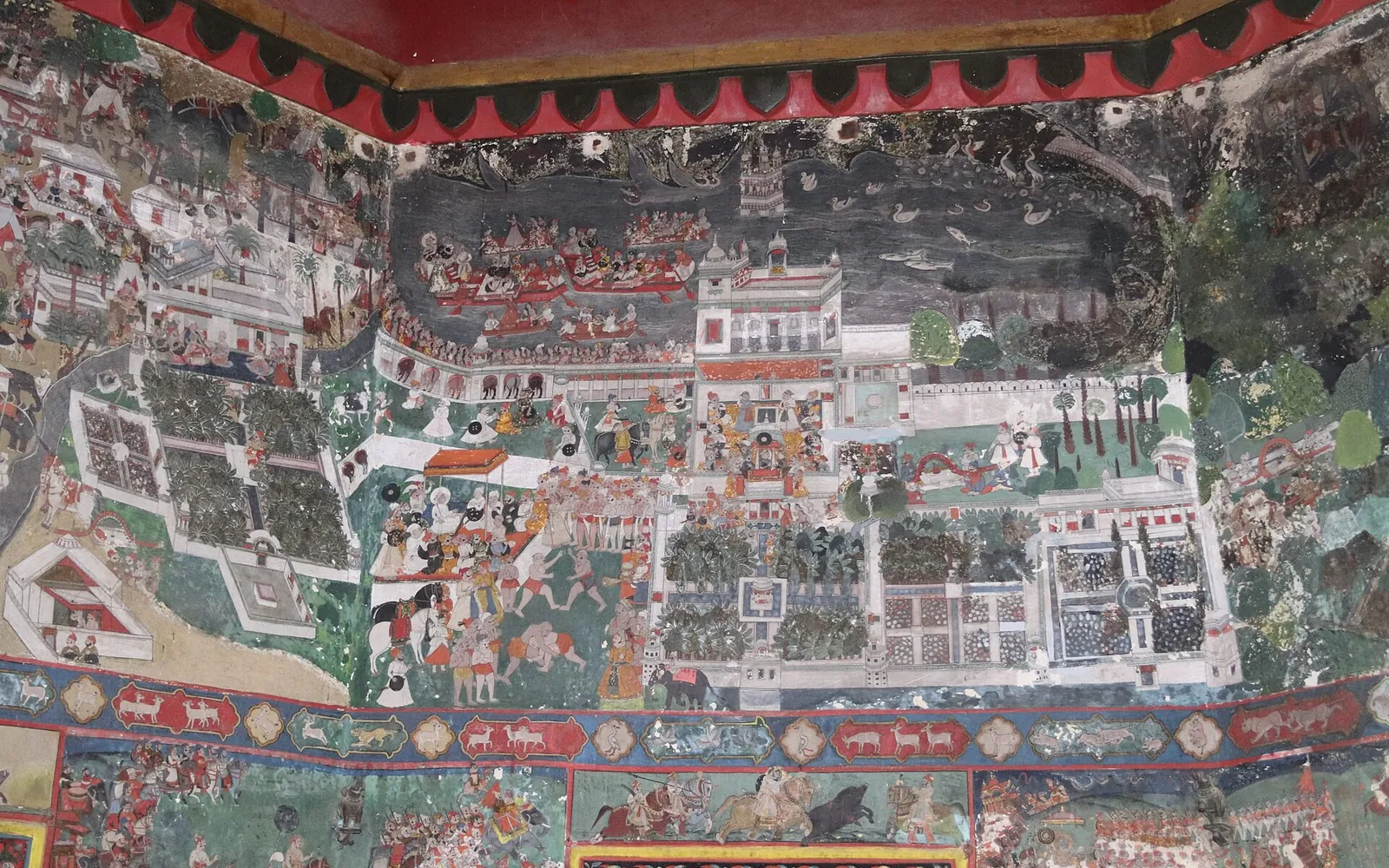
Kota’s court was a patron of the arts. The Kota school of miniature painting, which grew out of the Bundi style, became famous for hunting scenes in dense jungle, with tigers, elephants and rulers drawn with unusual energy. Many of these paintings survive in the palace museum and in collections around the world. The court also built temples such as Mathuradheesh, gardens, stepwells and the island pavilion of Jagmandir on Kishore Sagar.
The Dussehra celebrations that grew into today’s Kota Dussehra Mela also go back to this period: the mela traces its royal observance to 1723, under Maharao Durjanshal Singh.
Zalim Singh Jhala, the regent
No figure looms larger over Kota’s 18th and 19th centuries than Zalim Singh Jhala. As diwan and regent he effectively governed Kota for about fifty years, steering it through Maratha raids and the collapse of Mughal authority, reforming revenue, and keeping the treasury full. In 1817 Kota signed a treaty with the British East India Company and became a princely state under British paramountcy.
Zalim Singh’s family held so much power that it led to open conflict with the Kota ruler after his death. In 1838 the British settled the dispute by separating part of Kota’s territory to create the new state of Jhalawar for his descendants.
The princely state and the railway
Through the late 19th and early 20th centuries Kota’s rulers modernised the state. Maharao Umed Singh II, who ruled from 1889 to 1940, built schools, hospitals, public offices and Umed Bhawan Palace, and the railway brought Kota into the wider economy of Rajputana.
1948: joining independent India
After independence, Kota was one of the princely states that formed the United State of Rajasthan in March 1948, with Kota as its capital and Maharao Bhim Singh II as Rajpramukh. The union was enlarged in stages over the following years into the present state of Rajasthan, and Kota became a district headquarters.
Dams, industry and coaching
The decades after independence changed Kota completely. The Chambal Valley Project built a chain of dams on the river, including the Kota Barrage at the city itself, bringing irrigation and power. Chemical, fertiliser and engineering plants made Kota one of the main industrial cities of Rajasthan, the atomic power station at nearby Rawatbhata added to the region’s importance, and the quarries around Ramganjmandi carried Kota Stone to floors across India.
From the 1980s Kota took on a new identity as a centre for engineering and medical entrance coaching. How that happened is told in Kota, the coaching capital of India.
Kota today
Since the late 2010s the city has invested heavily in public spaces and roads: the Chambal Riverfront, Oxygen City Park and a network of flyovers and underpasses described in modern Kota development. The old city, the palace and the river still sit at the centre of it all.
Timeline of Kota history
| Period | Event |
|---|---|
| 8th century CE | Inscription at the Kansua Shiva temple, among the oldest records in the Kota area |
| 12th to 13th centuries | Hada Chauhans establish themselves in the region, with Bundi as capital |
| Before 1631 | Kota is a fief of the Bundi kingdom |
| 1631 | Shah Jahan grants Kota as a separate state to Rao Madho Singh |
| 17th to 18th centuries | Garh Palace expanded; Kota school of painting flourishes |
| 1723 | Royal Dussehra observance begins under Maharao Durjanshal Singh |
| Late 18th century to 1824 | Zalim Singh Jhala governs Kota as regent |
| 1817 | Treaty with the British East India Company |
| 1838 | Jhalawar state created from part of Kota for Zalim Singh’s heirs |
| 1889 to 1940 | Reign of Maharao Umed Singh II, period of modernisation |
| March 1948 | Kota becomes capital of the United State of Rajasthan |
| 1950s to 1970s | Chambal dams, Kota Barrage and industrial growth |
| 1980s onward | Growth of the coaching industry |
| 2018 to 2023 | Chambal Riverfront, Oxygen City Park and the signal-free road plan |
Where to see Kota’s history
- Garh Palace and its museum, the seat of the Kota rulers.
- Kesar Bagh cenotaphs, the royal chhatris.
- Kansua Temple, one of the oldest temples in the area.
- Patan Pol and Kotri Pol, gates of the old walled city.
- Bundi, the older Hada capital an hour away.
For the wider region that the Hada rulers gave their name to, read our introduction to the Hadoti region of Rajasthan, and for the art their court sponsored, the Kota school of painting.
Frequently asked questions
When was Kota founded?
The settlement is much older, but Kota became a separate state in 1631, when the Mughal emperor Shah Jahan granted it to Rao Madho Singh, a son of Rao Ratan Singh of Bundi.
Where does the name Kota come from?
Local tradition links the name to Koteya, a Bhil chief whose settlement stood on the Chambal before the Hada Rajputs took the area. The older spelling Kotah appears in colonial records.
Who were the rulers of Kota?
The Hada Chauhan Rajputs, a branch of the Bundi ruling family, with the title Rao and later Maharao. The best-known include Rao Madho Singh, Maharao Bhim Singh I, Maharao Umed Singh II and Maharao Bhim Singh II.
Why was Jhalawar separated from Kota?
The regent Zalim Singh Jhala and his family had effectively governed Kota for decades. To settle the resulting dispute with the Kota ruler, the British created Jhalawar in 1838 from part of Kota's territory for Zalim Singh's descendants.
What is Hadoti?
Hadoti, the land of the Hadas, is the region of south-east Rajasthan once ruled by the Hada Chauhans. Today it covers the districts of Kota, Bundi, Baran and Jhalawar.
Sources
Editorial team
The KotaRajasthan.net team writes about the places, history and festivals of Kota and Hadoti, and corrects pages when readers point out changes.