History and people
Maharao Bhim Singh I of Kota: Rank, Faith and Krishna
Written by Kota Rajasthan Editorial Team · Updated
Maharao Bhim Singh I was one of the most ambitious of Kota’s early rulers. He reigned from 1707 to 1720, years in which the Mughal empire, after the death of Aurangzeb in 1707, was still powerful but fracturing through succession wars. His career shows how a Rajput state of the second rank could raise its standing at court through service and alliances, and how deeply Krishna devotion came to shape the identity of the Kota court.
Coming to power in a time of turmoil
Kota had been a separate state since its founder, Rao Madho Singh, received it from the Mughals (in 1631 by the usual reckoning; some sources say 1624). Its rulers, like those of Bundi, served as Mughal commanders, and their fortunes depended on which side they backed in the empire’s frequent succession struggles. Bhim Singh came to the throne in 1707, the year Aurangzeb died and his sons fought for the succession. The years that followed saw several emperors rise and fall in quick succession, and a ruler who chose well could gain a great deal.
Raising Kota’s rank: the title Maharao
The rulers of Kota began as Raos, the title used by the Hada house. In 1713 the emperor Farrukhsiyar granted Bhim Singh the title Maharao. He combined it with the older title Raja, granted to his ancestor Madho Singh by Jahangir, and from then on the rulers of Kota were styled Maharao Raja, a title they kept until the end of princely rule. His reign strengthened Kota’s position among the Rajput states of the region, including in its long rivalry with its parent state, Bundi.
A devotee of Krishna as Brijnathji
Bhim Singh I is also remembered as a devotee of Krishna. At the Kota court Krishna was worshipped as Brijnathji, a form linked to the Shrinathji cult of Nathdwara in the Vallabh, or Pushtimarg, tradition founded by Vallabhacharya. Pushtimarg worship, centred on the loving service of Krishna in temples known as havelis, became an important part of court and city life in Kota.
A painting of about 1719-20, now in the Philadelphia Museum of Art, shows this devotion vividly. Brijnathji sits enthroned in jewelled regalia, filling most of the picture, while Bhim Singh stands behind him holding a peacock-feather fan like a temple attendant, with his son Arjun Singh close by. The image of a powerful ruler presenting himself as the servant of his god became a recurring theme in Kota painting; see the Kota school of painting.
The old-city temple of Mathuradheesh, one of the principal Pushtimarg shrines, reflects the devotional culture that Kota’s rulers encouraged. Rajasthan Tourism records that its image of Krishna was brought from Karnaval village near Mathura and first housed in the haveli of Dewan Dwarka Das.
Succession
Bhim Singh I died in 1720 and was succeeded by his son, Maharao Arjun Singh, who ruled until 1723. He was followed by Durjan Sal, whose long reign (1723-56) saw the growing pressure of the Marathas on Rajputana, the background to the rise of the regent Zalim Singh Jhala later in the century.
Legacy
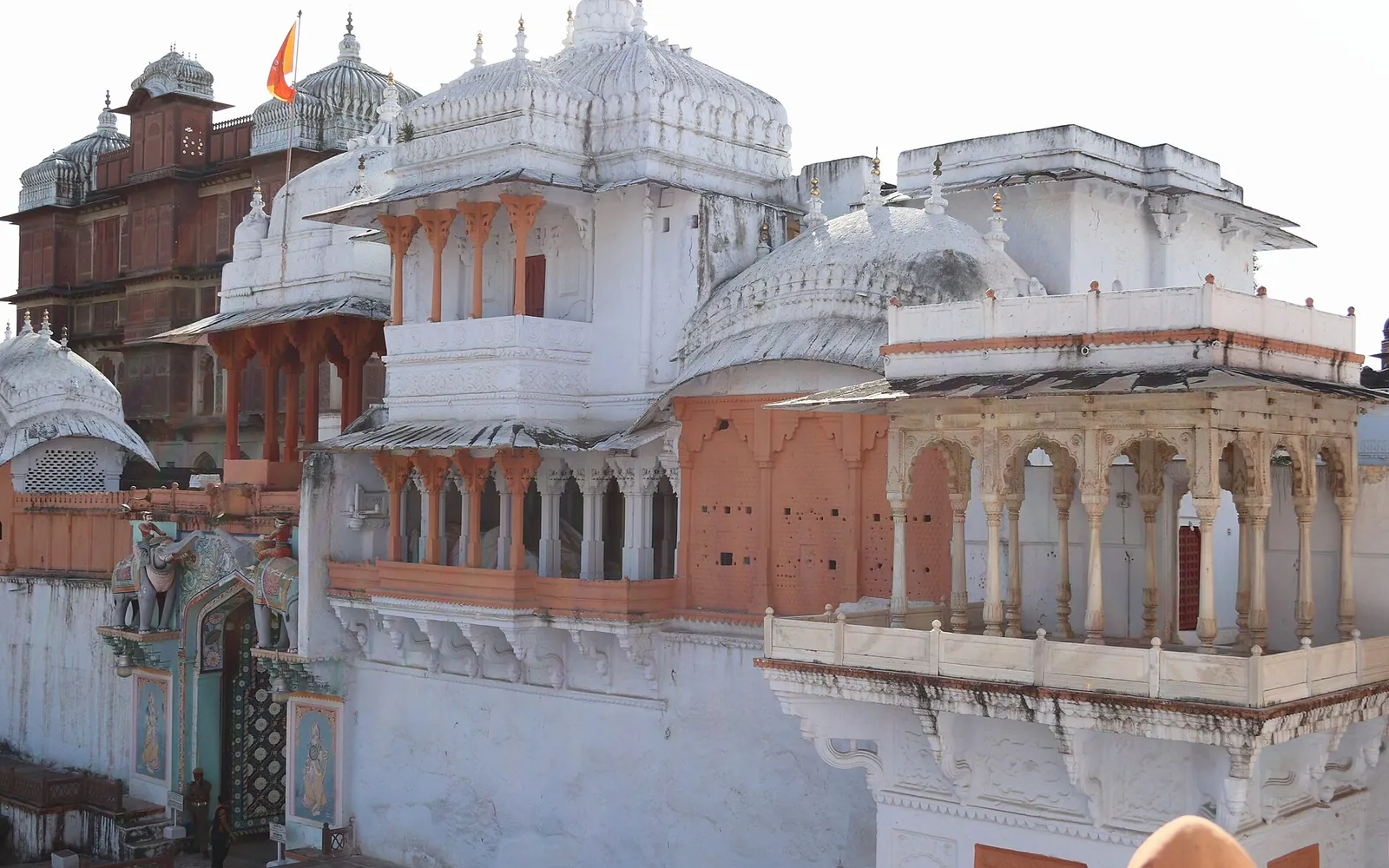
Under Bhim Singh I and his successors, Kota’s court combined military service to the Mughals with patronage of religion and the arts. That combination produced the temples of the old city, the expansion of the Garh Palace, and the court culture in which the Kota school of painting flourished.
Where to see his legacy in Kota
- Mathuradheesh temple, the Pushtimarg haveli in the old city.
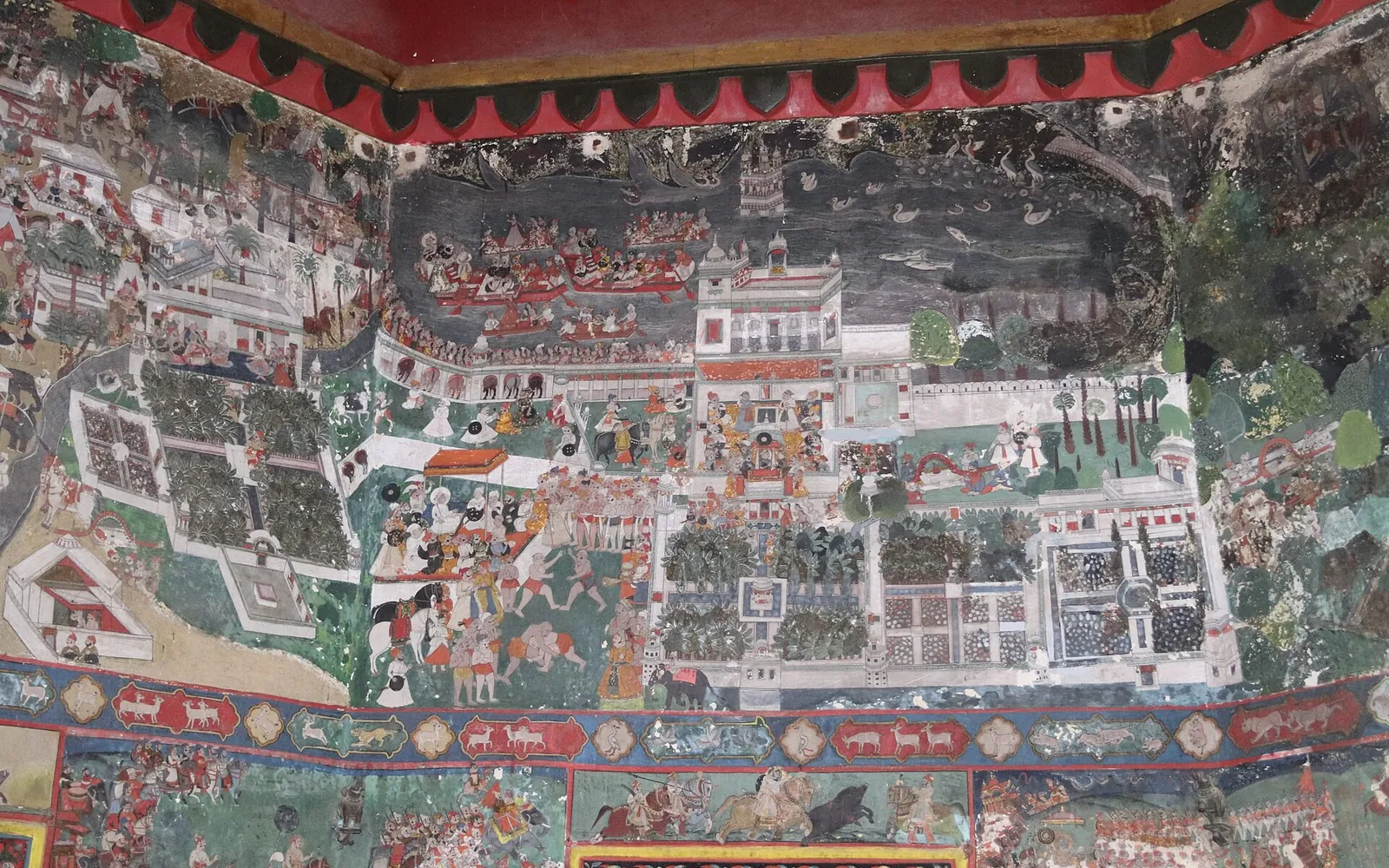
- The painted apartments and museum of the Garh Palace, where Brijnathji and court festivals appear in the murals and miniatures.
- The temples of Kota, for the city’s wider devotional landscape.
Read the full history of Kota or meet the other people who shaped the city.
Frequently asked questions
Who was Maharao Bhim Singh I?
A ruler of Kota from 1707 to 1720, the first of his line to hold the title Maharao, remembered for raising Kota's rank at the Mughal court and for his devotion to Krishna.
When did Kota's rulers become Maharaos?
The Mughal emperor Farrukhsiyar granted Bhim Singh of Kota the title Maharao in 1713. His successors combined it with the older title Raja as Maharao Raja.
Who is Brijnathji?
Brijnathji is the form of Krishna worshipped by the Kota royal family, linked to the Shrinathji cult of Nathdwara. Kota court paintings often show the rulers celebrating festivals before Brijnathji.
What is Pushtimarg?
The Vaishnava tradition founded by Vallabhacharya, centred on loving service to Krishna. Its temples, called havelis, include Shrinathji at Nathdwara and Mathuradheesh in Kota.
Sources
Editorial team
The KotaRajasthan.net team writes about the places, history and festivals of Kota and Hadoti, and corrects pages when readers point out changes.