Food and crafts
Kota School of Painting: Hunts, Krishna and Court Life
Written by Kota Rajasthan Editorial Team · Updated
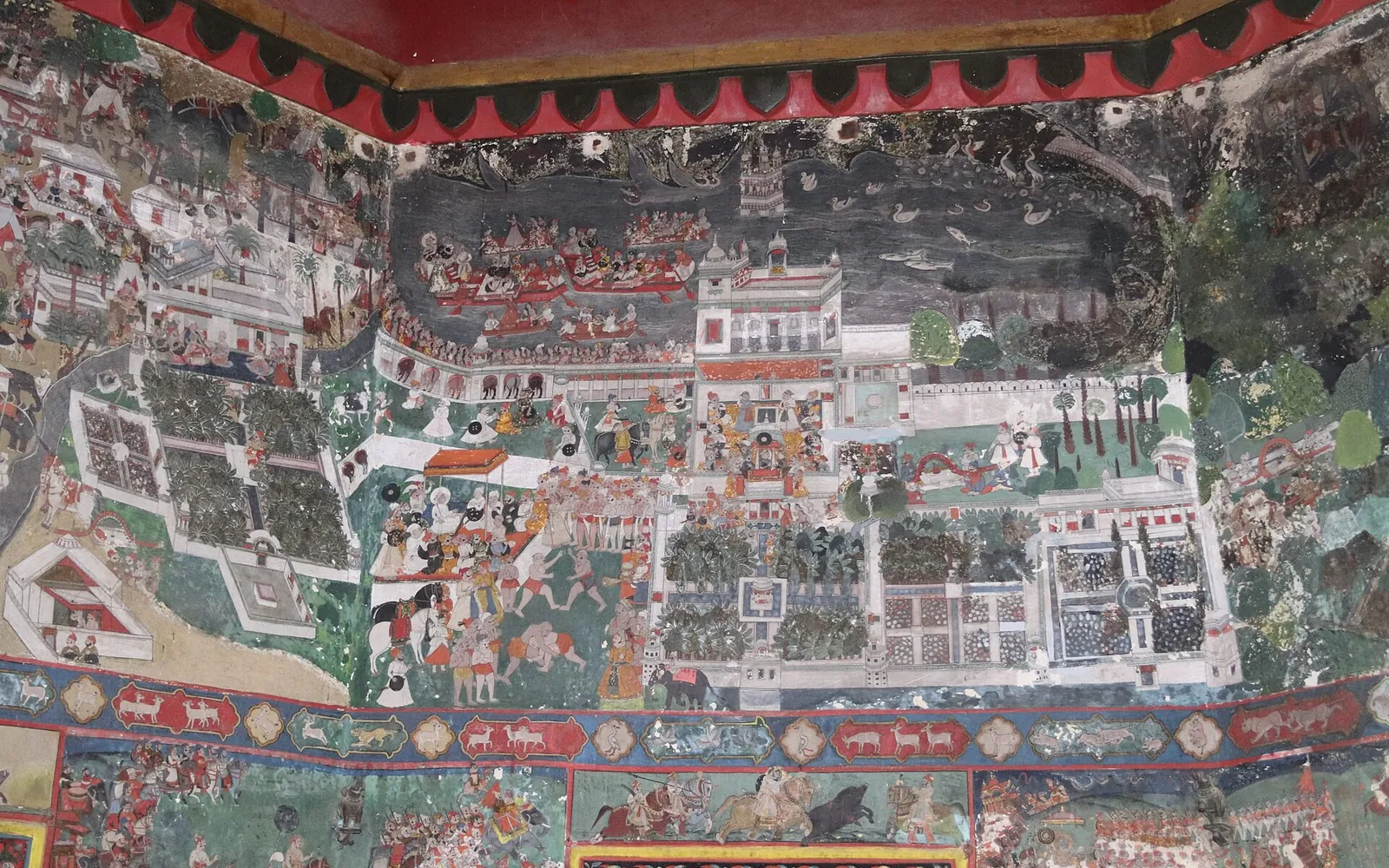
The Kota school of painting is one of the most distinctive branches of Rajput miniature art. Where many Rajasthani courts painted lovers on terraces and gods in gardens, Kota’s artists became famous for something wilder: Maharaos on foot or on elephants, hunting tigers, lions and boar through steep, crowded jungle, painted with a speed and confidence that still feels fresh. This guide explains where the style came from, what to look for and where you can see it in Kota and Bundi today.
From Bundi to Kota: the origins
Kota painting cannot be separated from its parent, Bundi. Kota was part of the Hada Chauhan kingdom of Bundi until it became a separate state in the 17th century (the date is usually given as 1631, with some sources saying 1624; see our history of Kota). Art historians treat Bundi and Kota as one closely related idiom.
Bundi painting itself grew out of contact with the Mughal court. Rajput princes served the emperors and saw the imperial workshops at first hand. A key early document is the so-called Chunar Ragamala of 1591, probably painted for a member of the Bundi royal family; three of its artists say they were trained by Mir Sayyid Ali and Abd al-Samad, the masters of Akbar’s studio. Under Rao Ratan Singh of Bundi (r. 1607-31) the development of Bundi painting can be followed through dated miniatures and wall paintings.
The Hada Master and the first Kota pictures
The bridge between the two courts is an artist whom modern scholars call the Hada Master (active about 1610-60). He specialised in elephants and hunting scenes, and at some point he moved from Bundi to the new kingdom of Kota, where his work became the basis for later Kota painting. The earliest major portrait in what would become the Kota manner, Maharao Jagat Singh of Kota in a Garden, is attributed to him. In pictures like this the background is as expressive as the figures: Rajput painters tended to fill space with pattern and colour rather than create Mughal-style depth.
The great hunting scenes
The genre that made Kota famous is the shikar (hunt) painting. As one standard survey of Rajput painting puts it, Kota developed “one of the most instantly appealing genres of Rajput painting”. Large-format hunting pictures were produced especially during the long reign of Maharao Umed Singh I (1771-1819).
What to look for in a Kota hunt:
- A landscape seen from above. The ground seems to tilt up towards the top of the picture, covered with trees that march up the hillside, often with arching bamboo and a fringe of trees along the skyline.
- Animals drawn from life. Kota artists sketched directly from observation, and their drawings of tigers, elephants and deer are among the liveliest in Indian art. Some finished works use sparse colour so that the draughtsmanship shows through.
- The ruler in action. The Maharao is shown shooting from a hide, a platform or an elephant, often more than once in the same picture as the story unfolds.
The artists of this period were led by a painter known as Shaykh Taju, whose workshop produced master draughtsmen who handled animals with the fluency of calligraphers.
Krishna and court ritual
Hunting was not the only subject. Kota’s rulers were devoted followers of Krishna in the Pushtimarg tradition (see Maharao Bhim Singh I and the Mathuradheesh temple), and a large body of Kota painting is religious. Pictures centred on Brijnathji, the form of Krishna worshipped by the Kota court and linked to the Shrinathji cult of Nathdwara, became a subgenre of their own, often showing the Maharao himself celebrating a festival before the deity.
Kota painters also produced portraits and ragamala sets (series that give visual form to musical modes). A Kota ragamala of 1768 contains more than 240 miniatures and is preserved in a library in Udaipur.
The last flowering
Painting at Kota received its last important impetus under Maharao Ram Singh II (r. 1827-66), who commissioned scenes of his court and religious life; one well-known example shows him and his companions playing Holi on elephants in a city street. Shatru Sal (r. 1866-89) is regarded as the last major patron. By the end of the 19th century, with photography and European taste spreading among the princely courts, the Kota atelier had disappeared.
Where to see Kota painting today
You do not need to visit a foreign museum to see the style in its home setting.
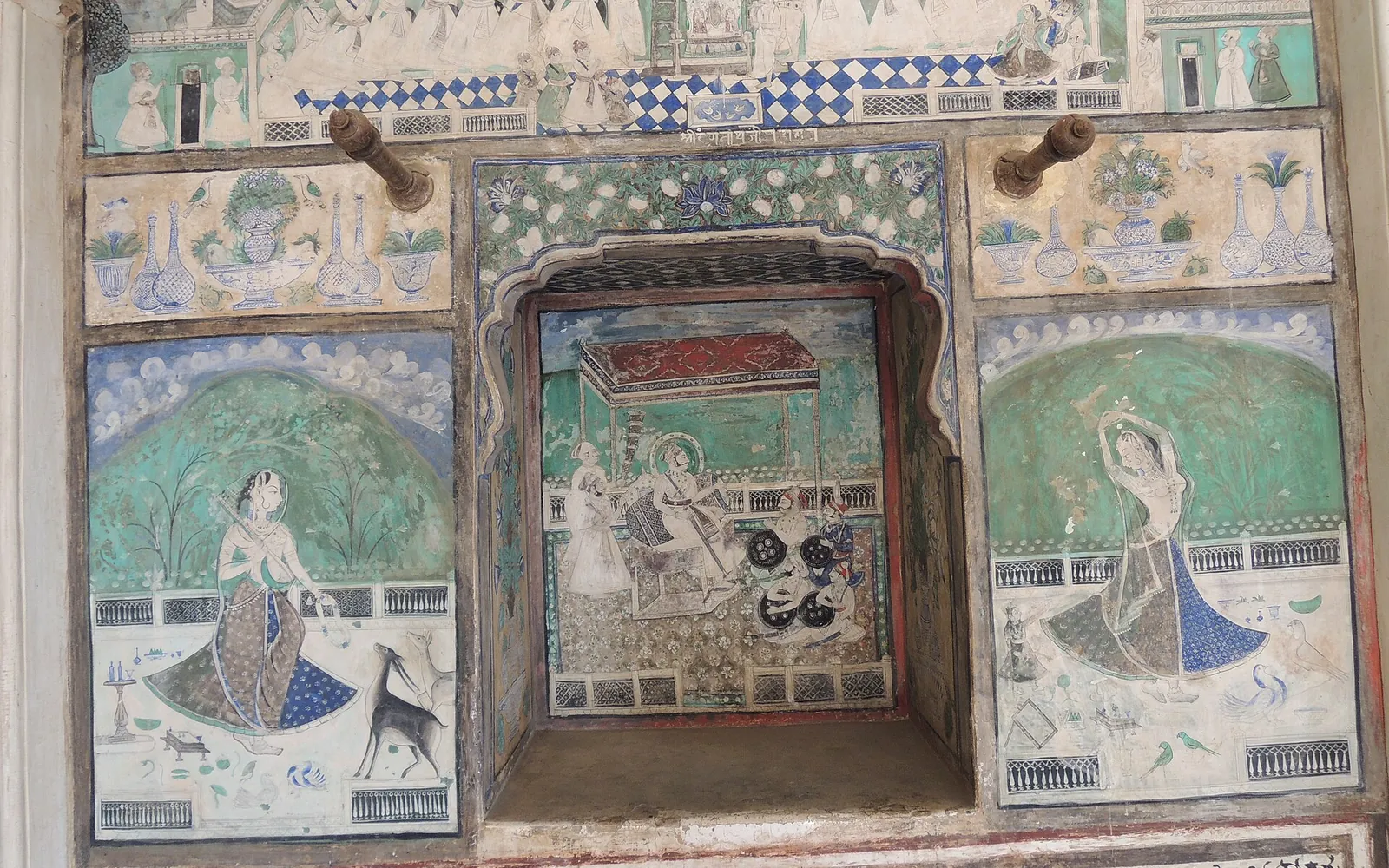
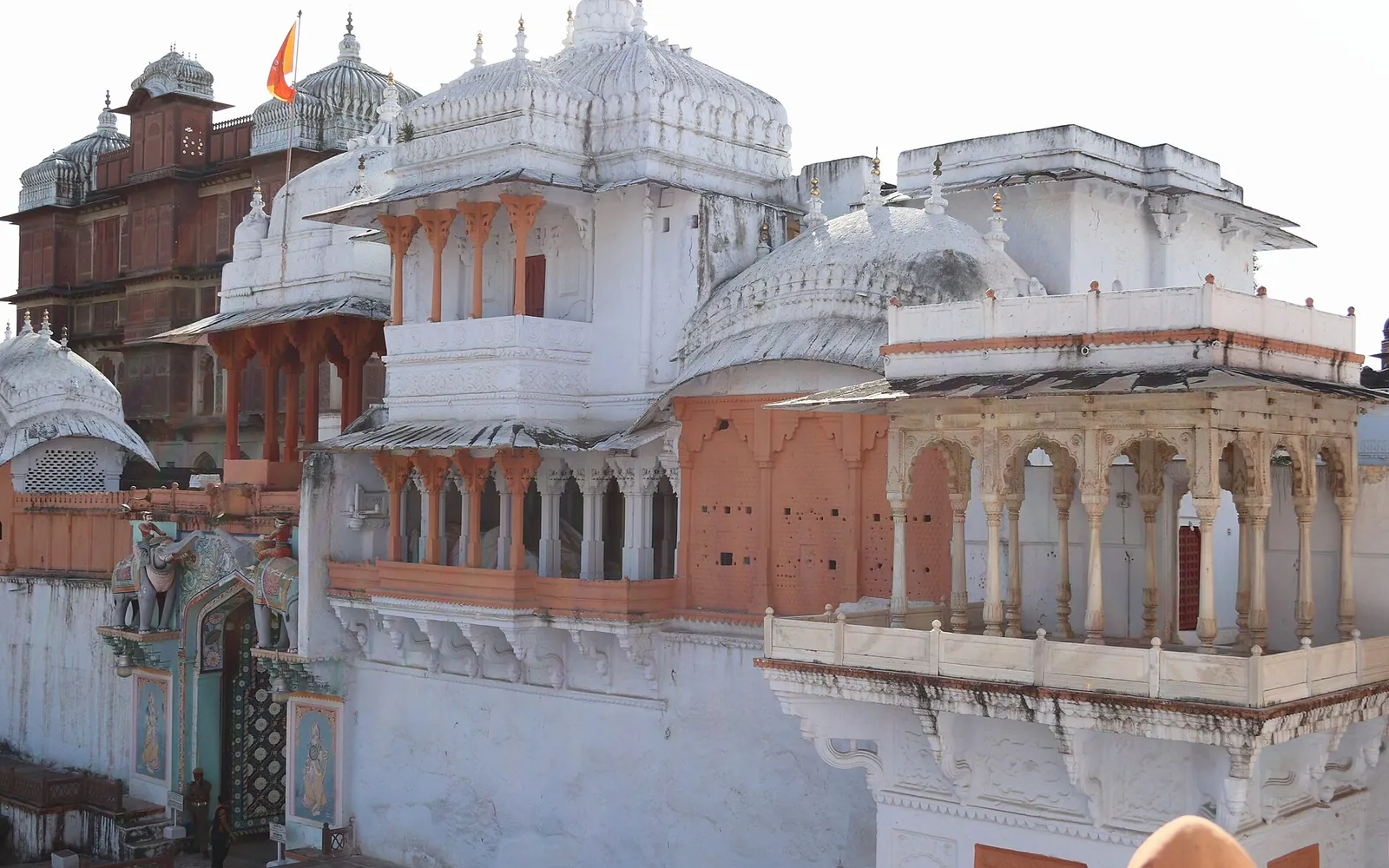
- Garh Palace, Kota. The Rao Madho Singh Museum on the ground floor holds miniatures of the Kota school along with arms and royal objects, and the palace apartments have wall paintings of flora and fauna, hunts, processions and scenes from the life of Krishna. Allow at least two hours.
- Government Museum, Kota. Mainly sculpture, but with a separate section for manuscripts and paintings.
- Bundi Palace. The Chitrashala, built under Rao Umed Singh of Bundi in the 18th century, is the best place in the region to see Bundi murals: Krishna and Radha, court scenes, elephants and battles.
- Sukh Mahal, Bundi. The Government Museum here, opened in 2016, displays miniatures of both the Kota and Bundi schools, including Krishna Lila, portraits and hunting scenes.
For a museum-by-museum overview, see our guide to museums in Kota and Hadoti.
Tips for looking at Kota paintings
- Get close, then step back. Up close you see the brushwork in the foliage and fur; from a distance you see how the whole hillside moves.
- Find the ruler more than once. Many hunts are continuous narratives.
- Compare with Bundi. After the Garh Palace, the Bundi Chitrashala shows the softer, more lyrical side of the same family of styles. Our weekend in Bundi route fits both in, and our Bundi school of painting guide explains that tradition in its own right.
- Ask before photographing. Photography rules and camera fees differ between museums and change; check at the ticket counter.
Kota painting in the bigger picture
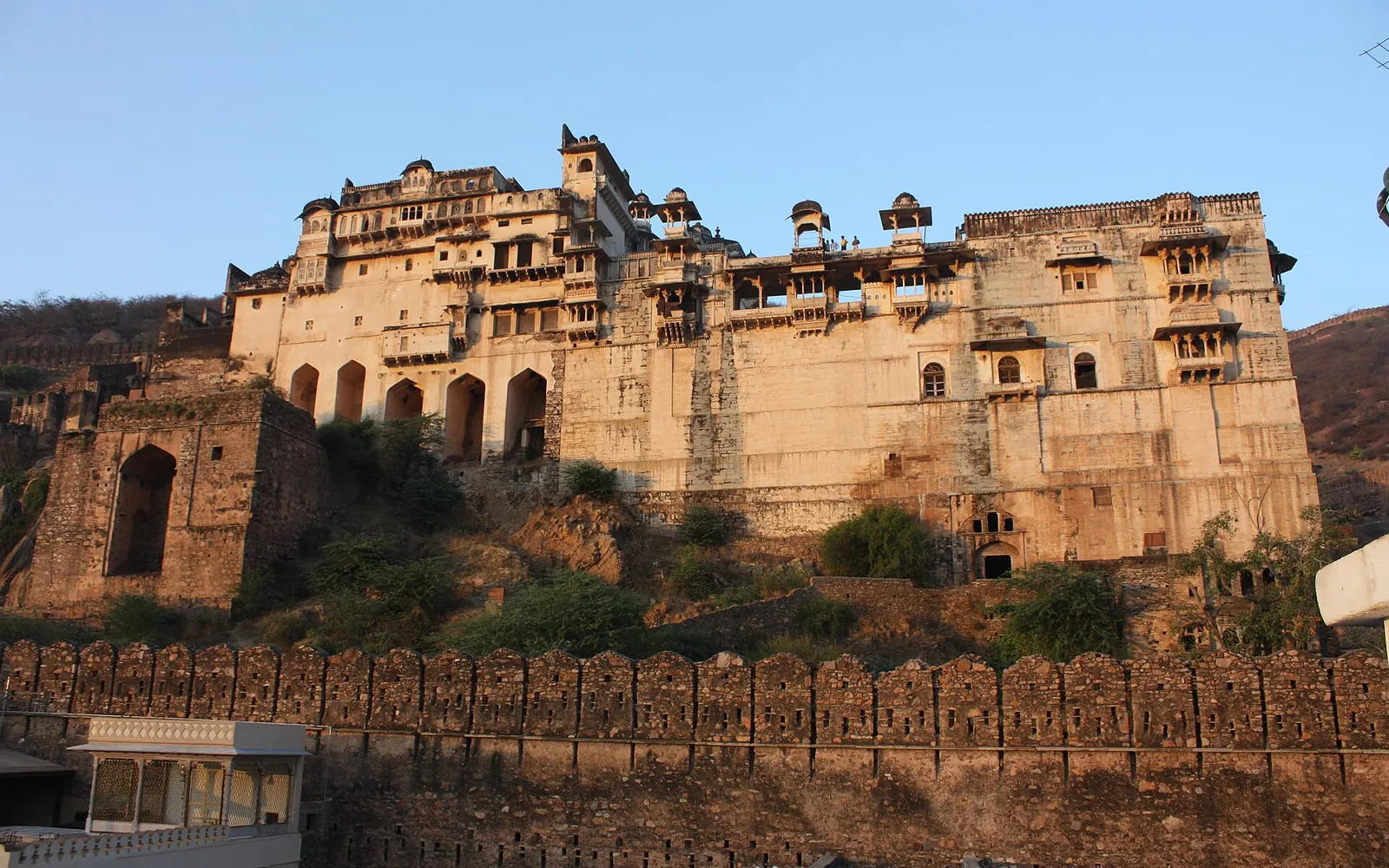
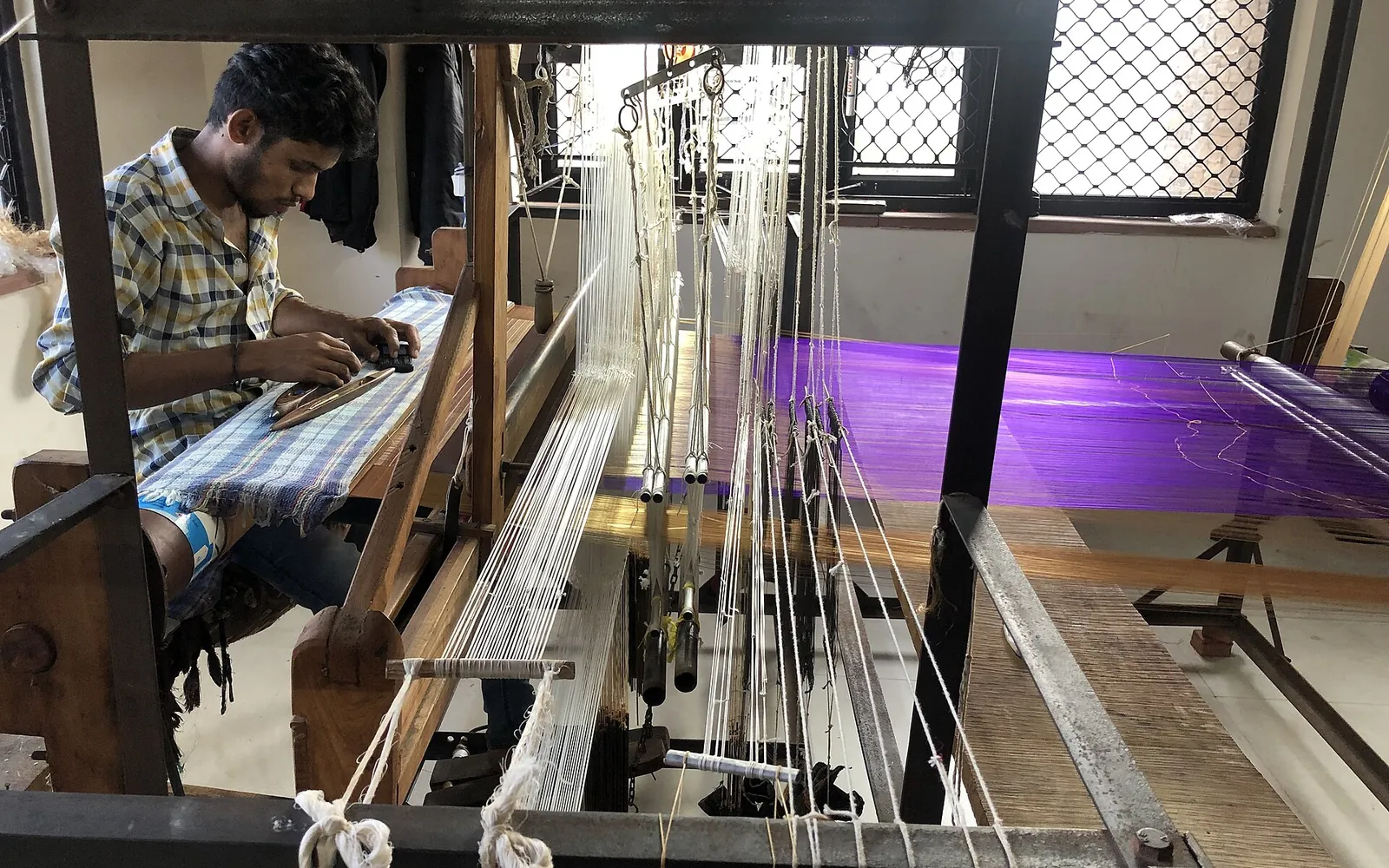
Kota painting is one strand of a wider Hadoti heritage that includes the Kota Doria weave, the temples of Baroli and the fort-palaces of the Hada rulers. Read more in our introduction to the Hadoti region.
Frequently asked questions
What is the Kota school of painting known for?
Above all for its hunting scenes: large compositions of the Maharaos hunting tigers, lions and boar in steep, densely wooded landscapes, drawn with lively, confident brushwork. It also produced portraits, ragamala sets and Krishna subjects.
How is Kota painting related to Bundi painting?
Kota was part of Bundi until the 17th century, and art historians treat the two as one closely related idiom. Bundi painting leaned towards ragamalas, literary themes and court life, while Kota specialised in hunts and animals.
Where can I see Kota paintings in Kota?
The Rao Madho Singh Museum inside the Garh Palace holds Kota-school miniatures, and the palace apartments have wall paintings of hunts, processions and Krishna. The Government Museum in Sukh Mahal, Bundi, also displays Kota and Bundi paintings.
When did the Kota school end?
Painting received a last strong push under Maharao Ram Singh II (r. 1827-66). Shatru Sal (r. 1866-89) is considered the last important patron, and by the end of the 19th century the court atelier had effectively disappeared.
Sources
Editorial team
The KotaRajasthan.net team writes about the places, history and festivals of Kota and Hadoti, and corrects pages when readers point out changes.