Food and crafts
Kota Doria vs Chanderi: How the Two Sarees Really Differ
Written by Kota Rajasthan Editorial Team · Updated
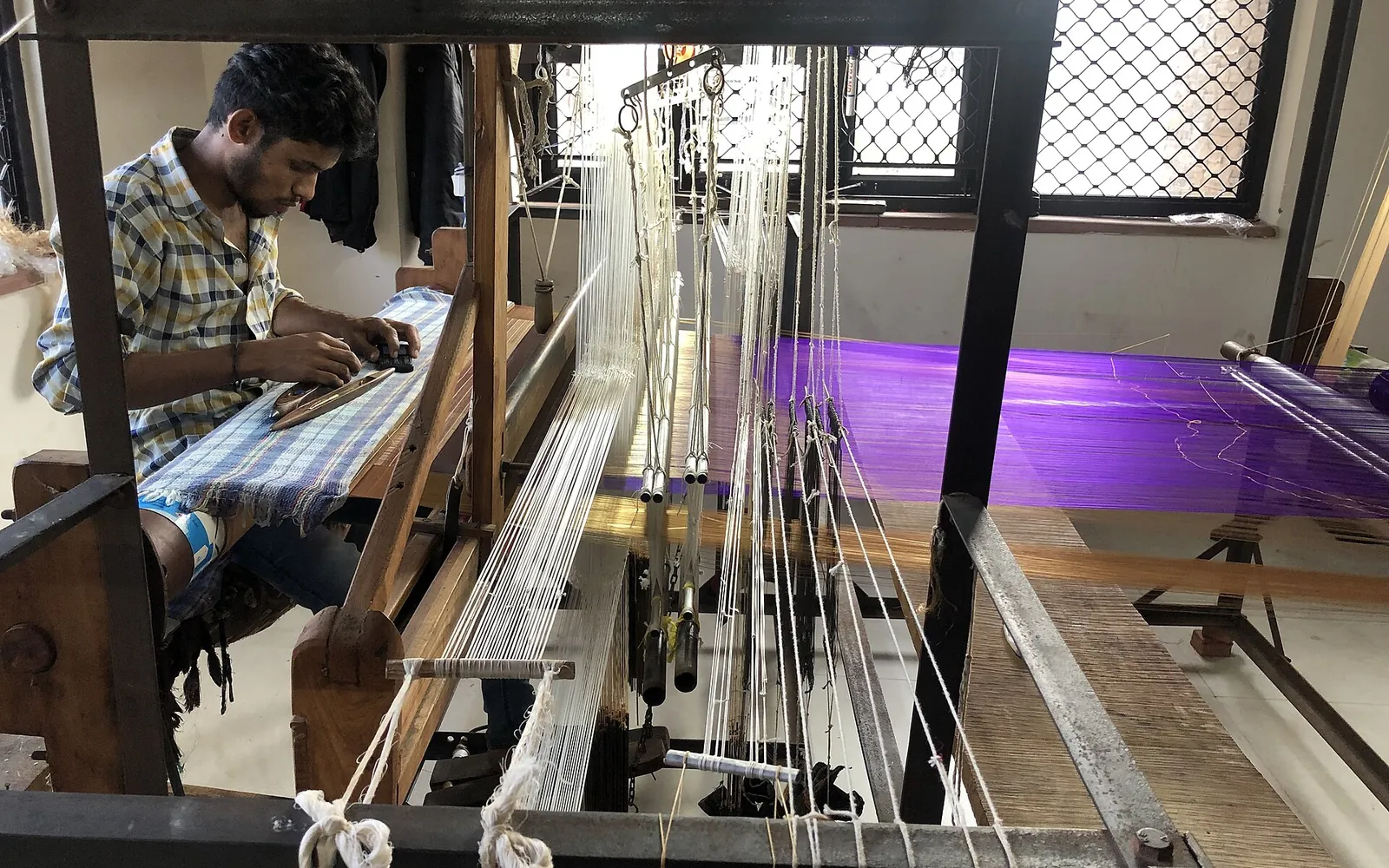
Kota Doria vs Chanderi is a common question for anyone shopping for a light handloom saree in central India. Both are fine, airy fabrics, both mix cotton and silk, both are protected Geographical Indications, and both are heavily copied. Yet they come from different places, are woven differently and look different once you know what to check. This guide explains the real differences, so you can tell them apart in a shop in Kota or anywhere else.
Where each one comes from
Kota Doria is woven in Kaithoon, a weaving town near Kota, and in surrounding villages of the Hadoti region of Rajasthan. Weavers there still use traditional pit looms. The fabric began as Kota Masuriya, a narrow cloth for turbans; our full guide to Kota Doria and the Kaithoon weave explains the two competing accounts of how the weavers came to Kota.
Chanderi comes from Chanderi, a historic town in Ashoknagar district of Madhya Pradesh, on the boundary of the Malwa and Bundelkhand regions. Chanderi sarees are the district’s product under the government’s One District One Product scheme. The town has a long weaving history, and its sarees have been prized for centuries for their fineness.
The two belong to different states and to different weaving traditions.
Kota Doria vs Chanderi at a glance
| Kota Doria | Chanderi | |
|---|---|---|
| Where woven | Kaithoon and villages near Kota, Rajasthan | Chanderi, Ashoknagar district, Madhya Pradesh |
| Signature look | Grid of tiny squares (khat) | Smooth, sheer weave with a soft sheen |
| Classic yarns | Cotton and silk together in an open check | Silk warp with a fine cotton weft; also pure silk and pure cotton |
| Decoration | Plain, printed, embroidered, or zari in checks and border | Zari borders, woven butis in body and pallu |
| Typical feel | Airy, slightly crisp | Fluid, light, gently lustrous |
| GI protection | Yes, plus a registered GI logo | Yes |
The weave: khat versus sheer
The single clearest difference is the structure of the cloth.
Kota Doria’s khat. Hold a Kota Doria up to the light and you see a fine grid of tiny squares, rather like graph paper. These squares, called khat, come from the way the cotton and silk threads are combined in the warp and weft, and they leave the fabric open and light. Silk is added to the cotton (roughly one part silk to four parts cotton is the commonly given blend) to give strength and a slight sheen. The result is an airy, almost transparent fabric that holds its shape.
Chanderi’s sheer weave. Chanderi does not have a check grid. The classic silk-cotton Chanderi uses an un-degummed mulberry silk warp and a very fine cotton weft. Because the silk keeps its natural gum, the fabric is sheer and slightly translucent, with an even surface and a gentle sheen. Chanderi is also made in pure silk and pure cotton.
If you remember one test, remember this: squares mean Kota Doria; a smooth, sheer surface with woven motifs usually means Chanderi.
Decoration and motifs
Chanderi is known for its woven decoration. Gold and silver zari is used in the border as extra-warp patterning and in the pallu and body as extra-weft designs. Small motifs called butis are scattered across the body. Traditional designs include coins, flowers and peacocks, and modern geometric patterns are common too. Weaving is done on pit and frame looms.
Kota Doria started as a simple, unadorned cloth, and plain Doria remains a staple. Today you will also find zari woven into the checks and borders, block-printed and embroidered Doria, and ornate bridal pieces that can take weeks to weave. The khat structure stays the defining feature, whatever is added on top.
How they feel and drape
Kota Doria is very light and slightly crisp, and it stands away from the body a little, which is part of why it feels so cool in the heat. Chanderi is smoother and more fluid, with a soft fall. Both are comfortable in warm weather; zari-heavy Chanderis are generally kept for weddings and festivals, while plain Kota Doria is a classic everyday summer saree in Rajasthan.
GI protection and the problem of copies
Both fabrics are registered Geographical Indications, which legally links the name to the region and its weavers. Kota Doria and Chanderi were registered in the mid-2000s. Kota Doria also has a separately registered GI logo; the IP India registry lists its certificate as dated 4 October 2010. Genuine handloom Kota Doria may carry the GI mark woven into one corner.
Protection has not stopped imitation. Much of the cloth sold as “Kota Doria” is made on power looms outside Hadoti, and power-loom “Chanderi” is common too. These copies are cheaper and more uniform, but they are not the handloom craft the names describe.
How to spot a genuine handloom piece
- Look for small irregularities. Handwoven khat checks and butis are very slightly uneven; machine-made ones are perfectly regular.
- Feel the fabric. Handloom cloth is soft and alive; heavily finished, stiff fabric is a warning sign.
- Check the selvedges and the ends. Neat but not machine-perfect edges suggest a hand loom.
- Ask about the GI mark and look for it on Kota Doria.
- Buy close to the source. In Kota, the weaving town of Kaithoon and established cooperatives are the safest bet; elsewhere, use government handloom emporia or sellers who can tell you which weaver or cluster a piece came from.
We do not quote prices, because they vary hugely with yarn, zari and the hours of weaving involved. A plain handloom piece and a zari bridal saree are different purchases altogether.
Caring for both
Both fabrics are delicate. Silk and zari pieces are best dry-cleaned. Plain cotton Doria and cotton Chanderi can be hand-washed gently in cold water with a mild detergent, without wringing, and dried in the shade. Store them folded in soft cotton, and refold now and then so creases do not weaken the threads.
Seeing the craft in Kota
If you are visiting Kota, a trip to Kaithoon to see Kota Doria being woven is one of the most rewarding things to do beyond the monuments. Combine it with the Garh Palace and the city’s museums, or read what Kota is famous for for the city’s other specialities. If crafts are your interest, the region’s floor painting tradition, Mandana art, and the miniature tradition of the Kota school of painting are worth exploring too.
Verdict
Kota Doria and Chanderi are cousins, not twins. Choose Kota Doria for the airy check, everyday summer comfort and a direct link to Kota’s weavers. Choose Chanderi for a sheer, gently lustrous fabric with woven zari motifs that suits festive occasions. Whichever you pick, buying a genuine handloom piece is what keeps both crafts alive.
Frequently asked questions
What is the main difference between Kota Doria and Chanderi?
The weave. Kota Doria has a distinctive open check of tiny squares called khat, giving a light, airy, slightly crisp fabric. Chanderi has a fine, even, sheer weave with a soft sheen, usually decorated with zari borders and small woven motifs called butis.
Which is better for summer, Kota Doria or Chanderi?
Both are light. Kota Doria's open khat weave makes it especially airy and it is a classic summer fabric in Rajasthan. Chanderi is sheer and light too, but zari-heavy Chanderi saris are usually kept for festive wear. Choose by occasion rather than heat alone.
Is Chanderi silk or cotton?
It is made in three main kinds: pure silk, cotton and silk-cotton. The classic silk-cotton Chanderi uses a silk warp and a fine cotton weft, which gives its sheer, slightly translucent look.
Do Kota Doria and Chanderi have GI tags?
Yes. Both were registered as Geographical Indications in India in the mid-2000s. Kota Doria also has a separately registered GI logo; genuine handloom pieces may carry the GI mark woven into a corner.
How can I tell a handloom piece from a power-loom copy?
Look for slight irregularities in the checks or motifs, a soft hand rather than a stiff finish, and neat but not machine-perfect selvedges. Ask for GI marking or buy from weavers, cooperatives and government handloom outlets.
Sources
Editorial team
The KotaRajasthan.net team writes about the places, history and festivals of Kota and Hadoti, and corrects pages when readers point out changes.