Food and crafts
Mandana Art of Hadoti: Rajasthan's Floor and Wall Painting
Written by Kota Rajasthan Editorial Team · Updated
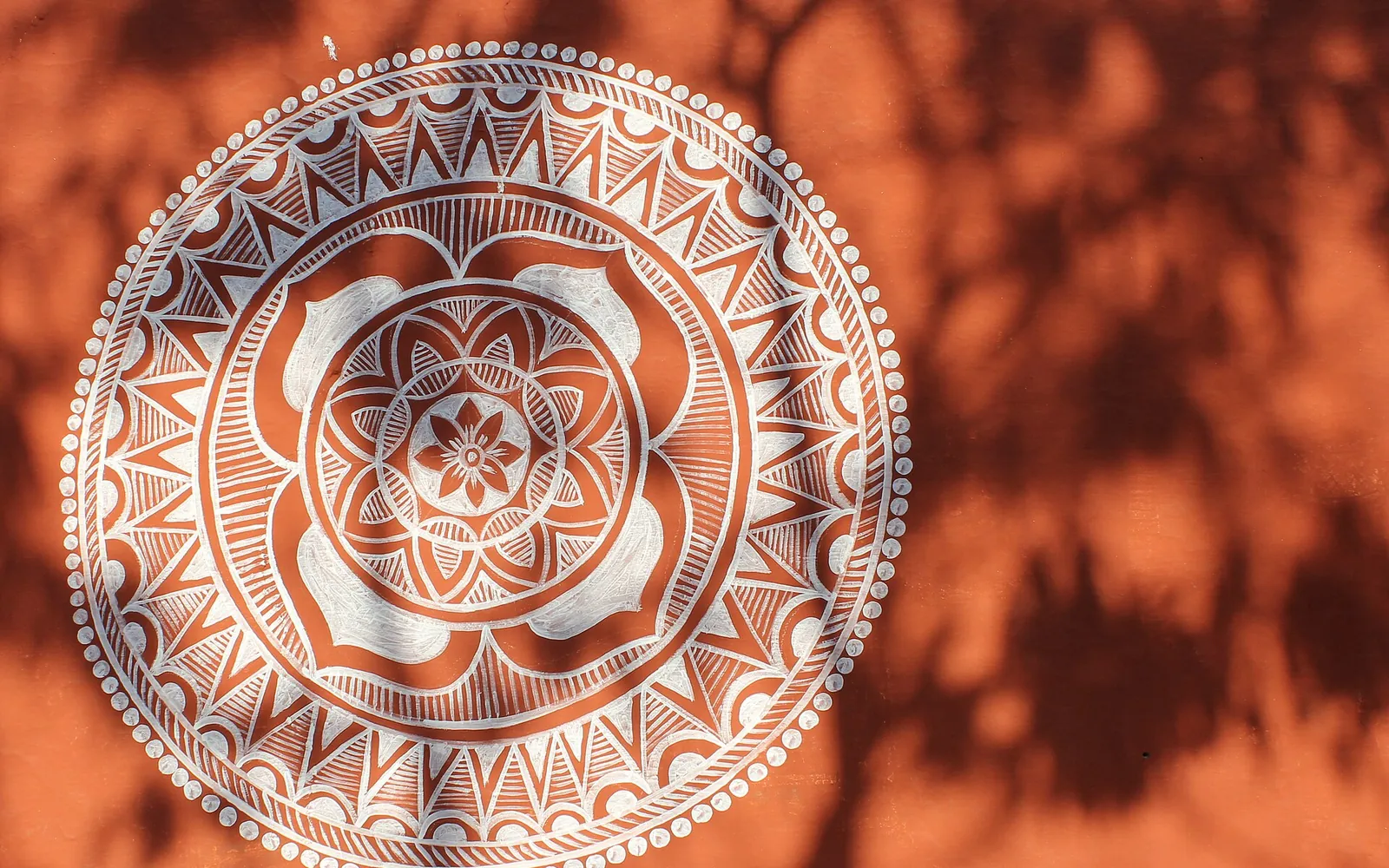
Mandana art is the quiet folk art you may notice on the threshold of a village house in Hadoti: a crisp white pattern, perfectly symmetrical, drawn on a floor or wall washed in red earth. It is one of the oldest living art forms of south-east Rajasthan and neighbouring Malwa, practised mostly by women at home rather than by professional painters. Where the court painters of the Kota school and Bundi school worked for kings, mandana belongs to households, festivals and the rhythm of the farming year. This guide explains what mandana is, how it is made, what the designs mean and how to look at it respectfully.
What mandana is
Mandana refers to wall and floor paintings made in Rajasthan and Madhya Pradesh. They are drawn for three broad reasons: to protect the home and hearth, to welcome the gods into the house, and to mark celebrations on festive and family occasions. The designs are usually placed where they will be seen and walked past: at the entrance, in the courtyard, around the household shrine and near the kitchen hearth.
Although mandana is found across a wide area, it is most closely associated with the Hadoti region. Accounts of the tradition single out Meena women in Hadoti for their skill in producing designs of near-perfect symmetry and accuracy, and the craft is usually passed down from mother to daughter rather than taught formally.
How a mandana is made
The process is simple in materials and demanding in skill.
- Preparing the surface. The floor or wall is plastered with cow dung mixed with rati, a local clay, and red ochre. When dry it gives the warm red-brown ground that makes the white lines stand out.
- Drawing the design. Lime or chalk powder mixed with water is used for the motif. There is no stencil; the painter works freehand, often starting from a central point and building outwards.
- Tools. The traditional tools are a small piece of cotton cloth, a tuft of hair, or a rough brush made by fraying the end of a date-palm stick. Fingers are used for fine dots and edges.
Because the ground is renewed regularly, especially before festivals, a mandana is semi-permanent. Old designs fade or are plastered over and new ones drawn, so the art is constantly being remade.
Motifs and meanings
Mandana designs range from pure geometry to lively figures:
- Geometric and floral patterns, such as concentric circles, squares, stars and lotus forms, often used at thresholds and in courtyards.
- Ganesha, the remover of obstacles, at entrances and for auspicious beginnings.
- Peacocks, birds and tigers, reflecting the animals of the Hadoti countryside.
- Women at work, carrying water or grinding grain, which make many walls read like a picture of village life.
Different designs are associated with particular festivals and household events. Families and villages have their own repertoires, so the same festival may be marked with different mandanas a few kilometres apart. If you want to know what a specific design means, the best source is the woman who drew it.
Mandana and the festival year
Mandana is part of the same cycle of festivals that fills the Hadoti calendar. Houses are cleaned and replastered before major festivals such as Diwali, and that is when fresh designs appear on floors and walls. Smaller household occasions, including weddings and religious observances, also call for new drawings. Festivals such as Kajli Teej in Bundi show the same household culture of decoration and song, and the cool, dry weeks after the monsoon are when houses are most often freshly plastered.
Mandana and India’s other floor arts
Mandana belongs to a wide family of Indian threshold and floor drawings: rangoli in western India, kolam in Tamil Nadu, alpana in Bengal and chowk poorana in Uttar Pradesh. What sets mandana apart is its palette and its permanence. Rangoli and kolam are usually made with loose coloured powder or rice flour and swept away within a day or two, while a mandana is painted in lime onto a freshly plastered red ground and can last weeks or months until the surface is renewed.
A tradition under pressure
Like many domestic arts, mandana has become less visible. Cement floors, painted walls and changing tastes leave less space for clay-and-lime drawings, and some describe the practice as outdated. At the same time there have been efforts to keep it alive. Koshalya Devi from Baran, for example, has worked to preserve the traditional white-on-red mandana, painting more than 100 designs in the style on hardboard with oil paints and teaching the form to people outside the region. Crafts villages and cultural centres also paint mandanas on their walls as demonstrations, as in the photograph on this page from Shilpgram near Udaipur.
How to see mandana respectfully
- It is in homes, not museums. Most mandana is found on private houses in villages around Kota, Bundi, Baran and Jhalawar. Admire it from the road, and ask before photographing a house or the people in it.
- Go at festival time. The weeks before Diwali are the best time to see fresh designs.
- Buy from makers. If you are offered mandana on paper, cloth or board, buying directly from the artist keeps the money in the tradition.
- Do not step on it. A floor mandana is part of the household’s worship; walk around it.
Mandana and Hadoti’s other arts
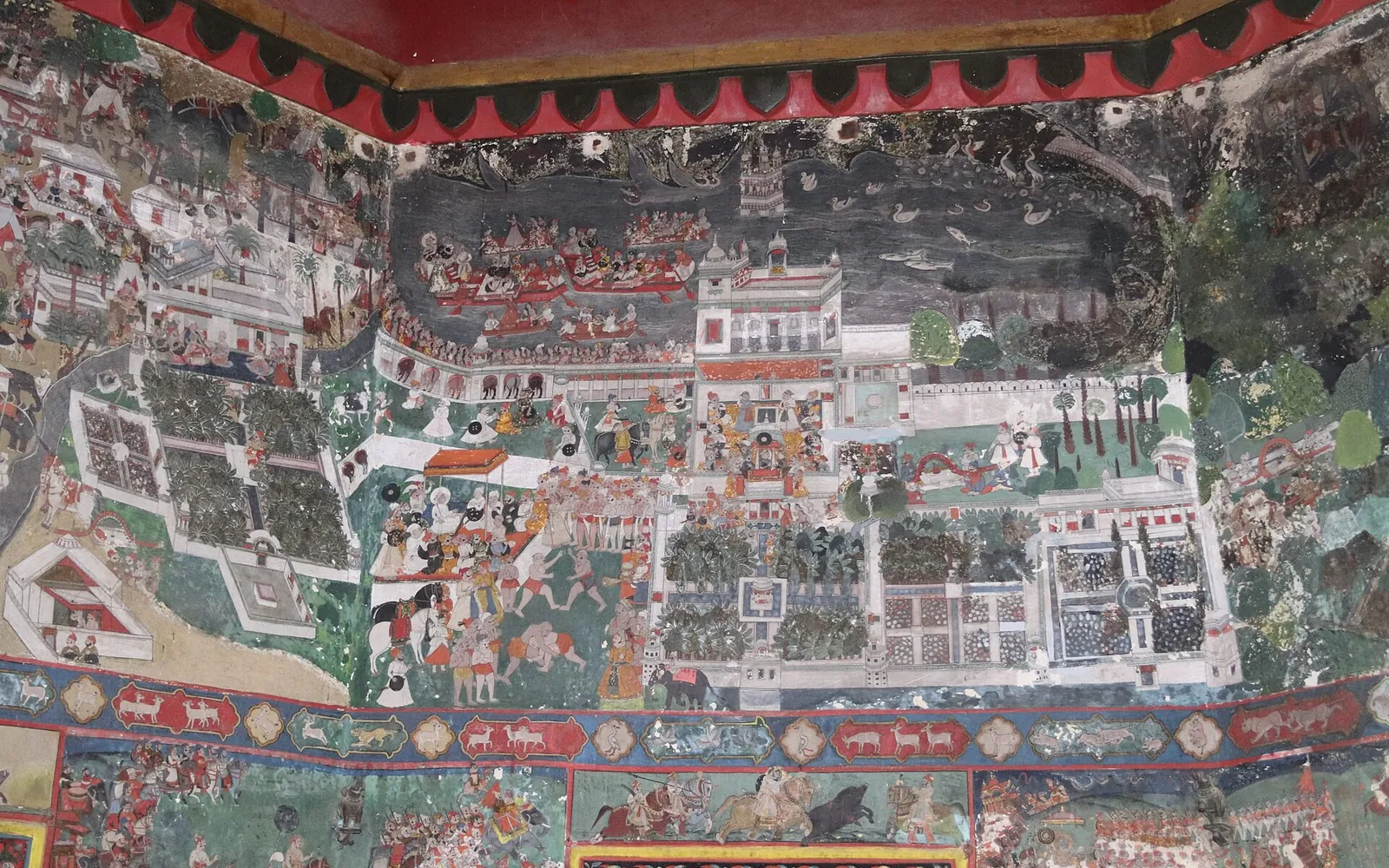
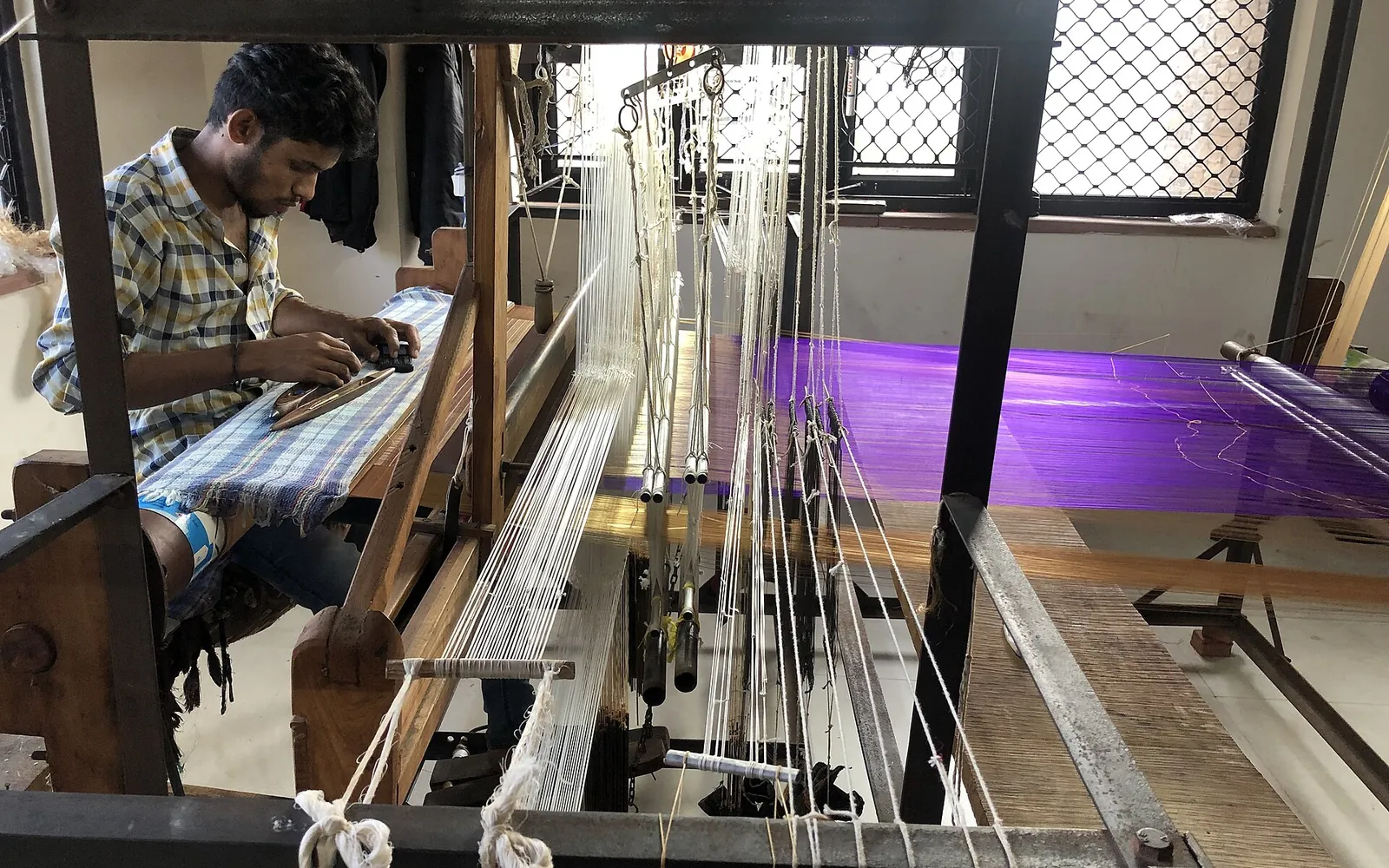
Mandana sits alongside other crafts that make the region distinctive: the fine Kota Doria weave of Kaithoon, the court miniatures of Kota and Bundi, and the painted walls of the palaces. For the people who keep many of these traditions alive in Baran district, see our page on the Sahariya tribe, and for festivals where village art is at its best, see the Hadoti festival guide.
Frequently asked questions
What is mandana art?
Mandana is a domestic folk art of Rajasthan and Madhya Pradesh in which women draw white geometric and figurative designs on floors and walls that have been plastered with a red earth and cow-dung mixture.
Where is mandana art practised?
Across parts of Rajasthan and Madhya Pradesh, but it is most closely associated with the Hadoti region of south-east Rajasthan, and in particular with Meena women there.
What materials are used in mandana?
The base is cow dung mixed with rati, a local clay, and red ochre. The motifs are drawn with lime or chalk powder, using a piece of cotton, a tuft of hair or a rough brush made from a date stick.
What do mandana designs show?
Geometric and floral patterns, and figures such as Ganesha, peacocks, tigers and women at work. Different designs are associated with different festivals and household occasions.
Is mandana the same as rangoli?
They are related threshold and floor arts, but mandana is drawn on a prepared red earth surface with white lime and is often semi-permanent on walls, while rangoli usually uses loose coloured powders on a floor for a single occasion.
Sources
Editorial team
The KotaRajasthan.net team writes about the places, history and festivals of Kota and Hadoti, and corrects pages when readers point out changes.