Festivals
Kajli Teej in Bundi: Dates, Procession, Fair and Tips
Written by Kota Rajasthan Editorial Team · Updated
Kajli Teej in Bundi is the town’s great monsoon festival. When the rains have filled Nawal Sagar and turned the Aravalli hills green, the women of Bundi put on their brightest clothes, new bangles and fresh henna, the goddess is carried through the bazaars, and a fair fills the town with stalls. Rajasthan Tourism describes Kajli Teej as “unique to the city of Bundi” and lists it each year in its fairs and festivals calendar. In 2026 it was listed for 31 August to 1 September. This guide explains what the festival is, when it falls, what you will see and how to plan a monsoon trip from Kota, 36 km away.
What is Kajli Teej?
Teej means “third”: it is the name for festivals that fall on the third day of a lunar fortnight. Three Teej festivals are dedicated to the goddess Parvati and Shiva, and all are mainly celebrated by women:
| Festival | When it falls | Also called |
|---|---|---|
| Hariyali Teej | Third day of the bright half of Shravan | Chhoti Teej in Rajasthan |
| Kajli (Kajari) Teej | Third day of the dark half of Bhadrapada | Badi Teej in Rajasthan |
| Hartalika Teej | Third day of the bright half of Bhadrapada |
Kajli Teej therefore comes about two weeks after Hariyali Teej, in the heart of the monsoon. Rajasthan Tourism describes it as a celebration in which the goddess Uma (another name for Parvati) is worshipped by “seekers of marital bliss and love”. Married women pray for their husbands and families; unmarried girls pray for a good match.
How Bundi celebrates
Rajasthan Tourism calls Bundi’s Kajli Teej a “dazzlingly theatrical and lively event” lasting two days. The main elements are:
- Dressing up. Women wear colourful traditional costumes, new sets of bangles and henna designs on their hands. Green, red and yellow are the colours of the season.
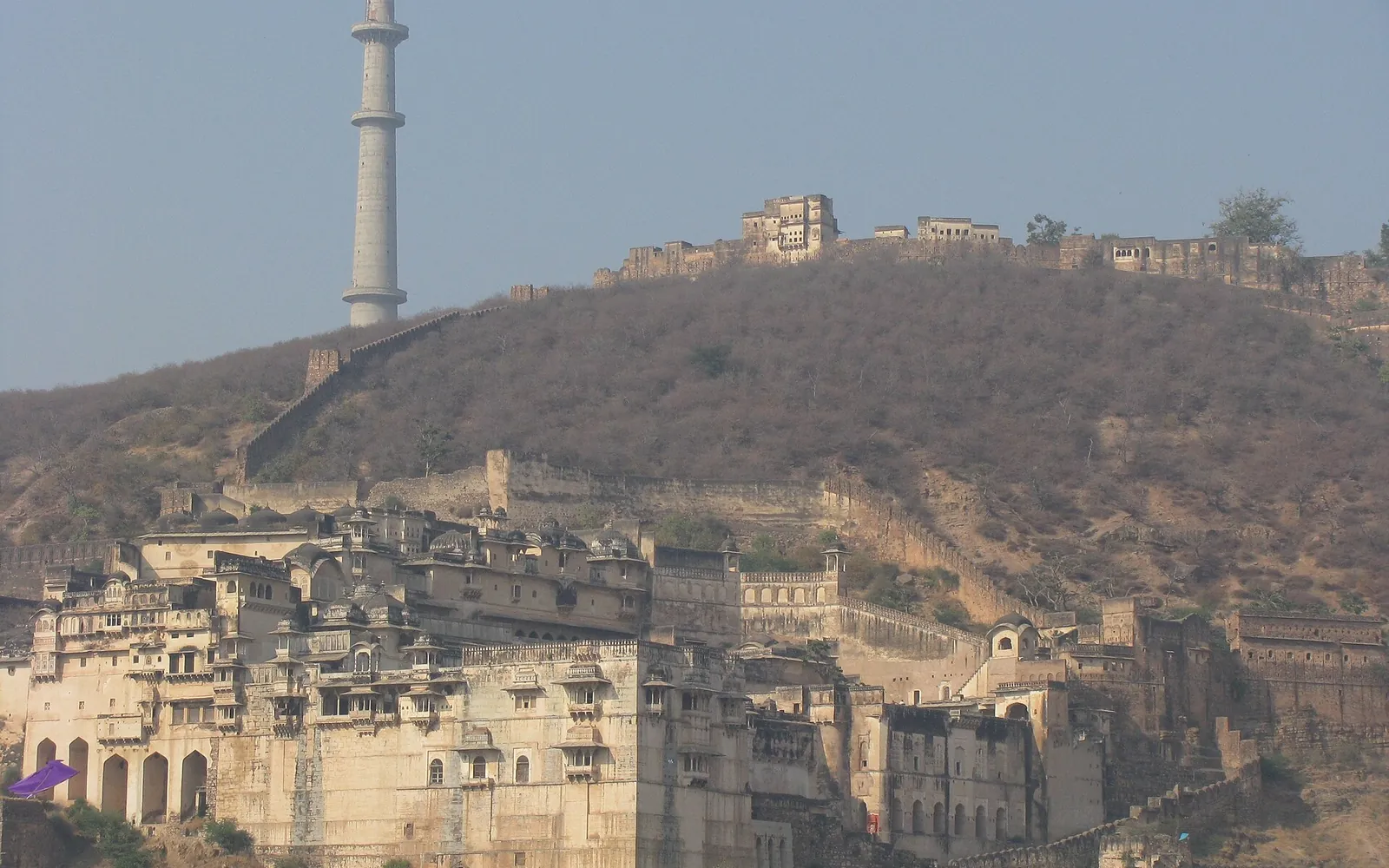
- The procession. Wikipedia’s account of Teej notes that in Jaipur and Bundi, processions associated with the festival traditionally pass through the main bazaars, with an image of Parvati carried in a palanquin. In Bundi the old town’s narrow streets below the palace make it a striking sight.
- The fair. A local fair, popular with people from the villages around Bundi, sells handicrafts: Rajasthan Tourism mentions the traditional katar (a push dagger), paintings, bangles, rural crafts and festival food.
- Music and swings. As at other Teej festivals in Rajasthan, women sing seasonal songs, and swings are hung from trees and courtyards.
Customs of the day
Some Teej customs are shared across Rajasthan and are worth knowing before you go:
- Sindhara. Parents send gifts of clothes, bangles, henna and sweets to their married daughters. Traditionally married women try to visit their parents’ homes for Teej.
- Fasting. Many women who keep the Kajari Teej fast go without food and water during the day. Wikipedia notes that the fast is broken by eating sattu (a preparation of roasted gram or grain flour) and that prayers are also offered to the moon and to the neem tree.
- Ghevar. The honeycomb-like sweet is the classic gift and treat of the Teej season across Rajasthan.
- Songs of separation. Teej songs often speak of a woman missing her husband or her parents’ home, which gives the festival a tender, nostalgic mood beneath the colour.
Kajli Teej dates
Because it follows the lunar calendar, the date moves each year, usually falling in August and occasionally in early September. Rajasthan Tourism publishes the Bundi dates in its annual fairs calendar; for 2026 it listed 31 August-1 September. For 2027 and later years, check that calendar or a panchang (Hindu almanac) once it is published. Our festivals in Kota and Hadoti page keeps a year-round list.
Bundi in the monsoon
Kajli Teej is the best excuse to see Bundi in its wettest, greenest season:
- Stepwells full of water. The stepwells of Bundi, including Raniji ki Baori, look as they were meant to when the water rises.
- Lakes. Nawal Sagar and Jait Sagar fill up; Sukh Mahal on Jait Sagar is lovely after rain.
- Waterfalls. Bhimlat, about 35 km from Bundi according to Rajasthan Tourism, runs strongly in a good monsoon, as does the gorge at Rameshwar Mahadev.
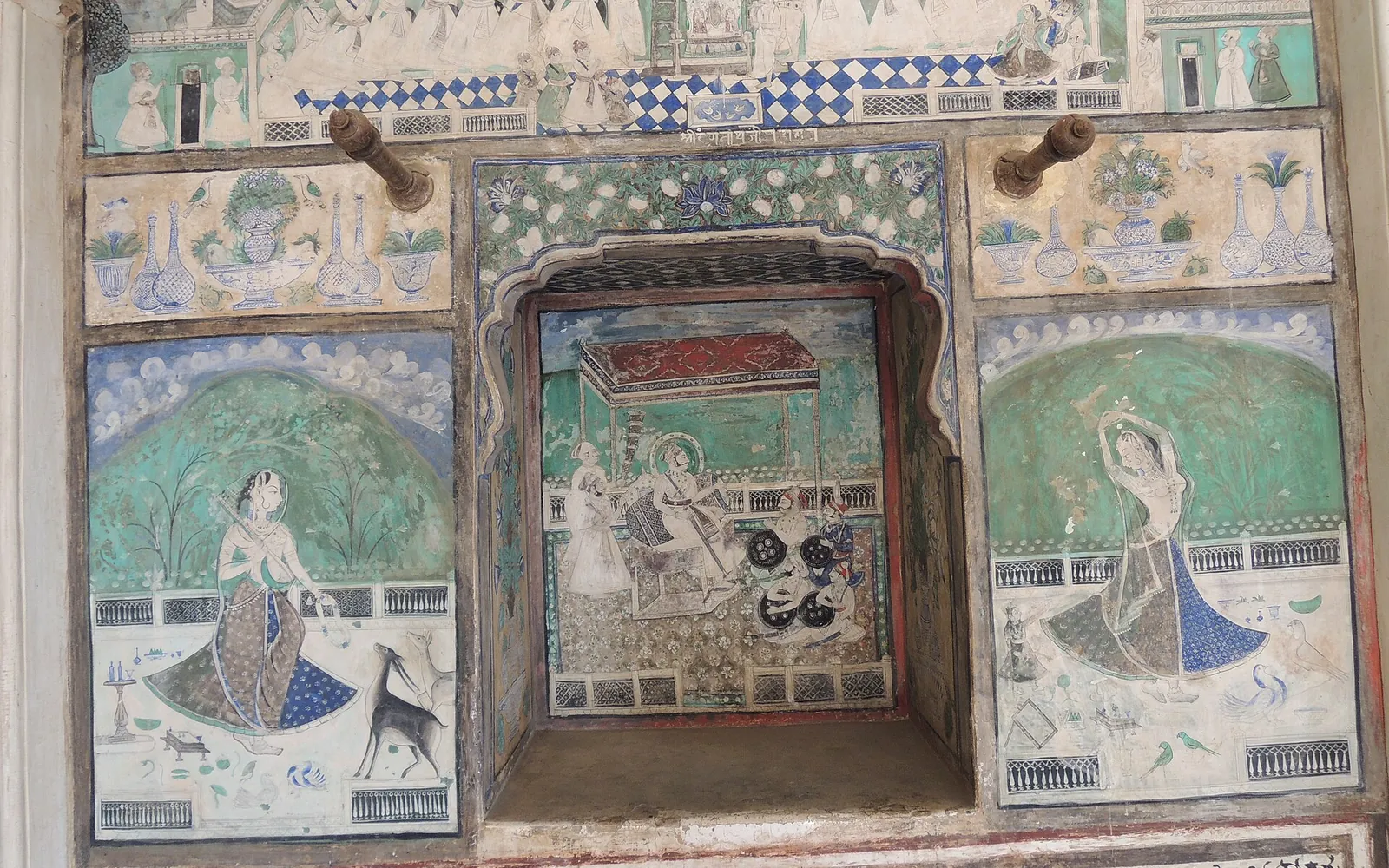
- The Chitrashala. On a rainy afternoon, the painted gallery of the palace is the perfect place to be; see the Bundi school of painting.
Teej elsewhere in Hadoti
Teej is celebrated in homes across Kota, Baran and Jhalawar too, with women’s gatherings, swings and ghevar from the sweet shops, but the public spectacle of Kajli Teej belongs to Bundi. If you are in Kota at Hariyali Teej, a fortnight earlier, look out for women dressed in green and for swings in temple courtyards and parks.
Practical tips
- Book ahead. Bundi’s guesthouses are small. Kota, 36 km away, has more choice if Bundi is full.
- Arrive early for the procession and stand where you can step back; streets are narrow and crowds dense.
- Ask before photographing women, especially during worship. Many will happily agree; some will not.
- Pack for rain. Waterproof shoes with grip matter more than an umbrella on Bundi’s stone lanes and steps.
- Check road conditions. Heavy rain can cause local flooding and causeway closures, particularly on smaller roads to waterfalls.
- Respect the fast. Many women will not be eating or drinking during the day; avoid offering food to people you meet.
Getting there from Kota
Bundi is about 36 km from Kota by road, under an hour by car or taxi, with frequent buses. During the monsoon allow extra time. If you can stay only one season, November brings Bundi Utsav; if you want the monsoon, Kajli Teej is the time. Read the history of Bundi before you go to make sense of the palace and town.
Frequently asked questions
When is Kajli Teej in Bundi?
On the third day of the dark fortnight of Bhadrapada, usually in August, sometimes early September. Rajasthan Tourism's 2026 calendar listed Kajli Teej in Bundi for 31 August to 1 September 2026. Check the next year's calendar before planning.
What is the difference between Hariyali Teej and Kajli Teej?
Hariyali Teej falls in the bright half of Shravan; Kajli or Kajari Teej comes about two weeks later, in the dark half of Bhadrapada. In Rajasthan Hariyali Teej is sometimes called Chhoti (small) Teej and Kajli Teej Badi (big) Teej.
Which goddess is worshipped on Kajli Teej?
Parvati, also called Uma or Teej Mata. Women pray for a happy married life, and unmarried girls for a good husband.
Is there a fair at Kajli Teej in Bundi?
Yes. Rajasthan Tourism describes a local fair, popular with people from the villages around Bundi, selling handicrafts such as the traditional katar dagger, paintings, bangles and food.
Is the monsoon a good time to visit Bundi?
It can be beautiful: the lakes and stepwells fill and the hills turn green. Expect heavy showers, slippery steps and occasional road closures near rivers, and keep plans flexible.
Sources
Editorial team
The KotaRajasthan.net team writes about the places, history and festivals of Kota and Hadoti, and corrects pages when readers point out changes.