Hadoti day trips
Raniji ki Baori, Bundi: The Queen's Stepwell of 1699
Written by Kota Rajasthan Editorial Team · Updated
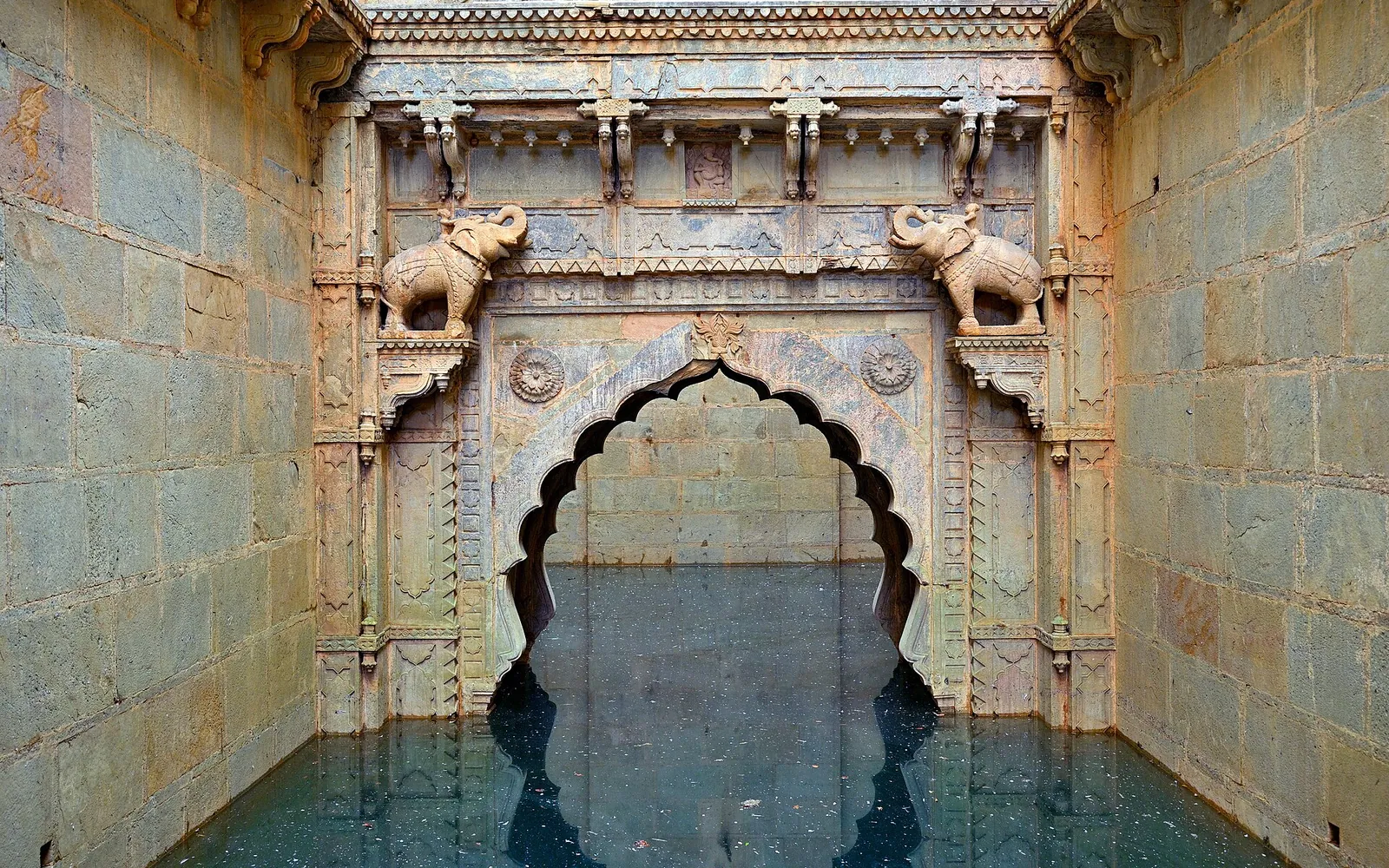
Bundi is often called the City of Stepwells, and Raniji ki Baori is its undisputed masterpiece. Descending some 46 metres into the earth, this multi-storeyed baori is a marvel of both engineering and art, its narrowing flights of steps framed by soaring pointed arches, ornate pillars and delicately carved brackets.
As you climb down into the cool, shadowy depths, the temperature drops noticeably and the noise of the town fades away. Carved images of Hindu deities, including the ten avatars of Vishnu, decorate the niches and gateways, turning a simple water source into a sacred, temple-like space. The play of light through the arches makes it an irresistible subject for photographers.
It sits right in the heart of town, making it an easy add-on to a day trip from Kota.
History of Raniji ki Baori
Raniji ki Baori was built in 1699 CE by Rani Nathavati Ji, a queen of the Bundi ruler Rao Raja Anirudh Singh. Rajasthan Tourism calls her his younger queen; because Anirudh Singh died in 1696, the work was completed in the reign of their son, Rao Raja Budh Singh. Stepwells like this were vital public works in arid Rajasthan, providing year-round water while also serving as cool retreats and places of social and religious gathering.
Bundi once had dozens of such baoris, but Raniji ki Baori is the largest and most richly decorated. It stands as a testament to the region’s remarkable tradition of water architecture, which combined practical necessity with extraordinary craftsmanship.
Architecture and carvings
The baori is entered through a narrow opening marked by pillars, under a high arched gate. From there the steps descend in stages, past galleries with ogee (S-curved) arches and carved brackets, with small places of worship on the landings. Rajasthan Tourism draws attention to the carvings of Gajraj, elephants with their trunks turned inwards as if they had just drunk from the well, and published descriptions note pairs of stone elephants facing each other at the corners. Stepwells like this were also social spaces: people met, rested and prayed here as well as drawing water.
Raniji ki Baori is the showpiece of a whole network of water structures. Our guide to the stepwells of Bundi covers the huge Dabhai Kund and the twin Nagar Sagar Kunds a short walk away, and the history of Bundi explains the reigns in which they were built.
What to see at Raniji ki Baori
- 46-metre deep multi-storey stepwell
- Carved pointed arches and pillars
- Sculpted images of Vishnu’s avatars
- Beautiful light and shadow play
- Central old-town location
Visiting Raniji ki Baori: practical details
| Detail | Information |
|---|---|
| Where | Hadoti Region, Bundi district |
| Distance from Kota | About 36 km |
| Best time to visit | October to March |
| Timings | Approximately 8:00 AM to 6:00 PM |
| Entry | Nominal / free for Indians; small fee for foreigners |
| Getting there | Drive 36 km from Kota to Bundi; the baori is in the town centre near the main bazaar, walkable from the palace. |
Distances are approximate road distances. Timings and entry charges change from season to season, so confirm them locally or with the district tourist office before you set out.
Tips for your visit
- The steps are steep and worn smooth; wear shoes with grip and hold the walls where you can.
- Morning light reaches furthest down the shaft and makes the best photographs.
- Do not go into the water at the bottom, and keep children close.
- Check opening hours and any ticket locally, as arrangements change.
Combine Raniji ki Baori with nearby places
- Bundi Palace: A dramatic hillside palace celebrated for the Chitrashala, whose walls are covered in some of Rajasthan’s finest miniature murals.
- Nawal Sagar Lake: A large artificial lake in the middle of Bundi, famous for its perfect reflections of the Garh Palace and Taragarh Fort.
- Chaurasi Khambon ki Chhatri: A striking two-storey royal cenotaph supported by 84 carved pillars, set in a garden on the edge of Bundi.
Frequently asked questions
How do I get to Raniji ki Baori from Kota?
Drive 36 km from Kota to Bundi; the baori is in the town centre near the main bazaar, walkable from the palace.
When is the best time to visit Raniji ki Baori?
October to March.
What are the timings and entry charges for Raniji ki Baori?
Timings: Approximately 8:00 AM to 6:00 PM. Entry: Nominal / free for Indians; small fee for foreigners. Both change, so check locally before you go.
What is Raniji ki Baori known for?
India's most ornate stepwell architecture.
Who built Raniji ki Baori?
Rani Nathavati, a queen of Rao Raja Anirudh Singh of Bundi, in 1699. Anirudh Singh died in 1696, so the stepwell was finished during the reign of their son Budh Singh.
How deep is Raniji ki Baori?
About 46 metres, according to the published descriptions of the stepwell.
Sources
Editorial team
The KotaRajasthan.net team writes about the places, history and festivals of Kota and Hadoti, and corrects pages when readers point out changes.