History and people
History of Bundi: The Hada Kingdom from 1241 to 1948
Written by Kota Rajasthan Editorial Team · Updated
The history of Bundi is the history of the Hada Chauhans, the Rajput family that gave the Hadoti region its name. From a hill stronghold taken in the 13th century they built a small, proud state that survived the Delhi sultans, the Mughals, the Marathas and the British, painted its palace walls with some of the finest murals in India, and filled its streets with stepwells. Kota, now the bigger city, began as a branch of Bundi. This guide follows the story from Rao Deva to the merger of 1948 and points you to the places where you can still see it, 36 km from Kota.
Before the Hadas
The country around Bundi was inhabited long before any Rajput dynasty: Stone Age artefacts have been found near the town. In the early 13th century the area was held by Meena and Bhil chiefs. Tradition links the name Bundi to a Meena chief called Bunda; in the 1880s Kipling still called the narrow valley at the head of the town the “Banda Gorge”.
Rao Deva and the first Hada capital (1241)
The Hadas were a branch of the Chauhans, the clan that had ruled Ajmer and Nadol. After the collapse of Chauhan power at the end of the 12th century, the Hada branch moved south-east. According to the standard histories, Rao Deva (Rao Devda) took Bundi from the Meenas in 1241 (some accounts say 1242), made it his capital and called the surrounding country Haravati, the land of the Hadas.
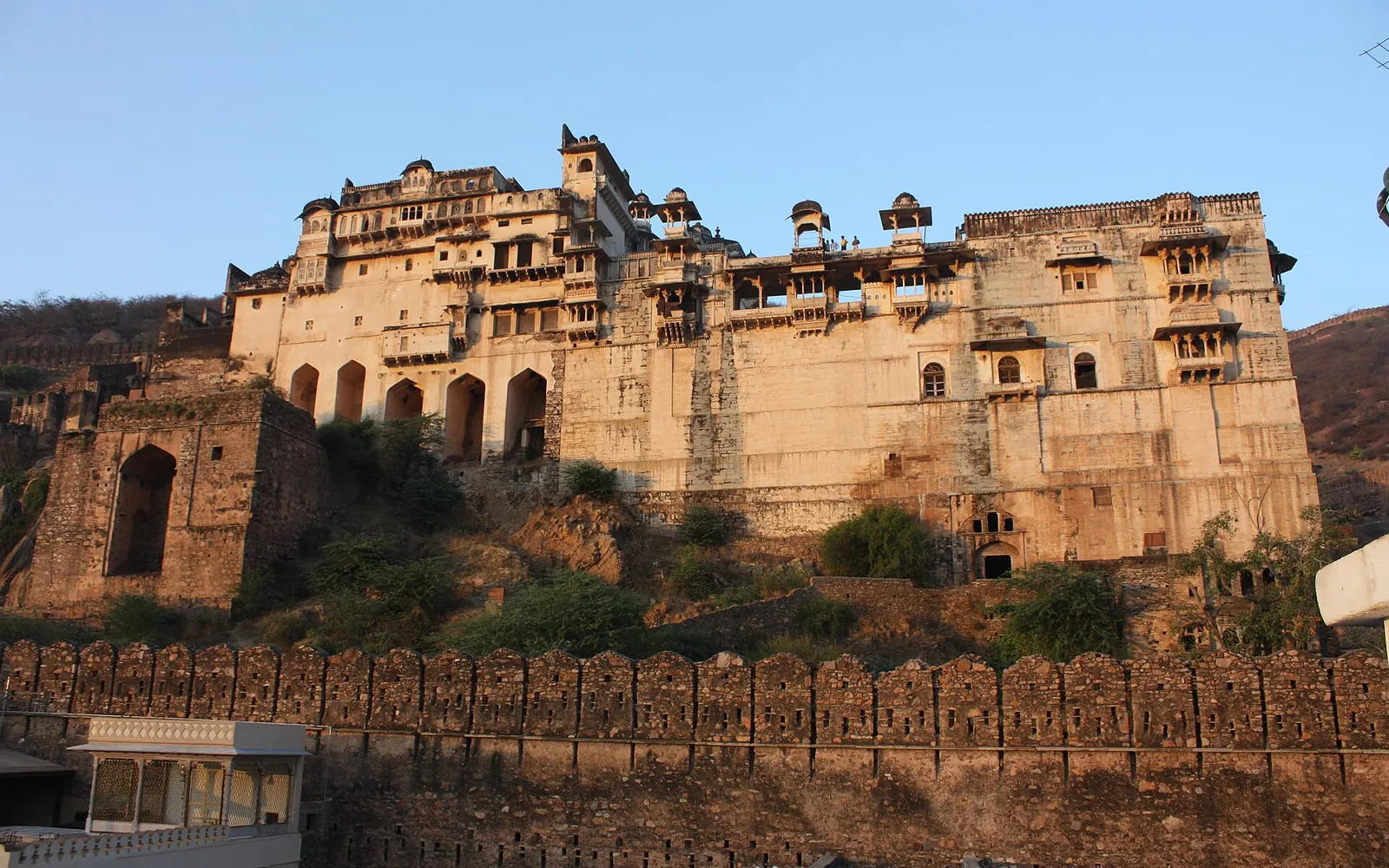
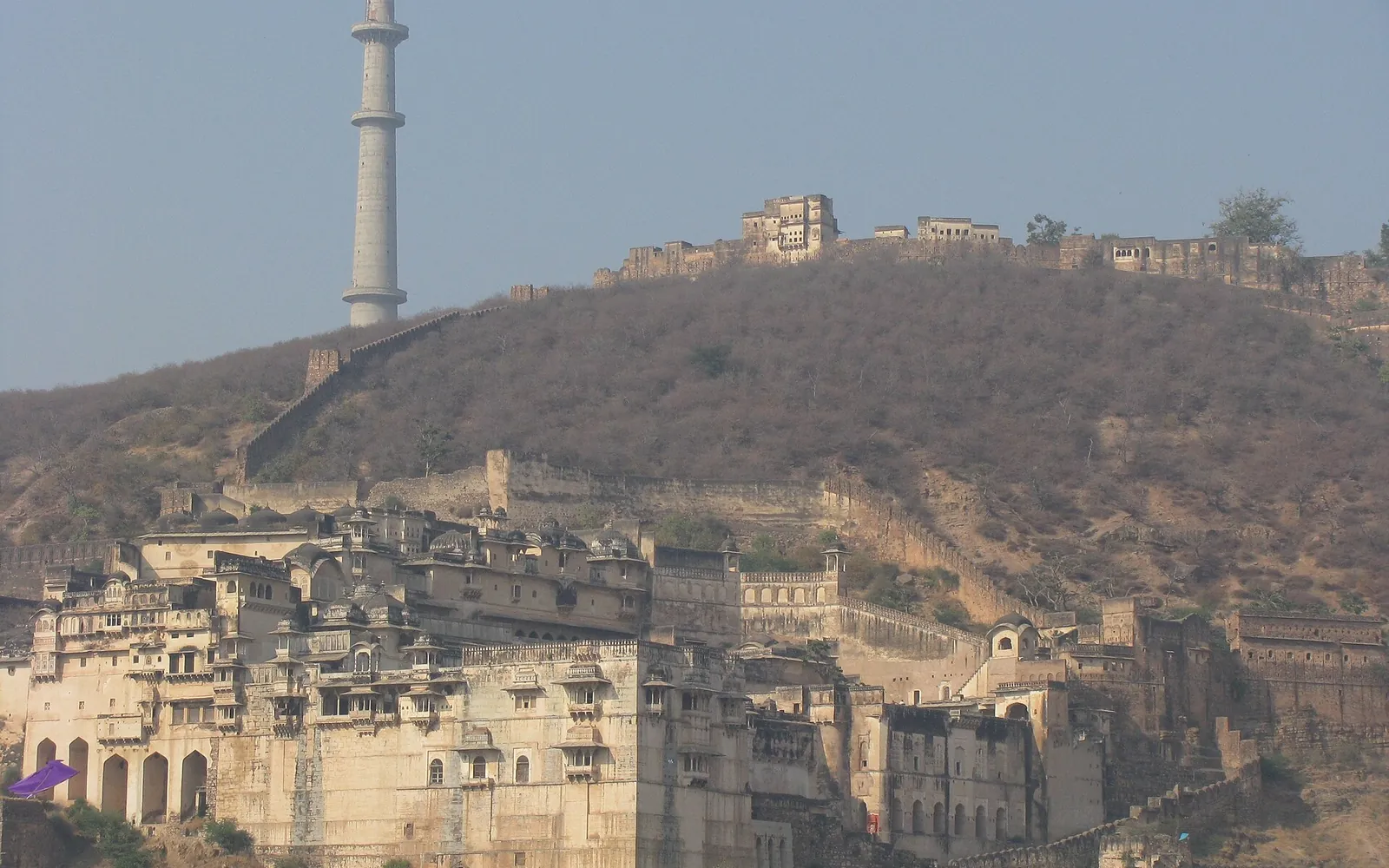
The great fort above the town, Taragarh, the Star Fort, belongs to the following century. Accounts credit Rao Raja Bar Singh with building it in 1354, and later rulers added palaces, water tanks and walls. For two centuries the Hadas of Bundi were often vassals of the Sisodias of Mewar, and the state had to fight hard to keep its independence.
The Mughal settlement (1568-1569)
The turning point came under Rao Surjan Singh, who held the fortress of Ranthambore. In 1568 Akbar besieged it; in 1569 Surjan surrendered the fort and came to terms. The settlement left Bundi with considerable autonomy, and Akbar granted Surjan the title of Rao Raja. Accounts of the treaty say it included concessions to Hada pride, such as freedom from certain obligations at court. From then on, Bundi’s rulers served as Mughal commanders and drew wealth and prestige from imperial service. The fort is now inside Ranthambore National Park, an easy trip from Kota.
Ratan Singh, Chhatar Sal and the birth of Kota
Rao Ratan Singh (1608-1632) served Jahangir and is credited with building the palace below Taragarh, using the hard local stone. He granted the Kota territory to his younger son Madho Singh, and Kota became a separate state, usually dated to 1631. Our list of the rulers of Kota follows that branch.
His grandson Rao Chhatar Sal (1632-1658) was one of the most trusted Rajput commanders of Shah Jahan and governor of Delhi under Dara Shikoh. He built the Keshav Rai temple at Keshoraipatan and the Chhatra Mahal in the palace. In 1658, in the war of succession between Shah Jahan’s sons, he died fighting for Dara at Samugarh, with his son Bharat Singh. The same war cost the Kota branch its ruler and his brothers at Dharmat: see the battle of Dharmat.
The golden age of building and painting
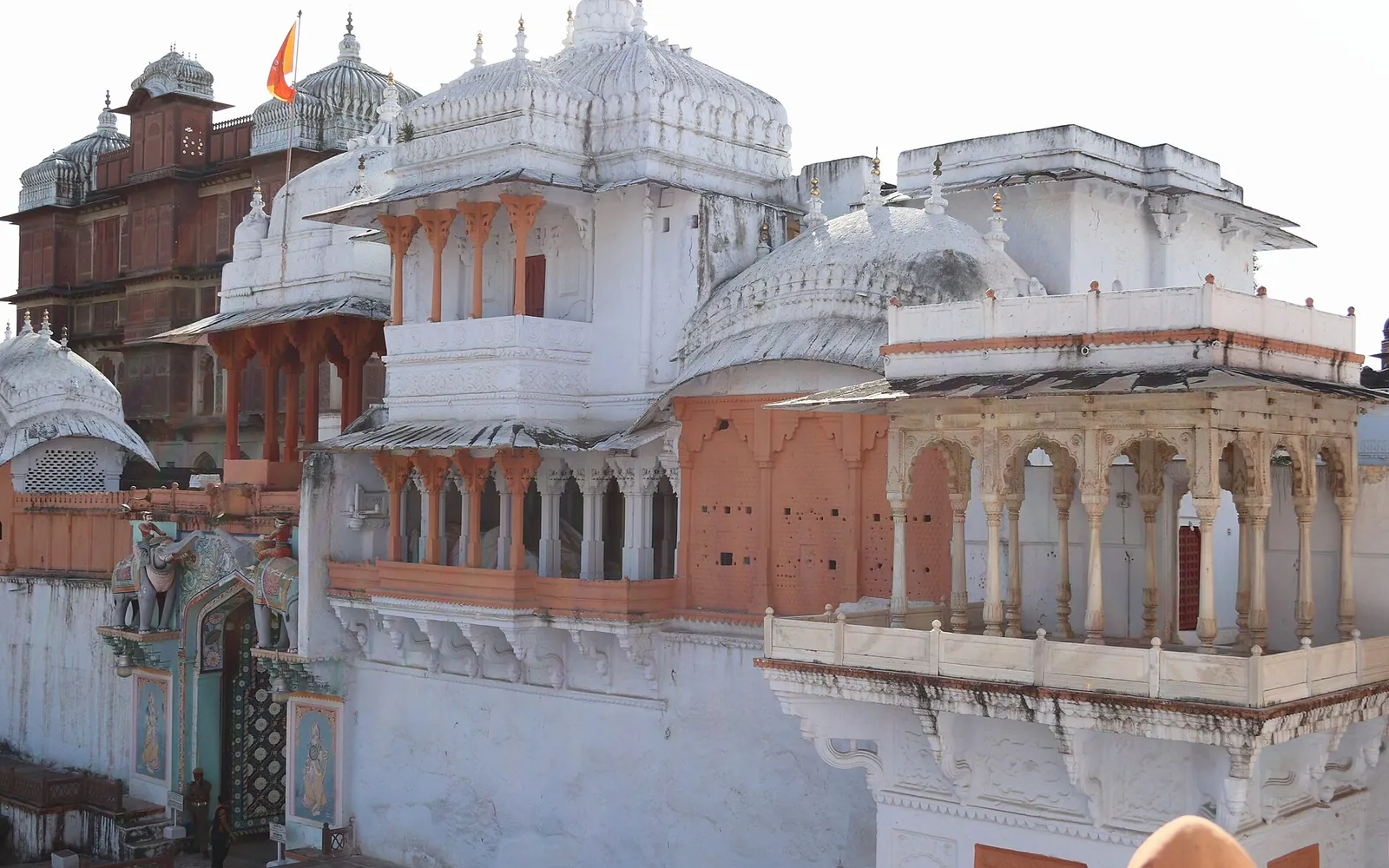
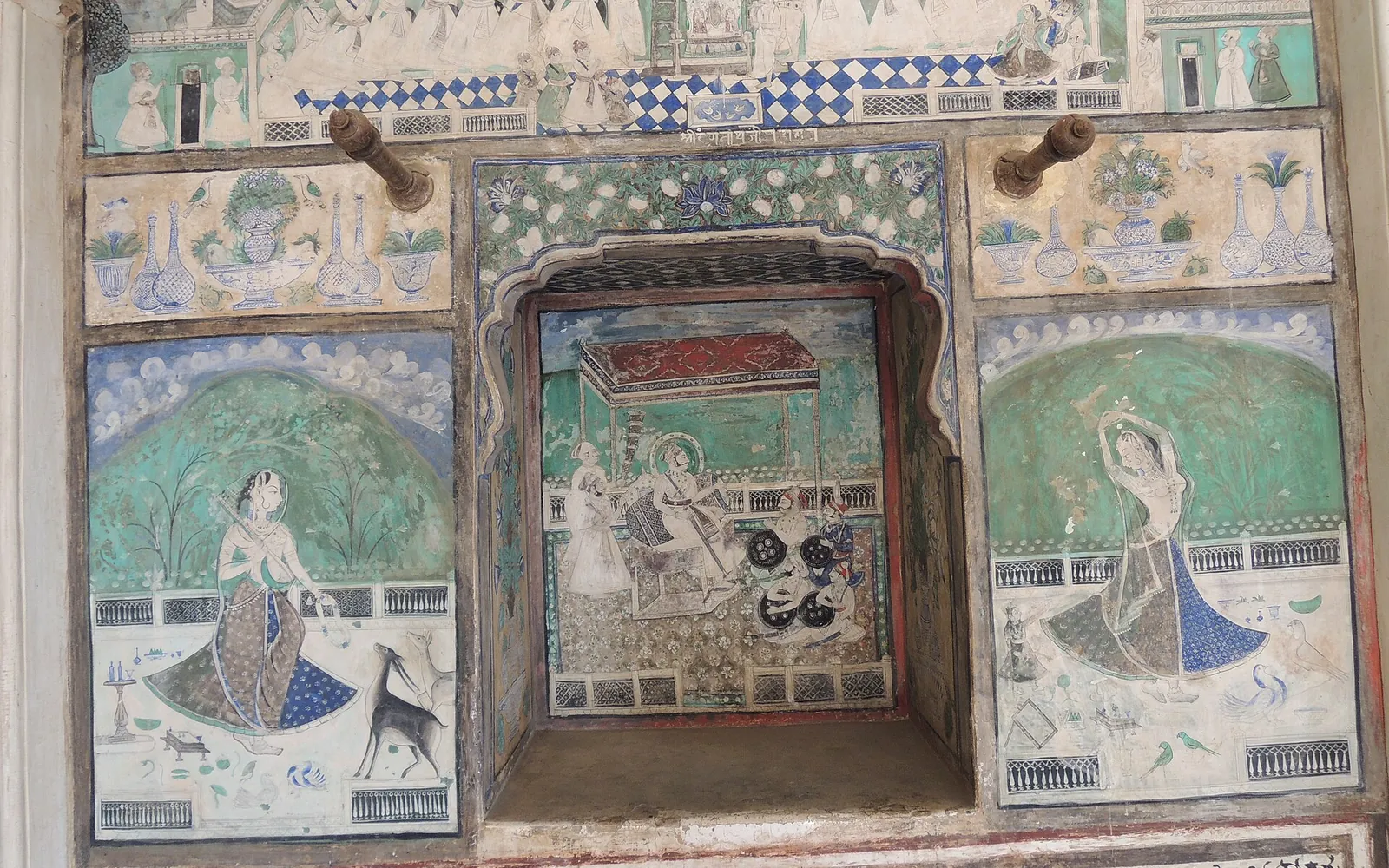
The late 17th and 18th centuries gave Bundi most of what visitors see today. Rao Raja Anirudh Singh (1682-1696) is remembered for the 84-pillared cenotaph built for his wet nurse, Deva, and his queen Nathavati built Raniji ki Baori in 1699. Budh Singh received the title Maharao Raja from the Mughal emperor Bahadur Shah I in 1707, a title his successors kept. The Chitrashala, the painted gallery of the palace, was created in the reign of Umed Singh in the mid-18th century and is the finest surviving example of the Bundi school of painting. Later, Sukh Mahal on Jait Sagar was built in 1776 during the reign of Rao Raja Vishnu (Bishan) Singh.
Marathas and the British (1804-1818)
The 18th century brought Maratha raids and heavy tributes. In 1804 Bundi’s ruler Bishan Singh helped the British commander Colonel Monson during his retreat from the Maratha chief Holkar, and the state paid for it with years of reprisals. After the Third Anglo-Maratha War, Bundi signed a treaty with the British East India Company on 10 February 1818, accepting British protection.
Ram Singh came to the throne as a boy in 1821; the British agent James Tod took part in his installation. He ruled for 68 years, until 1889, and was known as a conservative ruler who encouraged Sanskrit learning. It was in his reign that Kipling visited Bundi and described its palace. His successor Raghubir Singh (1889-1927) faced two terrible famines; the state’s population fell from about 258,000 to 171,000 by 1901 through death and emigration.
Merger and modern Bundi
The last rulers were Ishwari Singh (1927-1945) and Bahadur Singh, who won the Military Cross in Burma during the Second World War before succeeding in 1945. On 25 March 1948 Bundi joined Kota, Jhalawar and other south-eastern states in the Rajasthan Union, the first stage of the union that became the state of Rajasthan. Some sources give 1949 for Bundi’s final accession, because the union was enlarged in stages.
Today Bundi is a district headquarters with about a hundred thousand people. Its isolation, which Kipling grumbled about, is what preserved it: the old town, palace and stepwells were never swallowed by industry the way central Kota was.
Where to see Bundi’s history
- Bundi Palace and the Chitrashala, then Taragarh above it.
- The stepwells: Raniji ki Baori, Dabhai Kund and Nagar Sagar Kund (see the stepwells of Bundi).
- Sukh Mahal and the Kshar Bagh cenotaphs of the royal family (see Bundi’s cenotaphs).
- Nawal Sagar in the centre of town.
Our weekend in Bundi guide turns these into a two-day route from Kota, and Bundi Utsav each November is the town’s own celebration of this heritage.
Frequently asked questions
Who founded Bundi?
The Hada Chauhan chief Rao Deva (also written Rao Devda) took Bundi in 1241, according to most histories, and made it his capital. The town's name is traditionally linked to an earlier chief named Bunda Meena.
How old is Bundi?
As the Hada capital it dates from the 13th century. People lived in the area much earlier: Stone Age artefacts have been found near Bundi.
When did Kota separate from Bundi?
Kota was given to Madho Singh, younger son of Rao Ratan Singh of Bundi, in the early 17th century. Most sources date the separate state to 1631; Rajasthan Tourism's Bundi page gives 1624.
Who was the last ruler of Bundi?
Maharao Raja Bahadur Singh, who succeeded in 1945. Bundi joined the Rajasthan Union in March 1948.
Why is Bundi called the city of stepwells?
Its rulers, queens and nobles built dozens of stepwells and kunds to store water in a dry region. Rajasthan Tourism calls Bundi the city of stepwells, and Raniji ki Baori (1699) is the best known.
Sources
Editorial team
The KotaRajasthan.net team writes about the places, history and festivals of Kota and Hadoti, and corrects pages when readers point out changes.