History and people
Kipling in Bundi: What He Saw at Sukh Mahal and the Palace
Written by Kota Rajasthan Editorial Team · Updated
Kipling in Bundi is one of the best literary stories in Hadoti. In the cold season of 1887-88 a young Rudyard Kipling, then a reporter for The Pioneer of Allahabad, rode a hired tonga over a bad road into Bundi, slept in a pavilion on a lake, changed money at a palace treasury and left with the most quoted description of any building in Rajasthan. His account survives in Letters of Marque, a series of travel letters later collected in From Sea to Sea (1899). Because the book is now in the public domain, you can read exactly what he saw and then walk the same route from Sukh Mahal to the Bundi Palace yourself.
Why Kipling came to Rajputana
Kipling worked in India as a journalist from 1882. As The Pioneer’s special correspondent in Rajputana he wrote a run of sketches about the princely states, which became Letters of Marque. The letters follow a loose route through Jaipur, Udaipur, Chittor and Jodhpur, with a detour to “little Boondi”, as he spelled it, reached from the British cantonment at Deoli.
The dates fit 1887-88. He mentions the Queen’s Jubilee, celebrated in 1887, and notes that James Tod had installed the ruler of Bundi “sixty-six years ago”, in 1821. The ruler was Maharao Raja Ram Singh, who reigned from 1821 to 1889. For the bigger picture of these states, see our history of Bundi and the page on Colonel James Tod in Hadoti, whose writing Kipling carried with him.
The road from Deoli
Kipling’s driver, whom he calls Ram Baksh, had never been to Bundi and was sure the road would be terrible. He was right. Kipling describes a track that grew worse the nearer it came to the city, a missed change of horses, and a long day of jolting. He also warns readers that the state did not encourage English visitors. That frankness is part of the charm: the letters read less like a guidebook and more like the diary of a tired, curious man in a hurry.
A night at Sukh Mahal
At the city gate he asked where he could sleep, and the guard sent him to Sukh Mahal, “beyond the city”: in his words a pavilion on a lake, two turrets joined by an open colonnade. The caretaker was elderly, a clerk demanded his written permit, and it took until well after dark for servants to wrap canvas around some pillars to make a room. Kipling slept to the sound of water running over the overflow and birds on the lake. In the morning he admired the hill of black rock crowned with a grey chhatri, the garden below the dam and the small temples on the shore.
The place is still there. Sukh Mahal stands on the bank of Jait Sagar, a short drive from the old town, and now houses a small museum. The view across the water is recognisably the one he described, minus the pigeons and the canvas walls.
The palace “of uneasy dreams”
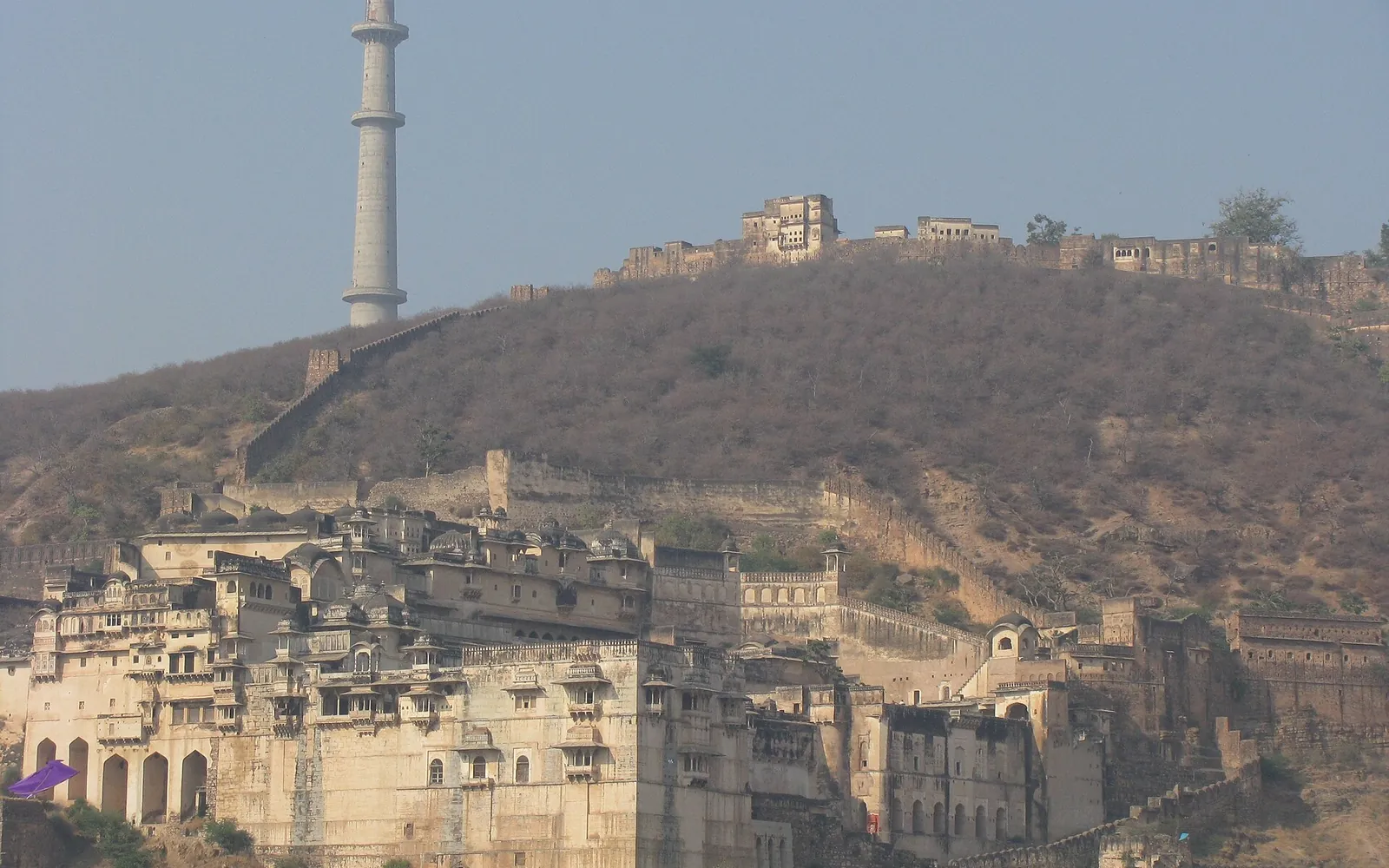
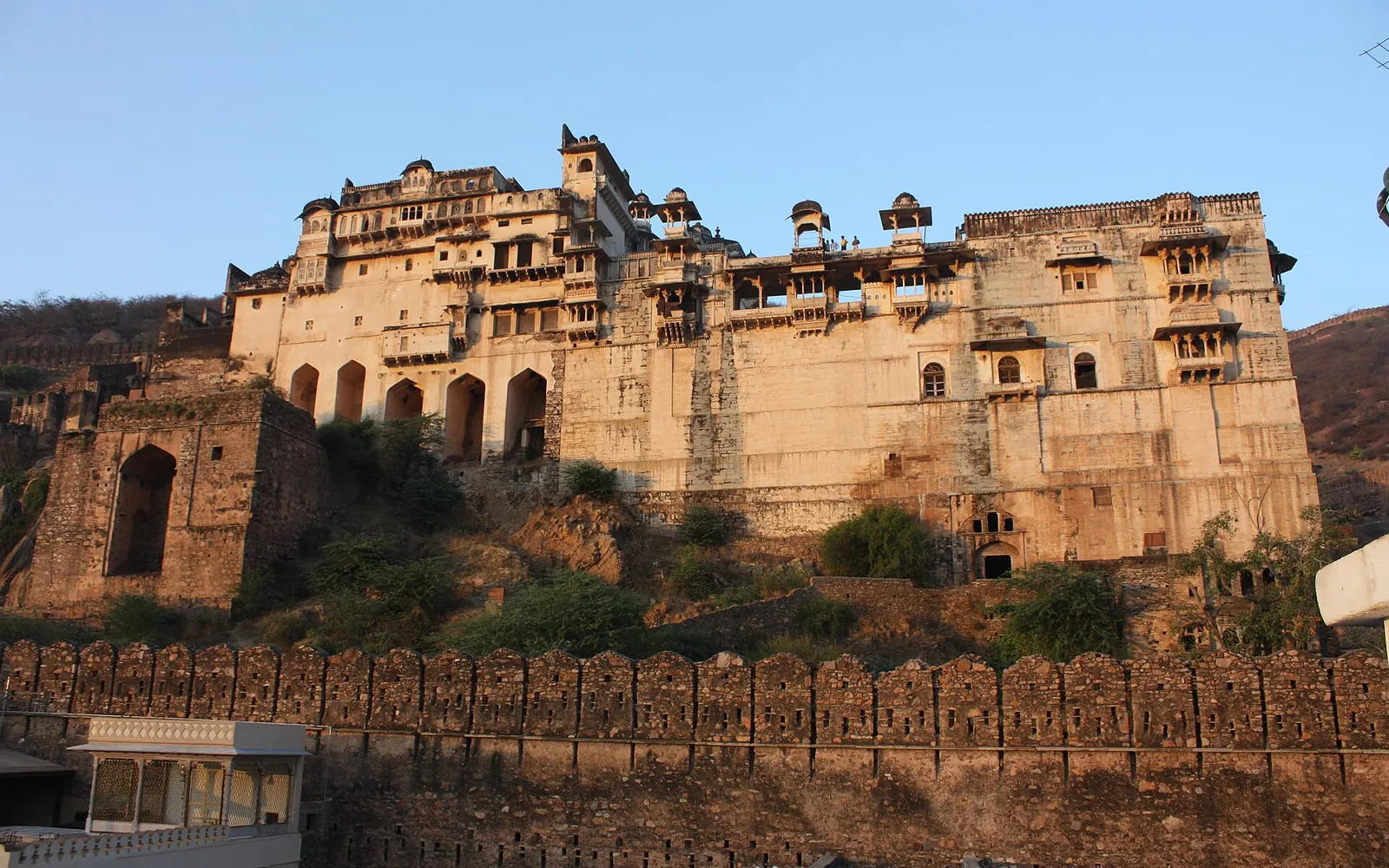
The heart of the account is his visit to the palace. Kipling first compared it with the others he had seen: Jaipur’s palace was the Versailles of India, Udaipur’s was dwarfed by its lake and hills, and Jodhpur’s grey towers on red rock were the work of giants. Bundi’s, he wrote, was “the work of goblins more than of men”, a palace built “in uneasy dreams”. Rajasthan Tourism quotes these lines on its Bundi page, and they still sum up the effect of the building rising terrace on terrace up the hillside below Taragarh Fort.
He went in to change a currency note at the state treasury, which was kept in the palace, and stayed to wander. He describes:
- The gate with two painted fish over the arch, and the great state drums kept in the guardroom, one of which was beaten as he entered.
- The treasury verandah, crowded with clerks and petitioners, which he thought ready-made for a painter.
- A gate with two carved elephants, which he named the “Gate of the Elephants” because nobody could tell him its real name. Today it is known as the Hathi Pol.
- The Ratan Daulat, a hall with an empty white marble throne guarded day and night.
- The Chhatra Mahal, a hall of audience built by Rao Raja Chhatar Sal, who died fighting for Shah Jahan’s side in 1658; Kipling was pleased to find almost nothing modern in it.
- A balcony high on the palace face from which the ruler could look east across his territory towards Kota and the Chambal.
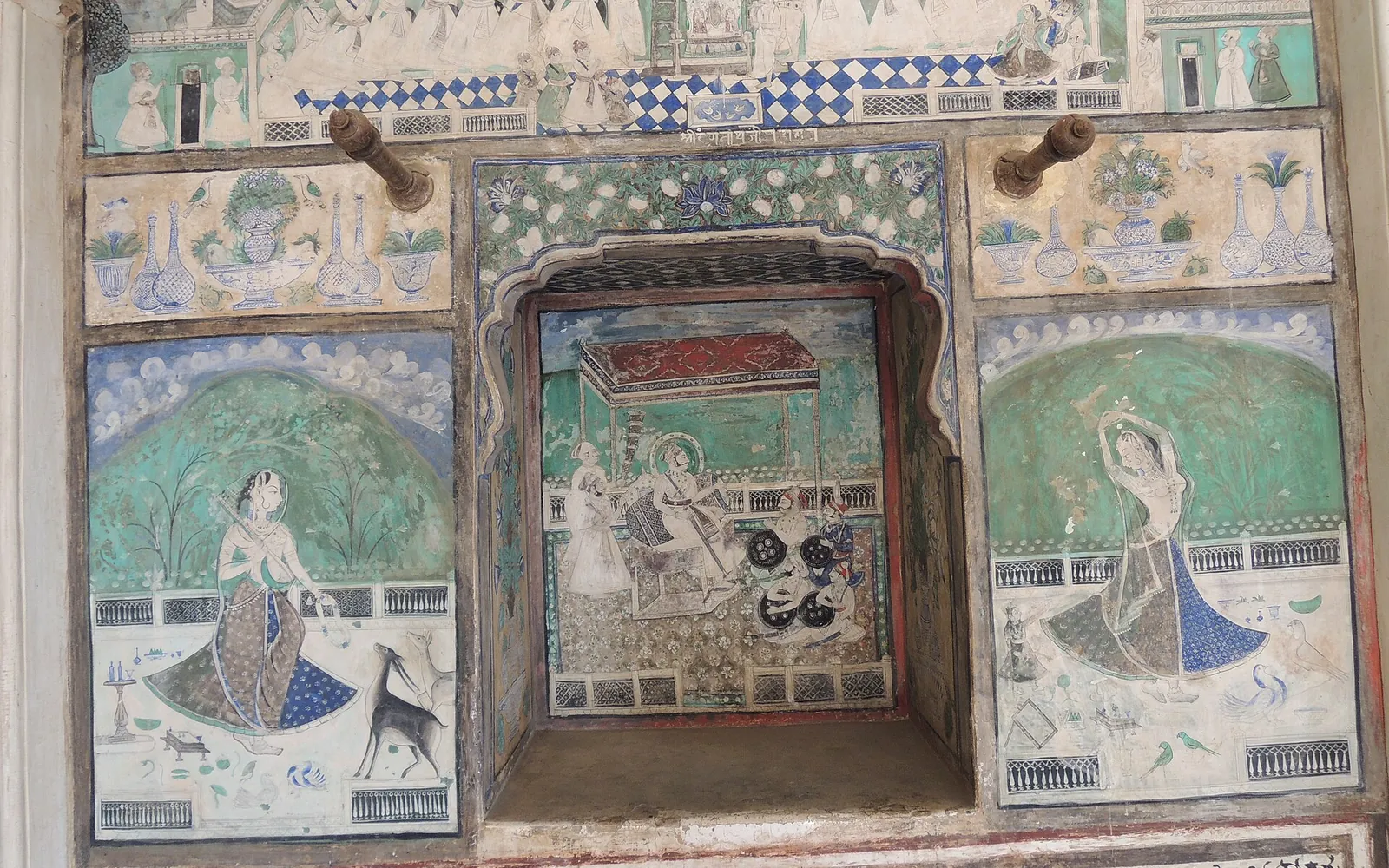
If you visit today, the Chitrashala, the painted gallery of the palace, is the part most visitors remember. Kipling does not describe it in detail, but the “raw blaze of colour” he noticed in the ceilings belongs to the same tradition.
Bundi as Kipling found it
Away from the palace he gives a picture of the town in the 1880s: a city “jammed into a V-shaped gorge”, streets paved with knobbly stones and almost empty of carts, Nawal Sagar (“the Nal Sagar”) at the head of the valley, a free school and a charitable dispensary run by a doctor he admired. He even predicted that if a railway ever reached Kota, twenty miles away, tourists would follow and Bundi’s isolation would end. Kota’s railway arrived in the decades that followed; the Kota Junction page tells that story.
Some of his remarks are those of a Victorian Englishman and read badly now. They are worth reading critically, as a record of how a colonial visitor saw the state, not as a neutral description.
Did Kipling write Kim in Bundi?
This is the claim most visitors hear. Rajasthan Tourism says it is “popularly believed” that Kipling wrote part of Kim in Bundi and that Sukh Mahal is credited as a muse. The evidence is thin. Kim was published in 1901, more than a decade after the visit, and Kipling’s own Bundi letters say nothing about it. The safest way to put it: Bundi is part of the India that Kipling knew and wrote about, and the Kim connection is a much-loved local tradition rather than a documented fact.
Following Kipling’s route today
- Start at Sukh Mahal on Jait Sagar in the early morning, when the lake is calm. The Kshar Bagh cenotaphs are close by (see Bundi’s cenotaphs).
- Drive or walk into the old town past Nawal Sagar, as Kipling did on his way to the treasury.
- Climb to the palace through the Hathi Pol, then visit the Chitrashala.
- Continue to Taragarh if you have the energy, for the view he described from the palace balcony.
- End at Raniji ki Baori or the other stepwells of Bundi, which Kipling did not write about but which every modern visitor should see.
Bundi is about 36 km from Kota by road. Our weekend in Bundi guide has timings for a full trip, and Bundi Utsav in November is a lively time to go.
Reading the original
Letters of Marque is in From Sea to Sea, volume 1, on Project Gutenberg (linked below). The Bundi section consists of three letters, beginning with the road from Deoli and ending with the palace. They take under an hour to read and make a fine companion on the drive from Kota.
Frequently asked questions
When did Rudyard Kipling visit Bundi?
During his Rajputana tour of 1887-88, while working as a special correspondent for The Pioneer of Allahabad. His letters mention the Queen's Jubilee of 1887 and count 66 years since James Tod installed the Bundi ruler in 1821, which places the visit in 1887-88.
Where did Kipling stay in Bundi?
At Sukh Mahal, the small lakeside pavilion on Jait Sagar outside the old city. The palace guard sent him there when he asked where he could sleep, and he spent the night in a corner of the colonnade screened off with canvas.
Did Kipling write Kim in Bundi?
Rajasthan Tourism says it is popularly believed that he wrote part of Kim in Bundi. Kim was published in 1901, many years after the visit, and Kipling's own Bundi letters do not mention it, so treat the story as tradition rather than established fact.
What did Kipling say about Bundi Palace?
He compared it with other Rajput palaces and wrote that Bundi Palace, even in broad daylight, was such a palace as men build for themselves in uneasy dreams, the work of goblins more than of men.
Can I read Kipling's account of Bundi online?
Yes. Letters of Marque is part of From Sea to Sea, which is free on Project Gutenberg. The Bundi chapters follow his visits to Udaipur and Chittor.
Sources
Editorial team
The KotaRajasthan.net team writes about the places, history and festivals of Kota and Hadoti, and corrects pages when readers point out changes.