History and people
Colonel James Tod in Kota and Bundi: Hadoti's Chronicler
Written by Kota Rajasthan Editorial Team · Updated
Colonel James Tod is the reason many people know anything about the history of Kota and Bundi at all. As the East India Company’s Political Agent for several Rajput states from 1818, he spent four eventful years in and around Hadoti, negotiating with Kota’s formidable regent, helping to install a boy king in Bundi and gathering the chronicles, inscriptions and stories that became his Annals and Antiquities of Rajast’han. That book gave Rajasthan its name in print and its romantic image in the world’s imagination. It is also partisan and sometimes wrong. This page looks at what Tod did in Hadoti, what he wrote, and how to read him today.
Who was James Tod?
Tod was born in Islington, London, on 20 March 1782, to a family of Scottish descent, and went to India in 1799 as a cadet in the Bengal Army of the East India Company. He became an expert surveyor and mapmaker; his map of central India, presented to the Governor-General in 1815, proved useful in the Third Anglo-Maratha War of 1817-18, during which he worked in the intelligence department.
After that war the British signed treaties with the Rajput states, and in 1818 Tod was appointed Political Agent for several of them. His first charge, according to his biographers, was Mewar, Kota, Sirohi and Bundi; Marwar was added soon after and Jaisalmer in 1821. His job was to settle the states after decades of Maratha and Pindari raids and bind them to the Company.
Tod and Kota
In Kota, Tod dealt above all with the regent Zalim Singh Jhala, who had ruled the state in the Maharao’s name since 1771 and had just negotiated Kota’s 1817 treaty with the British. Tod admired Zalim Singh’s administration; his Annals is the source of often-quoted figures on how Zalim Singh’s management raised the revenues of Kota and of districts he farmed for the Holkars.
That closeness became a problem. After Maharao Umed Singh I died in 1819, his successor Kishore Singh II tried to take back power from the regent. The quarrel ended in fighting at Mangrol in 1821, where Zalim Singh’s troops had British support (see the rulers of Kota). Wikipedia’s account of Tod’s career records that in 1821 his favouritism towards one party in a princely dispute, against his orders, brought a severe reprimand, restrictions on his authority and the removal of Kota from his charge.
Tod and Bundi
In Bundi, Tod’s name is linked with the accession of Ram Singh, who came to the throne as a boy in 1821 and ruled until 1889. Tod took part in his installation. When Rudyard Kipling visited Bundi in 1887, he was still carrying Tod’s book: he quotes Tod’s description of the young ruler as “fair and with a lively, intelligent cast of face”, calls him “Tod, the accurate”, and checks Tod’s account of a palace murder against what the guards told him. Bundi’s history in the early 19th century, from the 1818 treaty to Ram Singh’s long reign, comes to us partly through Tod’s eyes.
Tod and the birth of Jhalawar
In December 1821 Tod visited Chhaoni Umedpura, the military camp Zalim Singh had founded south of Kota. Wikipedia’s article on Jhalawar says he described it as a cantonment and a well-established township with large houses, havelis and surrounding walls. Seventeen years later, in 1838, that camp became the capital of the new state of Jhalawar created for Zalim Singh’s grandson. Our history of Jhalawar tells that story.
Leaving India
Tod’s sympathy for the Rajput princes made him enemies in the Company. His superior, David Ochterlony, distrusted him; Marwar, Kota and Jaisalmer were taken out of his hands; and his escort was reduced. In 1822 he resigned as Political Agent in Mewar, citing ill health, and in February 1823 he left India. Bishop Reginald Heber later wrote that Tod had been suspected of corruption because he favoured the princes, and that the suspicions were groundless.
The Annals and Antiquities of Rajast’han
Back in England, Tod became librarian of the new Royal Asiatic Society and wrote his great work. Annals and Antiquities of Rajast’han, or the Central and Western Rajpoot States of India appeared in two volumes, in 1829 and 1832. Wikipedia notes that the first printed mention of the name “Rajasthan” appears in the 1829 volume. The second volume includes his annals of Haravati, the Hada country of Bundi and Kota, along with his travel narrative through the region. He died in London on 18 November 1835, aged 53.
How to read Tod today
The Annals is a brilliant, readable book, and for some events it is the fullest account we have. But modern historians are cautious:
- Sources. Tod relied heavily on bardic chronicles and court genealogies, which praise their patrons and blur dates.
- Sympathies. He wrote as a partisan of the Rajput princes and against the Marathas, and he saw Rajput society through the lens of European chivalry. The History of Rajasthan article on Wikipedia describes his writing as extensive “if often uncritical”.
- Influence. His romantic picture of Rajput honour shaped later British policy and Indian nationalist writing, and much of what guides still repeat about Hadoti can be traced back to him.
The best approach is to treat Tod as a witness for what he saw between 1818 and 1822, and to check his account of earlier centuries against inscriptions and modern scholarship. On this site we note where sources disagree, as with Kota’s founding date on our Rao Madho Singh page.
Where to feel Tod’s Hadoti today
- Kota’s Garh, where he negotiated with Zalim Singh and the Maharaos.
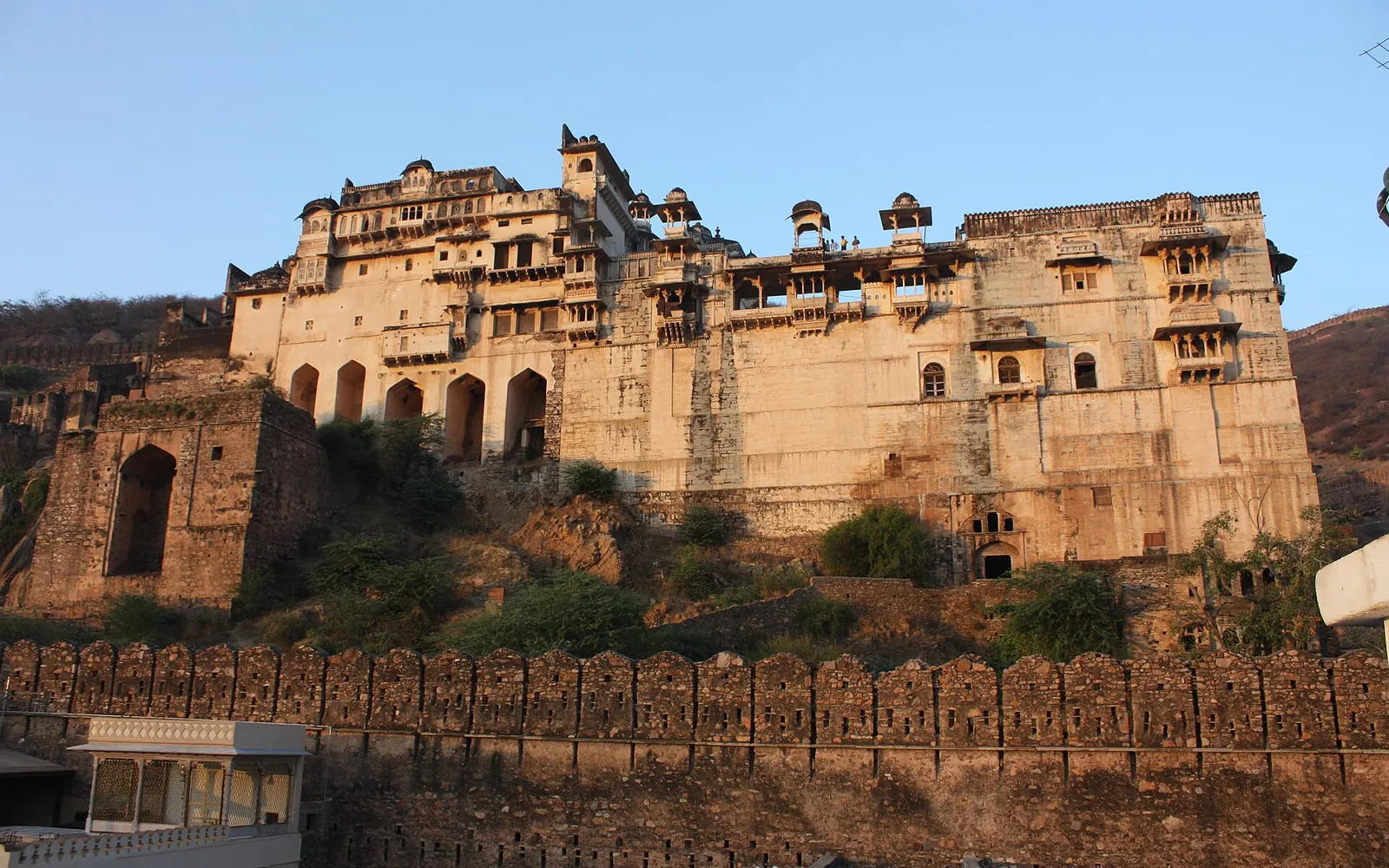
- Bundi Palace and Taragarh, which he described and Kipling compared with his account.
- Jhalawar’s Garh Palace, built in the town that grew from the camp he saw in 1821.
For the people who shaped the region before and after him, browse our people of Kota section.
Frequently asked questions
Who was Colonel James Tod?
A Scottish-descended British officer of the East India Company, born in London in 1782, who served as Political Agent to several Rajput states from 1818 to 1822 and later wrote Annals and Antiquities of Rajast'han. He died in 1835.
What was Tod's connection with Kota?
Kota was one of the states in his charge from 1818. He worked closely with the regent Zalim Singh Jhala, whom he admired. In 1821 he was reprimanded for favouring one party in a dispute, and Kota was taken out of his responsibilities.
Did Tod install the ruler of Bundi?
Yes. Tod took part in installing the boy Ram Singh as ruler of Bundi in 1821. Kipling, visiting in 1887, mentions it and says Tod described Ram Singh as fair and lively, in his eleventh year.
Is Tod's Annals reliable?
It is a valuable record of what Tod saw and was told, but he relied heavily on bardic chronicles and court traditions and wrote with strong sympathies for the Rajput princes. Historians treat it as a primary source about Tod's time and as a secondary source, to be checked, for earlier history.
Where can I read Tod's Annals?
The Annals are long out of copyright and are available in many reprints and free online library scans. Volume 2 contains his account of Haravati, the Hada country of Bundi and Kota.
Sources
Editorial team
The KotaRajasthan.net team writes about the places, history and festivals of Kota and Hadoti, and corrects pages when readers point out changes.