History and people
Rajasthan Union 1948: Kota and the First Step to Rajasthan
Written by Kota Rajasthan Editorial Team · Updated
The Rajasthan Union of 1948 is the moment Kota stepped onto the national stage. On 25 March 1948, seven months after independence, the rulers of ten states in south-eastern Rajputana, led by Kota, Bundi and Jhalawar, merged their territories into a single union. Kota’s ruler, Maharao Bhim Singh II, became its head with the title Rajpramukh, and Kota was its capital. Within a year the union had swallowed the great desert kingdoms and become the state of Rajasthan, with Jaipur as capital. This guide explains what happened, who was involved and why the date still matters in Hadoti.
The background: princely states after 1947
At independence in August 1947 most of what is now Rajasthan was made up of princely states, chiefships and the small British province of Ajmer-Merwara. The rulers had signed Instruments of Accession to India, handing over defence, foreign affairs and communications, but they still governed their own states. Many were too small to work as modern administrative units, and the government in Delhi, under Sardar Patel and V. P. Menon, pressed them to merge into larger unions.
The integration of Rajasthan took seven stages, from March 1948 to November 1956. The first was the Matsya Union, formed on 18 March 1948 by Alwar, Bharatpur, Dholpur and Karauli in the north-east.
25 March 1948: the Rajasthan Union
A week later came the second stage. The states that formed the Rajasthan Union were:
| State | Region |
|---|---|
| Kota | Hadoti |
| Bundi | Hadoti |
| Jhalawar | Hadoti |
| Banswara | Vagad (south) |
| Dungarpur | Vagad (south) |
| Pratapgarh | South |
| Kishangarh | Central |
| Tonk | East |
| Shahpura | Central |
| Lawa (chiefship) | East |
According to the History of Rajasthan article on Wikipedia, the rulers met at Umed Bhawan Palace in Kota. Maharao Bhim Singh II, as ruler of the largest state, became the first Rajpramukh, the constitutional head equivalent to a governor, and Gokul Lal Asawa became the first prime minister (the title then used for the chief minister). Our biography of Maharao Bhim Singh II covers his role in detail.
For Hadoti this was the end of more than three centuries of separate rule by the Hada houses of Bundi and Kota and, more recently, the Jhala house of Jhalawar. The three states that had been carved from one another over the centuries were united again for the first time since the 17th century.
18 April 1948: the United State of Rajasthan
The union in its first form lasted less than a month. On 18 April 1948 the large and prestigious state of Udaipur (Mewar) joined, and Prime Minister Jawaharlal Nehru inaugurated the enlarged United State of Rajasthan. Because the Maharana of Udaipur ranked above the other princes, he became Rajpramukh, and Bhim Singh II became Uprajpramukh, the deputy. Manikya Lal Verma became prime minister.
Some sources give 18 April 1948 rather than 25 March as the date of Kota’s merger because of this second step. Both dates belong to the same process.
1949-1956: completing Rajasthan
- 30 March 1949: Jaipur, Jodhpur, Bikaner and Jaisalmer joined, creating the United State of Greater Rajasthan. The Maharaja of Jaipur, Man Singh II, became Rajpramukh and Jaipur became the capital. The Maharana of Udaipur received the senior title of Maharajpramukh. Hiralal Shastri became prime minister on 7 April 1949. This is why 30 March is celebrated as Rajasthan Day.
- 15 May 1949: the Matsya Union joined.
- 26 January 1950: when the Constitution came into force, the state officially became Rajasthan.
- 1956: the last additions, including Ajmer, were made under the reorganisation of states, completing the seventh stage by November 1956. The offices of Rajpramukh and Uprajpramukh were abolished on 31 October 1956.
The seven stages at a glance
| Stage | Date | What happened |
|---|---|---|
| 1 | 18 March 1948 | Matsya Union: Alwar, Bharatpur, Dholpur, Karauli |
| 2 | 25 March 1948 | Rajasthan Union: Kota, Bundi, Jhalawar and seven others; Kota’s Maharao as Rajpramukh |
| 3 | 18 April 1948 | Udaipur joins: United State of Rajasthan |
| 4 | 30 March 1949 | Jaipur, Jodhpur, Bikaner, Jaisalmer join: Greater Rajasthan |
| 5 | 15 May 1949 | Matsya Union merges in |
| 6 | 26 January 1950 | Sirohi added; the state is named Rajasthan |
| 7 | 1 November 1956 | Ajmer-Merwara and Mount Abu added under the reorganisation of states |
In Hindi textbooks and exam guides the union of 25 March 1948 is often called Purva Rajasthan (Eastern Rajasthan) or the Rajasthan Sangh, to distinguish it from the later, larger unions. Questions such as “who was the first Rajpramukh?” and “which city was the capital of the second stage?” have the same answer: Kota and its Maharao.
Kota’s role in the negotiations
Kota was the largest and richest of the states in the second stage, which is the usual explanation for its Maharao being chosen as Rajpramukh and for Kota being chosen as capital. It was short-lived: once Udaipur, and then Jaipur, joined, seniority and size passed to them. But the Hadoti states had made the first big move, and the pattern they set, of rulers handing over power to a union in return for titles and privy purses, was followed by the larger states a year later. Those privy purses and titles were themselves abolished in 1971.
Why it matters in Kota
The union of 1948 is often forgotten outside Rajasthan, but in Kota it is a point of pride. For a few weeks the city was the capital of the first union that grew into India’s largest state, and its Maharao was the first head of that union. It also marks the start of modern Kota: after 1948 the city’s story moved from palaces and treaties to dams, industry and, later, coaching institutes, told in our pages on modern Kota and the Kota Barrage.
Places connected with 1948 in Kota
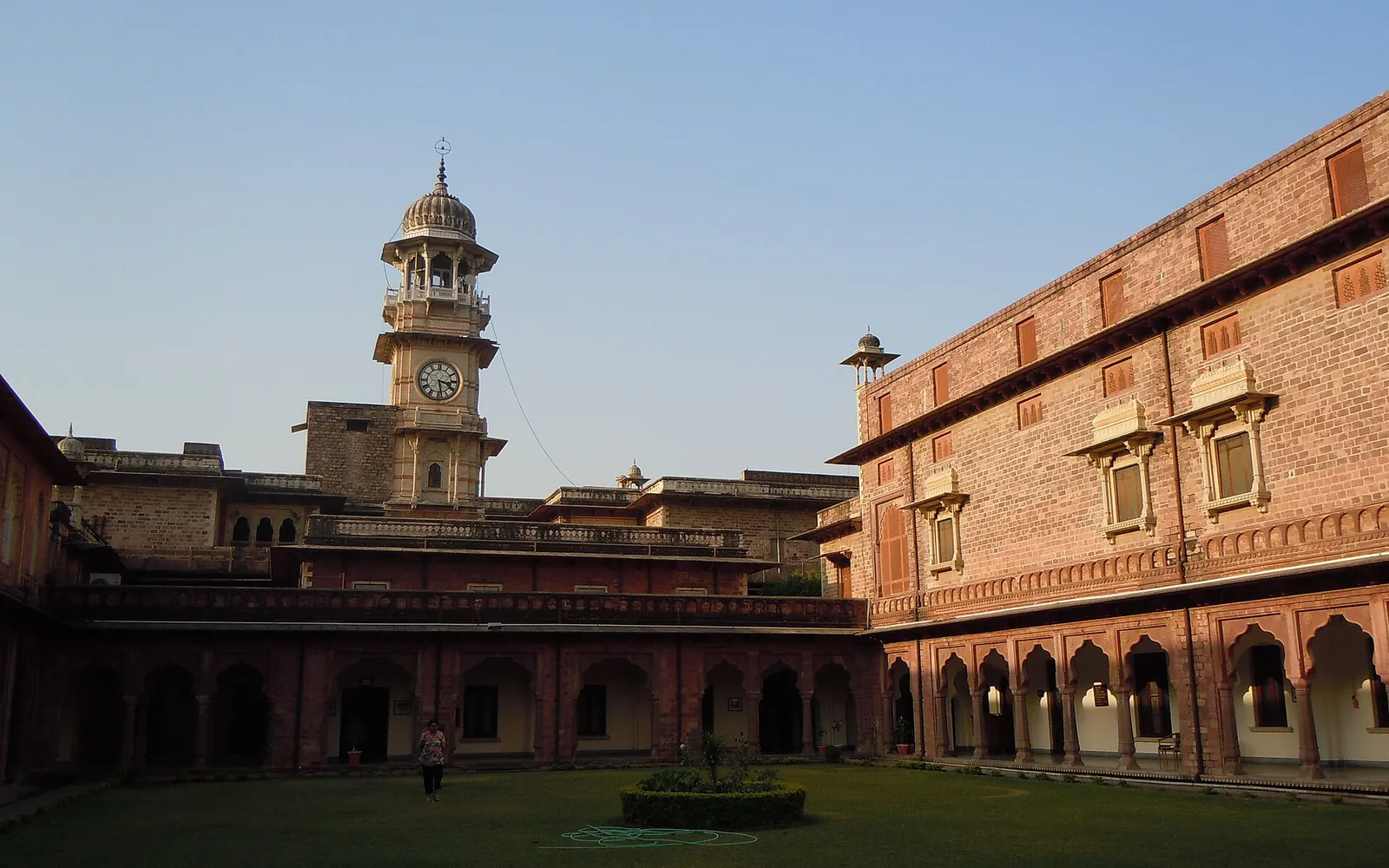
- Umed Bhawan Palace, where the rulers met.
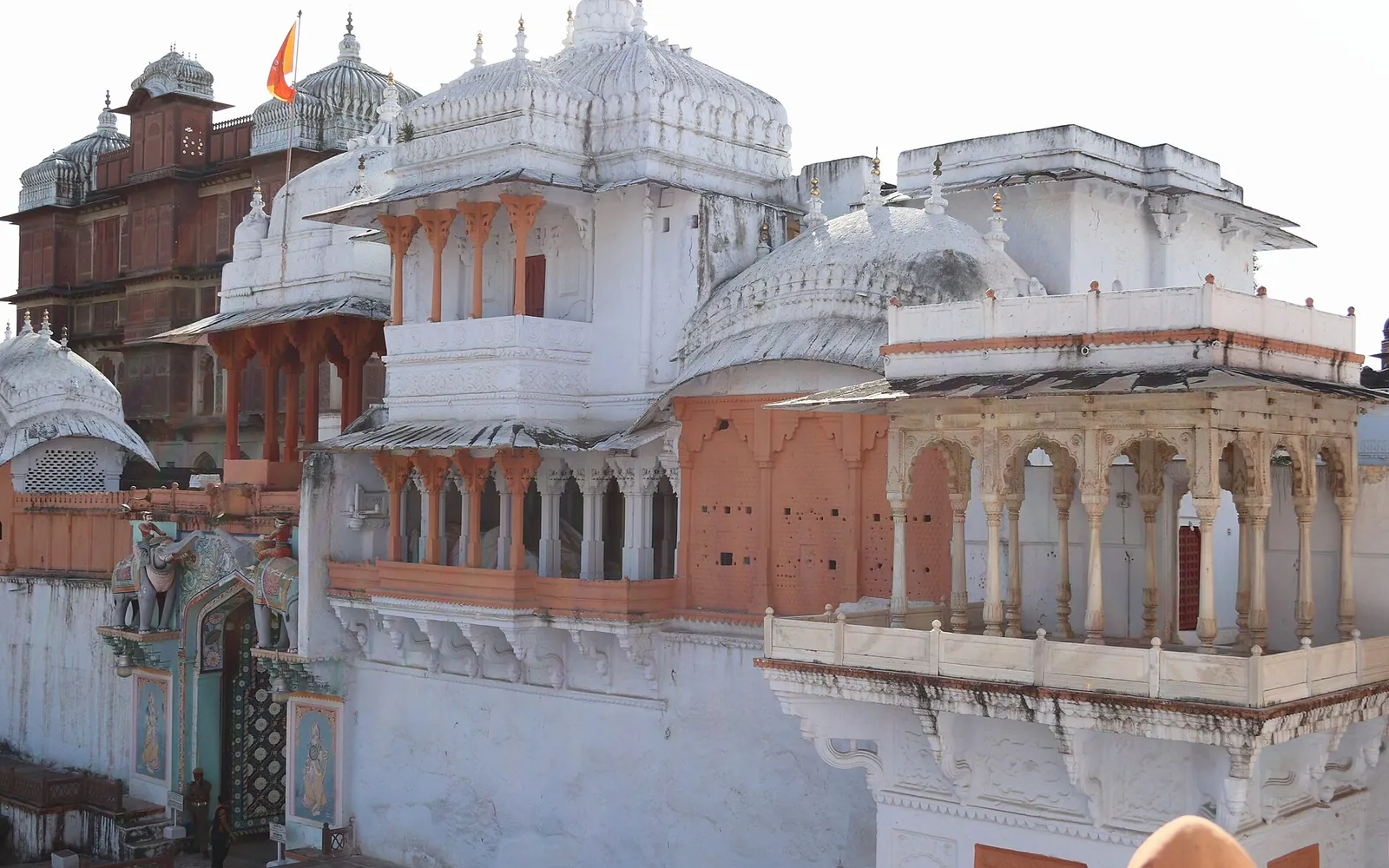
- The Garh, seat of the Maharaos until the end of princely rule; its museum displays the family’s collections.
- Brijraj Bhawan, the riverside palace later associated with the royal family.
Read more
The rulers of Kota page lists every Maharao from 1631 to 1948, and the history of Kota gives the full story. For the earlier upheaval that shaped the city’s relationship with British power, see the 1857 revolt in Kota.
Frequently asked questions
What was the Rajasthan Union?
The union of south-eastern Rajputana states formed on 25 March 1948, the second of the seven stages in which the modern state of Rajasthan was created. It brought together the Hadoti states of Kota, Bundi and Jhalawar with Banswara, Dungarpur, Pratapgarh, Kishangarh, Tonk, Shahpura and Lawa.
Who was the first Rajpramukh of the Rajasthan Union?
Maharao Bhim Singh II of Kota. When Udaipur joined in April 1948, the Maharana of Udaipur became Rajpramukh and Bhim Singh II became Uprajpramukh (deputy).
What was the capital of the Rajasthan Union?
Kota. After Jaipur, Jodhpur, Bikaner and Jaisalmer joined in 1949, Jaipur became the capital of the enlarged state.
Who was the first prime minister of the Rajasthan Union?
Gokul Lal Asawa. In the United State of Rajasthan formed in April 1948, Manikya Lal Verma became prime minister.
Why is Rajasthan Day on 30 March?
On 30 March 1949 the large states of Jaipur, Jodhpur, Bikaner and Jaisalmer merged into the union, forming Greater Rajasthan. That date is celebrated as Rajasthan's foundation day.
Sources
Editorial team
The KotaRajasthan.net team writes about the places, history and festivals of Kota and Hadoti, and corrects pages when readers point out changes.