History and people
1857 Revolt in Kota: Jaidayal, Mehrab Khan and the Siege
Written by Kota Rajasthan Editorial Team · Updated

The 1857 revolt in Kota is one of the most dramatic episodes in the city’s history and one of the most important in Rajasthan’s part of the Indian Rebellion. For five months Kota’s own soldiers, led by Lala Jaidayal and Mehrab Khan, held the city against the British after killing the Political Agent, Major Burton, and his two sons. The Maharao was shut in his palace; the British returned only in March 1858, after a siege and street fighting. This guide sets out what is well documented, what rests on later tradition, and where you can still see the places involved.
The background: 1857 in Rajputana
The rebellion began on 10 May 1857 with the mutiny of sepoys at Meerut and quickly spread across north and central India. By the end of June, the British had lost control of much of Bundelkhand and eastern Rajputana. Most Rajput rulers stayed loyal to the British or tried to stay out of the conflict, but their own soldiers and people did not always follow.
Kota was ruled by Maharao Ram Singh II (1828-1866), whose state had been bound to the British by treaty since 1817 and reduced by the creation of Jhalawar in 1838. Our list of the rulers of Kota gives the background. Kota also supplied troops to the British: a Kotah contingent was sent towards Agra in the summer of 1857 to block the road from Fatehpur Sikri, and, according to Wikipedia’s account of the battle of Agra, it defected en masse. The episode showed how fragile the loyalty of Kota’s soldiers had become.
The rising of 15 October 1857
Wikipedia’s history of Kota says the city was “not involved in the earlier events” of the rebellion. That changed in October. Major Burton was the British Political Agent at Kota. On 15 October 1857 soldiers of the Kota state forces rose, attacked the British Residency and killed Burton and his two sons. The Residency fell into the rebels’ hands.
Hindi-language histories, followed by the Hindi Wikipedia, name the leaders as Lala Jaidayal and Mehrab Khan. Both are remembered in Kota today as freedom fighters of 1857.
Five months of rebel control
After the killings the rebels took control of much of the city. Maharao Ram Singh II, who had not led the rising, was left in a difficult position inside the Garh, the walled palace on the Chambal, with only part of his forces loyal to him. Accounts describe him as effectively besieged by his own troops, while some nobles and soldiers sided with the rebels. Much of Kota remained in rebel hands through the winter of 1857-58.
The details of these months come mainly from British military reports and later histories, and they were written by people with strong views. It is fair to say that the rising was not simply a mutiny of a few soldiers: it drew support from people in the city and expressed real anger at British power and at the Maharao’s dependence on it.
The British recapture (March 1858)
In early 1858 the British were able to turn back to Rajputana. Forces of the Rajputana Field Force under Major-General Roberts, which operated in the region between January and June 1858, reached Kota. Wikipedia’s summary is that British forces responded “by storming the city and, after some resistance, capturing it in March 1858”. The rebels were driven out, and many fled to join other rebel forces in central India.
The Maharao kept his throne, although the British questioned his conduct during the rising.
What happened to the leaders
The fate of Jaidayal and Mehrab Khan after 1858 is told mainly in later histories rather than in readily available primary sources. They are generally said to have been captured and executed by the British. Because the details vary between accounts, we have not given specific dates here. Local histories and the Rajasthan State Archives are the best places to look for primary records.
Where to see the places of 1857 in Kota
- Brijraj Bhawan, on the bank of the Chambal, was the British Residency where Burton was killed. It is now a heritage hotel, and stories of Burton’s ghost are part of its local fame.
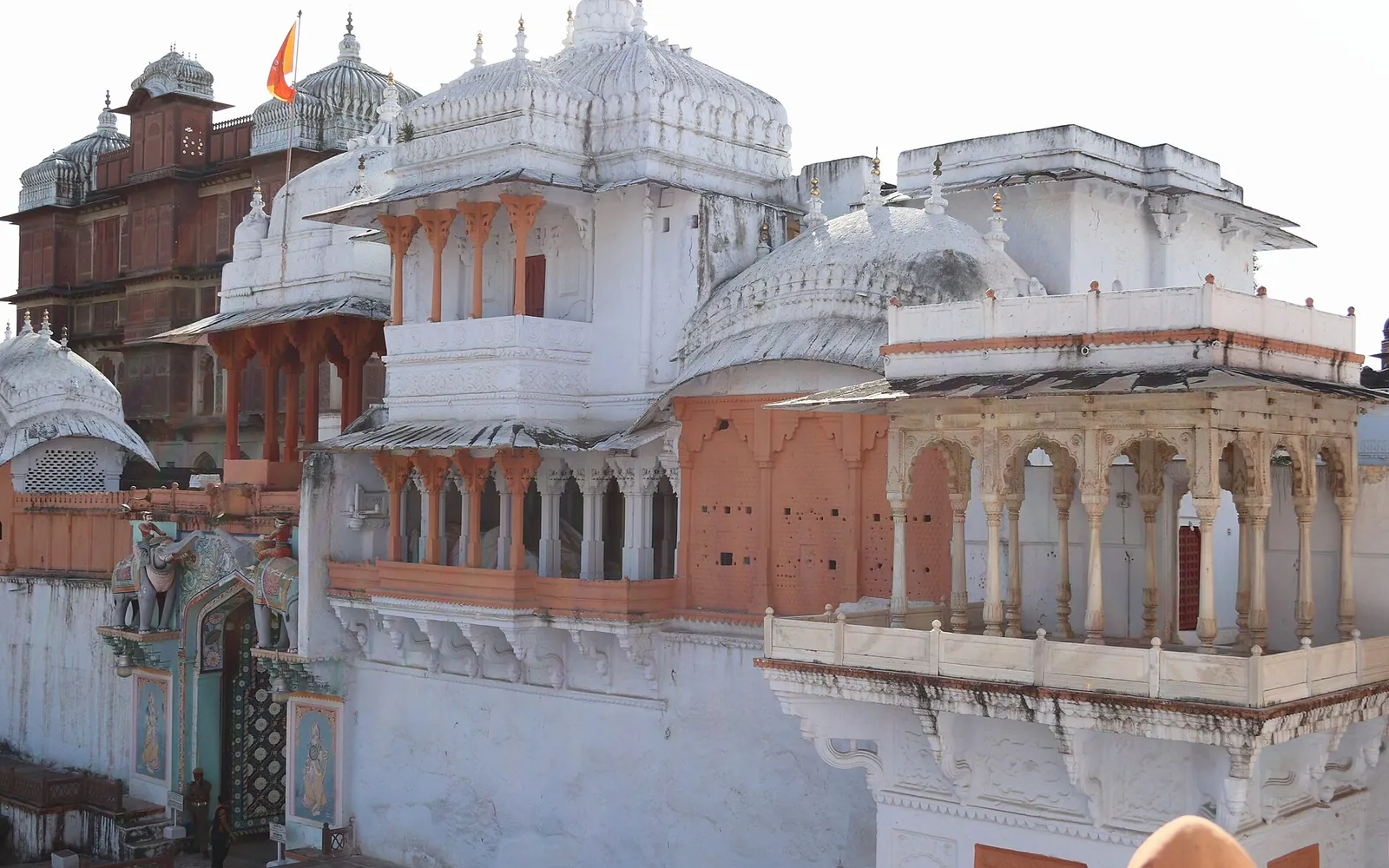
- The Garh and Rao Madho Singh Museum, where the Maharao held out. The museums in Kota guide has visitor details.
- The old city walls and gates, such as Patan Pol and Kotri Pol, which still mark the limits of the walled city as it was in 1857.
A Kota heritage walk through the old city passes several of these places in a morning.
Why 1857 matters in Kota’s story
The rising sits between two long eras: the age of Zalim Singh Jhala and the British treaties, and the modernising reign of Maharao Umed Singh II after 1889. It shows that Kota’s people were not passive spectators of British rule, and it connects the city to the national story of 1857 that is taught in every Indian school. For the longer story, read our history of Kota.
A note on sources
Much of what is written online about Kota in 1857, including dates for the leaders’ executions and numbers of casualties, is repeated without references. We have kept to what is supported by the sources listed below and flagged where accounts differ. If you have access to primary documents, such as Political Department records or the Rajasthan State Archives, we would welcome corrections through our contact page.
Frequently asked questions
What happened in Kota in 1857?
On 15 October 1857 troops in Kota rose against the British, killed the Political Agent Major Burton and his two sons, and took control of the city. The rebels held it until British forces captured Kota in March 1858.
Who led the 1857 revolt in Kota?
Lala Jaidayal and Mehrab Khan are named as the leaders of the Kota rising in Hindi-language histories and in local memory.
Who was Major Burton?
Major Burton was the British Political Agent at Kota. He was killed with his two sons when the rising broke out on 15 October 1857.
Where was Major Burton killed?
At the British Residency in Kota. The building, later known as Brijraj Bhawan, stands on the bank of the Chambal and is now a heritage hotel; ghost stories about Burton are told about it.
What did the Maharao of Kota do in 1857?
Maharao Ram Singh II was the ruler. He did not lead the rising and was left in a weak position while the rebels controlled much of the city. His conduct was later questioned by the British, but he kept his throne.
Sources
Editorial team
The KotaRajasthan.net team writes about the places, history and festivals of Kota and Hadoti, and corrects pages when readers point out changes.