Palaces and heritage
Garh Palace Kota (City Palace): History, Museum and Tips
Written by Kota Rajasthan Editorial Team · Updated

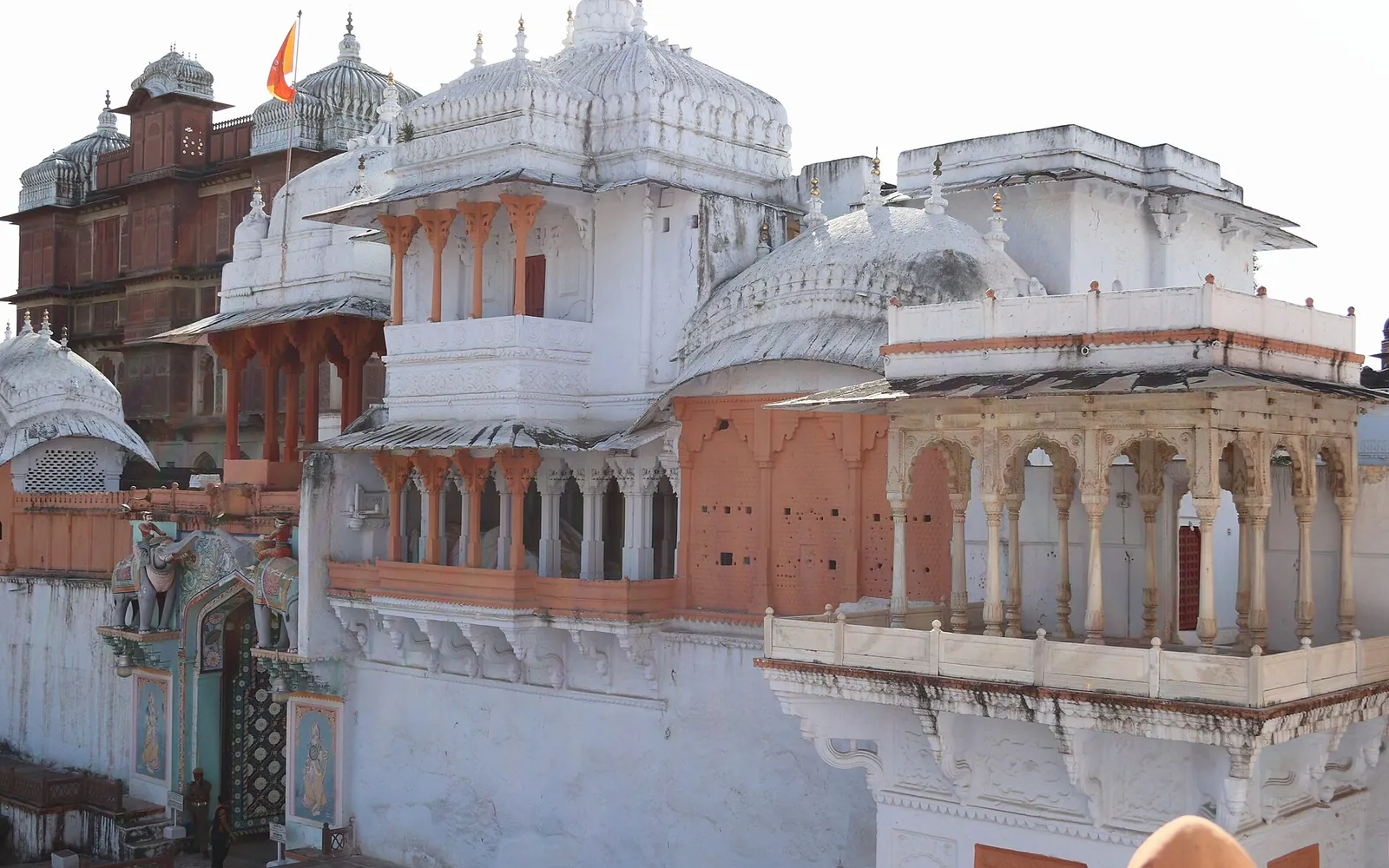
Rising above the eastern bank of the Chambal, this is one of the largest palace complexes in Rajasthan, a warren of courtyards, zenana quarters, audience halls and painted apartments that grew organically over more than three centuries. The moment you pass through the Hathia Pol (Elephant Gate), with its carved stone elephants standing guard, you feel the scale of Kota’s royal past.
Inside, the real treasures are the walls themselves. The palace is celebrated for its Kota school of miniature painting, hunting scenes teeming with tigers, elephants and the Chambal’s game, alongside Krishna-Leela panels, mirror-work chambers and delicate frescoes in the Bada Mahal and Raj Mahal. Look up and you will find ceilings inlaid with gold, coloured glass and tiny mirrors that scatter the afternoon light.
A large section houses the Rao Madho Singh Museum, packed with royal weaponry, palanquins, textiles, silver furniture and photographs of durbars and shikar. Give yourself at least two hours here, wear comfortable shoes, and take a guide if you can, the stories behind the paintings bring the whole place alive.
History of Garh Palace
Kota became a separate state in the 17th century, when Rao Madho Singh, a son of the Bundi ruler Rao Ratan Singh, received the territory around Kota from the Mughal emperor Shah Jahan. Sources give the date as 1624 or 1631; our history of Kota explains the discrepancy. Until then Kota had been part of Bundi within the wider Hadoti region ruled by the Hada Chauhan Rajputs.
Rajasthan Tourism describes the City Palace as a sprawling complex of suites and apartments built by different rulers at different times, predominantly in the Rajput style. The fortified Garh grew from Madho Singh’s time onwards as each ruler added wings, gates and painted halls, which is why the architecture blends fortress design with later flourishes. It remained the seat of the Kota state until the princely states merged into Rajasthan after 1947; the line of rulers is set out in rulers of Kota.
Not all its residents were kings. When the regent Zalim Singh Jhala returned to Kota in 1771, part of the Garh Palace was assigned for his residence, and he built the Jhala ki Haveli there. For half a century the real government of Kota was run from inside the palace walls by a minister rather than by the Maharao.
Today the palace and its Rao Madho Singh Museum, which Rajasthan Tourism describes as holding a splendid collection of Rajput miniature paintings of the Kota school along with sculpture, arms and antiques, preserve that legacy.
How to see the palace well
- Start at Hathia Pol and look at the carved elephants before you go in.
- Take the painted rooms slowly. The hunting scenes are the signature of the Kota school; our Kota school of painting guide tells you what to look for.
- Hire a guide or use the museum labels for the story behind the arms, palanquins and durbar photographs.
- Finish on the ramparts for the view over the Chambal, then walk down into the old city, following our Kota heritage walk.
- Respect the rules: photography and camera charges vary by section, and paintings should never be touched.
What to see at Garh Palace
- Hathia Pol (Elephant Gate) with carved stone elephants
- Kota-school miniature murals of hunts and Krishna-Leela
- Rao Madho Singh Museum’s arms, textiles and palanquins
- Mirror-work and gold-leaf ceilings of the Bada Mahal
- Sweeping views over the Chambal River
- Beautifully preserved zenana courtyards
Visiting Garh Palace: practical details
| Detail | Information |
|---|---|
| Where | Kota city |
| Distance from Kota | About 1 km |
| Best time to visit | October to March, mornings for soft light |
| Timings | 10:00 AM to 4:30 PM, closed on public holidays |
| Entry | Ticketed museum, with different rates for Indian and foreign visitors and extra camera charges |
| Getting there | The palace sits in the old city on the Chambal’s east bank, about 1 km from Kota’s centre; autos and taxis reach it easily. |
Distances are approximate road distances. Timings and entry charges change from season to season, so confirm them locally or with the district tourist office before you set out.
Combine Garh Palace with nearby places
- Jagmandir Palace: A small but exquisite red-sandstone palace built on an island in the middle of Kishore Sagar lake, and one of Kota’s most photographed sights.
- Kishore Sagar Lake: A historic artificial lake in central Kota, famous for the island palace of Jagmandir and its lively lakeside evenings.
- Kota Chambal Riverfront: A grand, kilometres-long riverfront along the Chambal, opened in 2023, promoted by its builders as the world’s largest and lined with monumental stone art.
- Kesar Bagh Cenotaphs: A historic garden of royal cenotaphs (chhatris) commemorating the rulers of Kota, celebrated for its exquisite stone carving.
- Kota school of painting: What to look for in the hunting scenes and Krishna pictures painted for the Kota court.
- Kota heritage walk: A self-guided route from the Garh Palace through the old city to Kishore Sagar.
Frequently asked questions
How do I get to Garh Palace from Kota?
The palace sits in the old city on the Chambal's east bank, about 1 km from Kota's centre; autos and taxis reach it easily.
When is the best time to visit Garh Palace?
October to March, mornings for soft light.
What are the timings and entry charges for Garh Palace?
Timings: 10:00 AM to 4:30 PM, closed on public holidays. Entry: Ticketed museum, with different rates for Indian and foreign visitors and extra camera charges. Both change, so check locally before you go.
Who built the Garh Palace in Kota?
No single ruler. It grew from the time of Rao Madho Singh, Kota's first ruler in the 17th century, as successive rulers added apartments, gates and painted halls. Rajasthan Tourism describes it as built by different rulers at different times.
Sources
Editorial team
The KotaRajasthan.net team writes about the places, history and festivals of Kota and Hadoti, and corrects pages when readers point out changes.