Palaces and heritage
Kota Junction Railway Station: History, Trains and Tips
Written by Kota Rajasthan Editorial Team · Updated
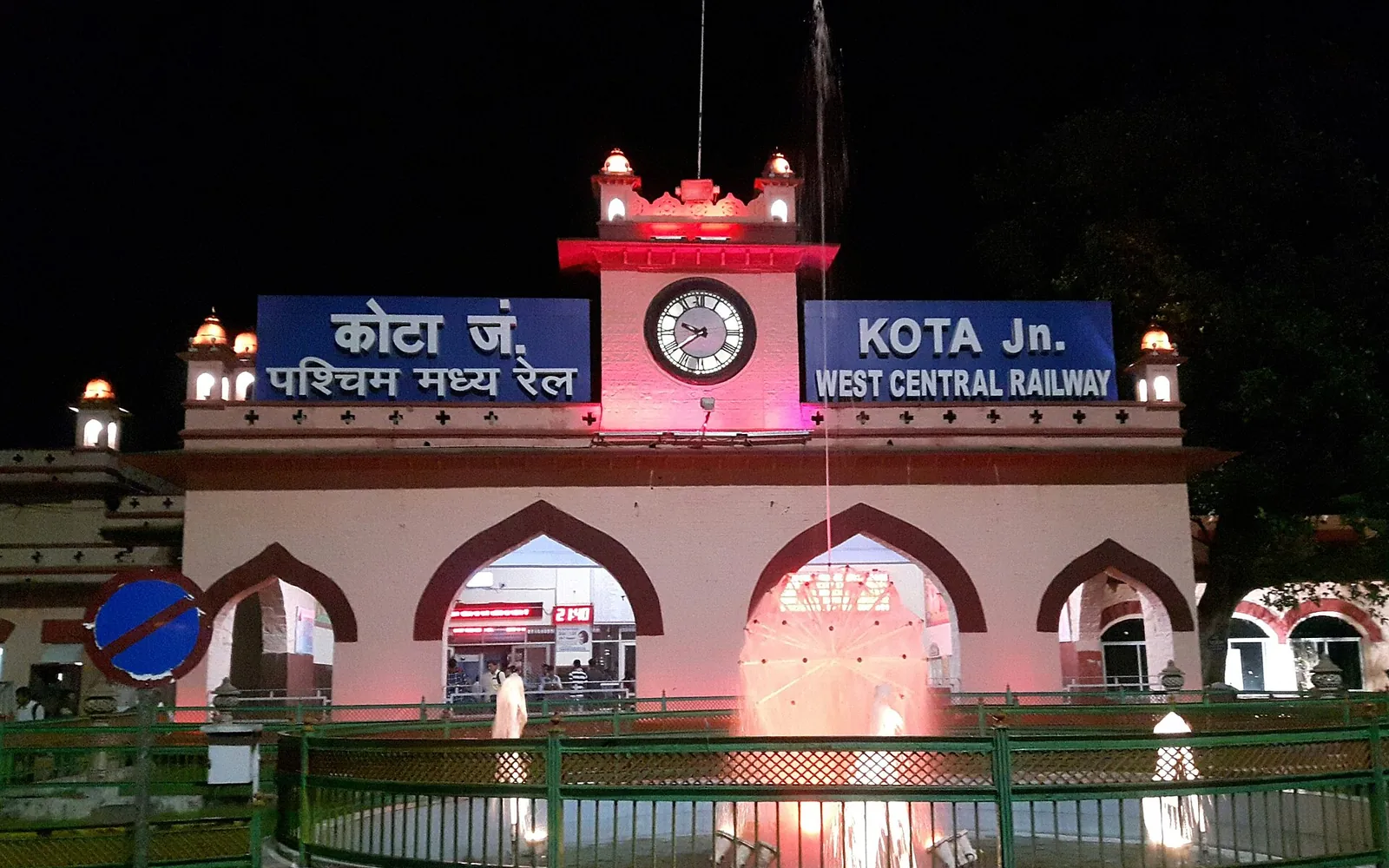
Kota Junction (station code KOTA) is the main railway station of Kota and one of the busiest junctions on the New Delhi to Mumbai main line. It is also the headquarters of the Kota Division of West Central Railway. For most visitors it is the way into the city, and for anyone interested in railways it is a good place to see how much of India’s long-distance traffic passes through Hadoti. This guide covers what the station is, how it shaped modern Kota, and practical tips for arriving and leaving.
What Kota Junction is
Kota Junction sits on the trunk line between Delhi and Mumbai, which runs north-south through the city. Wikipedia classes it as an NSG-2 station, a category used by Indian Railways for its larger, busier stations, and lists it among the top hundred booking stations in the country. More than 200 trains stop here, including Rajdhani, Duronto and Shatabdi-class services on the Delhi-Mumbai route.
Several trains also start at Kota, among them the Kota to Hazrat Nizamuddin Jan Shatabdi, the Kota-Dehradun Nanda Devi Express, the Kota-Shri Mata Vaishno Devi Katra Express, the Kota-Shri Ganganagar Superfast and the Indore-Kota Intercity. Timetables change, so always check current services on the Indian Railways or NTES apps.
Besides the junction, the city is served by smaller stations, including New Kota (NKOT), opposite Rajeev Gandhi Nagar in the south of the city, and Sogaria (SGAC) on the eastern side. Some trains stop only at these, so check which station your ticket names.
How the railway shaped Kota
Kota was a princely capital beside the Chambal long before the railway came, but the line turned it into a regional hub. Wikipedia notes that Kota district has railway on three sections: the Delhi-Mumbai main line (the Nagda-Mathura section), the line towards Ruthiyai and Bina, and the line west towards Chittorgarh. That made the city the natural place to collect and ship the produce of Hadoti, from grain and coriander to Kota stone from the quarries around Ramganjmandi.
The Kanwalpura-Kota and Gurla-Kota sections were electrified in 1987-88, under Western Railway at the time. Today Kota is a divisional headquarters, which brought railway offices, workshops and staff colonies to the city. Our guide to modern Kota covers how industry, power plants and later the coaching boom built on this connectivity.
Railway heritage to look for
Kota Junction is a working station rather than a museum, so treat it as a place to watch railway life rather than a monument. Things worth noticing:
- The scale of traffic. Long-distance expresses, freight trains and local services follow each other through the day, a reminder of how important the Delhi-Mumbai corridor is.
- The station building and forecourt, which have been extended many times as traffic has grown.
- Junction movements, with lines branching towards Bina and Chittorgarh.
- Station food, including Kota’s famous kachori at stalls in and around the station.
Photography rules at Indian railway stations can be strict, especially of operational areas. Ask before taking photos and do not photograph security staff or restricted areas.
Arriving in Kota by train
From the station, autos and app cabs reach the old city, the Chambal Riverfront and the main hotel areas. Prepaid or app-based options save haggling late at night. If you arrive early, the Kishore Sagar lakeside and the Garh palace make a good first stop. Our how to reach Kota guide compares train, road and air routes, and the 1 day in Kota itinerary works well for a stopover between trains.
Tips:
- Book well ahead for weekends, festival dates and the start and end of coaching terms, when trains to and from Kota fill quickly.
- Check whether your train uses Kota Junction, New Kota or Sogaria.
- Allow extra time in October during the Dussehra Mela, when city roads are crowded.
- Keep luggage close on crowded platforms, as at any big station.
Frequently asked questions
Is Kota Junction a major railway station?
Yes. It is an NSG-2 category junction on the New Delhi-Mumbai main line, the headquarters of the Kota Division of West Central Railway, and one of the top hundred booking stations in India, with more than 200 trains stopping.
Which trains start from Kota Junction?
Wikipedia lists the Kota-Hazrat Nizamuddin Jan Shatabdi, Kota-Dehradun Nanda Devi Express, Kota-Shri Mata Vaishno Devi Katra Express, Kota-Shri Ganganagar Superfast and Indore-Kota Intercity among others. Check current timetables before you travel.
How many railway stations are there in Kota?
Besides Kota Junction, the city has New Kota (NKOT) in the south, opposite Rajeev Gandhi Nagar, and Sogaria (SGAC) on the east side, plus smaller stations nearby. Some trains stop only at these.
When was the Kota line electrified?
The Kanwalpura-Kota and Gurla-Kota sections were electrified in 1987-88.
How do I get from Kota Junction to the old city?
Take an auto-rickshaw or app cab; the Garh palace, Kishore Sagar and the riverfront are a short ride away.
Sources
Editorial team
The KotaRajasthan.net team writes about the places, history and festivals of Kota and Hadoti, and corrects pages when readers point out changes.