History and people
Maharao Umed Singh II of Kota: The Moderniser (1889-1940)
Written by Kota Rajasthan Editorial Team · Updated
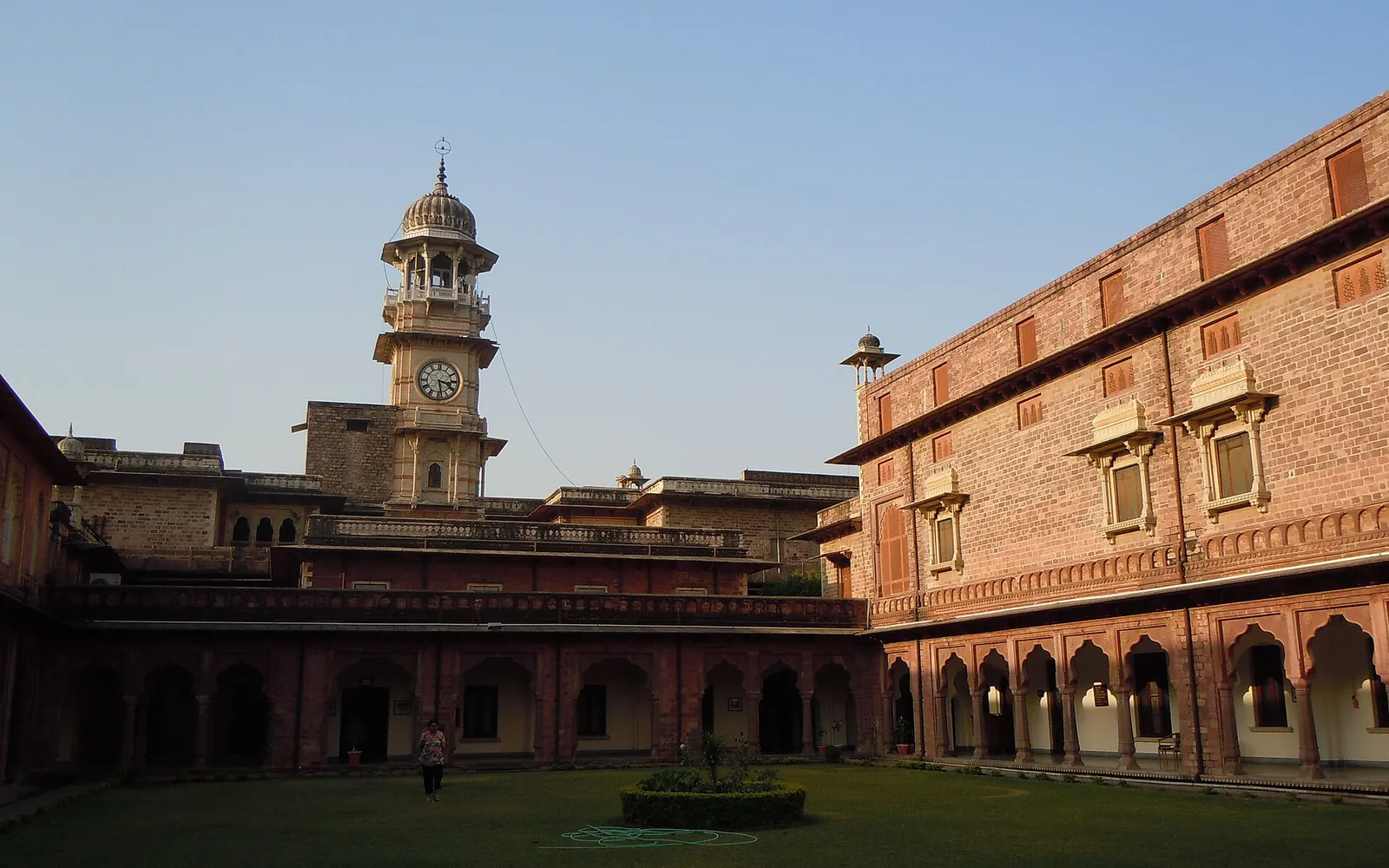
Maharao Umed Singh II (often spelled Ummed or Umaid Singh) ruled Kota from 1889 to 1940. His reign of about fifty years spans the transition from an old-style Rajput court to a modern princely state, and much of the colonial-era city that visitors see today, from Umed Bhawan Palace to the public buildings of the new town, was built in his time.
Early life and adoption
Umed Singh was born on 15 September 1873, not as the heir but as a member of a junior branch of the ruling family, descended from the 17th-century ruler Rao Kishor Singh I. His name at birth is recorded as Udai Singh. He was adopted by Maharao Shatru Sal II, the childless ruler of Kota, and succeeded him on his death in 1889.
Like many princes of his generation, he was educated at Mayo College in Ajmer, the school founded by the British to prepare the sons of ruling families for government under the Raj. That education shaped the style of his reign: a ruler at ease with British officials, interested in administration and public works, and still bound to the rituals of a Rajput court.
A long reign of modernisation
Over the following decades his government introduced modern administration, built schools, hospitals and public offices, and improved roads and water supply. The railway linked Kota to the wider economy of Rajputana and central India during this period; the Kota Junction railway heritage page tells that story. These changes laid the ground for the industrial city that grew on the Chambal after independence.
Although he never held an official post in the British government of India, he was consulted by senior officials and was regarded as a respected adviser among the princes. He sent Kota’s state troops to serve in both the First and Second World Wars.
Honours
Umed Singh II received a long series of British honours and ranks, a measure of his standing among the princes of the time:
- KCSI (Knight Commander of the Order of the Star of India), 1900
- Honorary rank of Major in the 1903 Durbar honours
- GCIE (Knight Grand Commander of the Order of the Indian Empire), 1907
- GCSI (Knight Grand Commander of the Order of the Star of India), 1911
- GBE (Knight Grand Cross of the Order of the British Empire), 1918
- Lieutenant-Colonel and later Colonel in the army ranks attached to his title
Umed Bhawan Palace
The most visible monument of his reign is Umed Bhawan Palace, built as a new royal residence outside the crowded old fort. It was designed by Sir Samuel Swinton Jacob, the engineer-architect behind many Indo-Saracenic buildings in Rajasthan, and combines Rajput and European elements set in gardens. Part of it now operates as a heritage hotel. The move from the Garh Palace on the river to a garden palace in the new town mirrors what many Rajput rulers did in this period.
The Dussehra fair
Kota’s Dussehra celebrations go back much further, but official festival sources credit Umed Singh II with making them grander and more colourful. The fair as a public event, with traders, performers and visitors from the villages of Hadoti, takes its recognisable shape in his reign. Its story is told in our history of the Kota Dussehra Mela, and the current edition is covered on the Dussehra Mela 2026 page.
The hunting Rolls-Royce
Like other princes of his time, Umed Singh II was a keen hunter. One relic of that world became famous much later: his 1925 Rolls-Royce Phantom I, customised for tiger hunting with mounted guns and searchlights, came up for auction in the United States in 2011. It is a reminder of the shikar culture that Kota’s painters had celebrated for two centuries (see the Kota school of painting).
Death and succession
Umed Singh II died on 27 December 1940, aged 67. He was succeeded by his only son, Maharao Bhim Singh II, who would be the last ruling Maharao and the first head of the Rajasthan Union.
Legacy
Umed Singh II is remembered as the ruler who brought Kota into the modern era while keeping its court traditions alive. To see his Kota, visit Umed Bhawan Palace, walk the old city on our Kota heritage walk, and look at the photographs of durbars and hunts in the Garh Palace museum.
Read the full history of Kota or meet the other people who shaped the city.
Frequently asked questions
When did Maharao Umed Singh II rule Kota?
From 1889 until his death on 27 December 1940, a reign of about fifty years and one of the longest in Kota's history.
What did Umed Singh II build in Kota?
Umed Bhawan Palace, designed by Sir Samuel Swinton Jacob, is the best-known building of his reign. His government also built schools, hospitals and public offices in the city.
What is the connection between Umed Singh II and the Dussehra Mela?
Official festival sources credit him with making the Dussehra celebration grander, and the fair took its recognisable public shape in his reign.
Who succeeded Umed Singh II?
His only son, Maharao Bhim Singh II, who ruled from 1940 and led Kota into the Indian Union and the Rajasthan Union in 1948.
Sources
Editorial team
The KotaRajasthan.net team writes about the places, history and festivals of Kota and Hadoti, and corrects pages when readers point out changes.