Hadoti day trips
Bundi Palace (Garh Palace): Chitrashala, History and Tips
Written by Kota Rajasthan Editorial Team · Updated
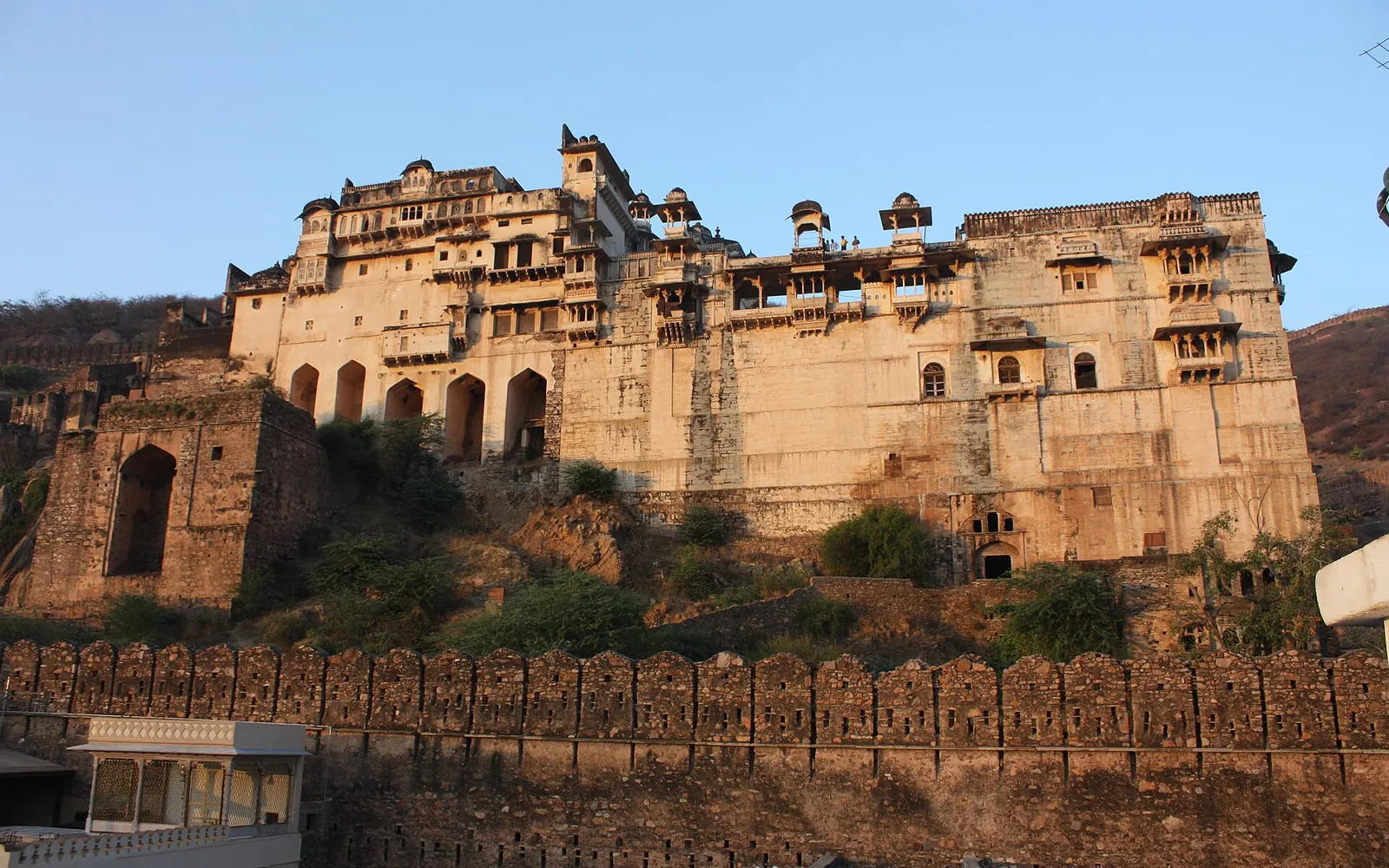
Clinging to the hillside below Taragarh Fort, the Bundi Palace (Garh Palace) of Bundi is a wonderful jumble of ochre-and-grey stone, carved balconies, elephant-flanked gateways and turrets that seem to grow straight out of the rock. Rudyard Kipling, who stayed here, wrote that it looked like the work of goblins rather than men, and the description still fits the palace’s wild, romantic silhouette.
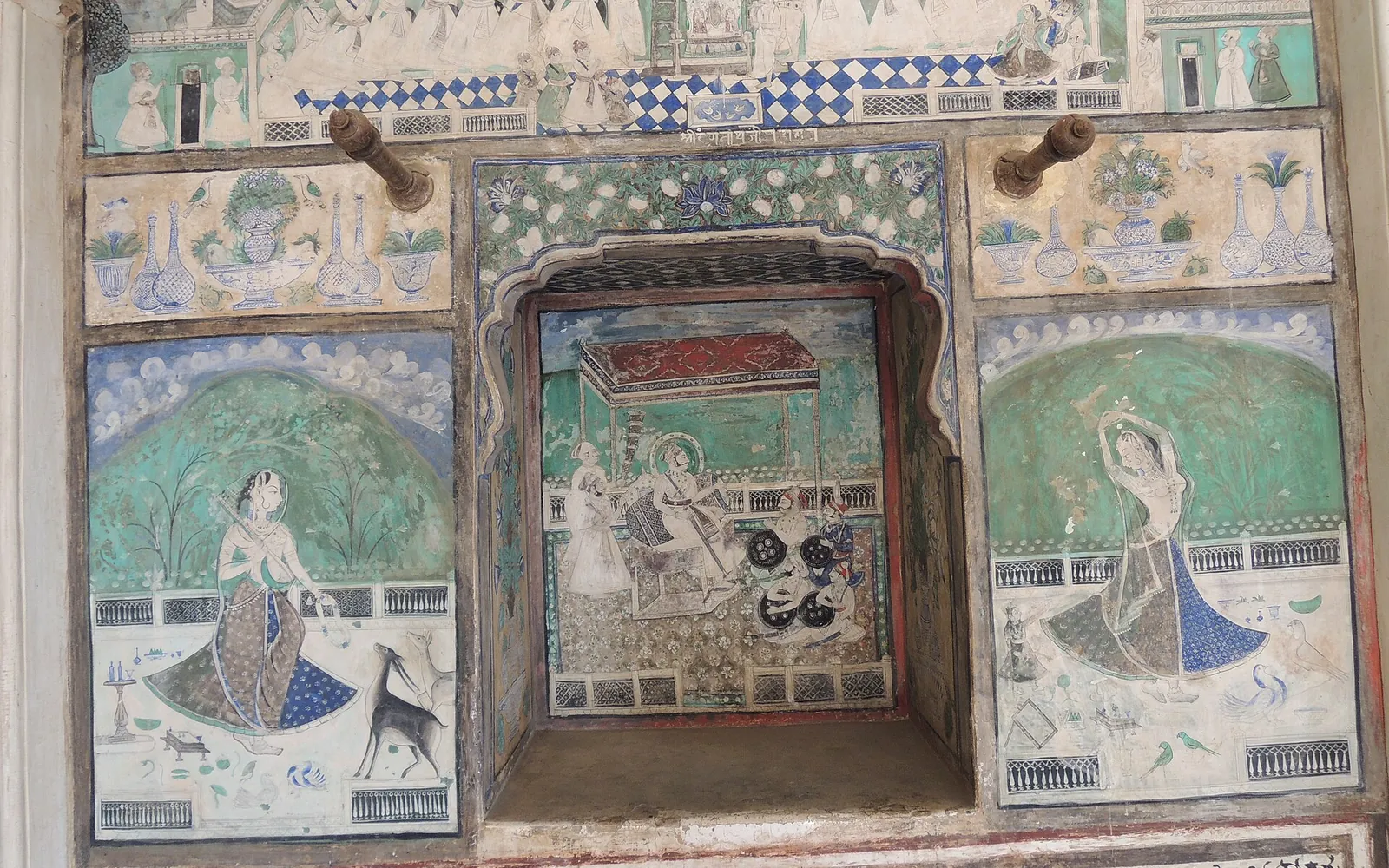
The palace’s crowning glory is the Chitrashala, an open gallery whose walls and ceilings are covered in exquisite murals painted in the celebrated Bundi school style. Rendered in cool blues and greens, they depict Krishna legends, royal processions, hunting scenes and courtly life in astonishing detail. Other highlights include the Ratan Daulat, the Chhatra Mahal and the Badal Mahal, each with its own painted treasures.
Come with time to linger, as the murals reward slow, careful looking.
History of Bundi Palace
Rajasthan Tourism describes the Garh Palace as a collection of palaces built by different rulers over a span of three centuries, and counts it among the largest palaces in India. Each ruler of the Hada Chauhan house added apartments, courtyards and painted rooms, so the palace grew down the hillside below Taragarh Fort rather than being planned as one building. Its architecture is Rajput in character, with jharokha balconies, bracketed pillars and many carved elephants.
Bundi developed a distinctive school of painting under royal patronage, and the palace murals, many of them from the 18th century, are among its finest works. The Archaeological Survey of India lists the wall paintings in the Garh Palace as a Monument of National Importance, the only painted interior on the national list for Hadoti; see protected monuments in Hadoti. Read more in our guide to the Bundi school of painting, and for the court culture of the 19th century, our profile of Bundi’s poet-historian Suryamal Mishran. The wider story of the state is in the history of Bundi.
The main parts of the palace
- Hathi Pol: the steep climb ends at the palace gates; the elephant gate is the most famous of them.
- Chhatra Mahal and Phool Mahal: apartments named by Rajasthan Tourism among the palace’s best-known sections.
- Badal Mahal (Palace of Clouds): walls covered with paintings that Rajasthan Tourism notes show an early Chinese influence; its vaults are decorated with half-open lotus motifs.
- Chitrashala: a pavilion and gallery of miniature murals around a garden court, with Krishna stories, processions, hunts and court scenes in the blues and greens associated with Bundi.
Kipling, who stayed in Bundi in 1887-88, wrote that the palace looked like something built in uneasy dreams, the work of goblins rather than men; our page on Kipling in Bundi has the context.
Tips for the murals
- Go early: the gates open at about 8 am, and soft light is easier on painted walls.
- Hire a guide at the gate if you want the stories behind the scenes; Rajasthan Tourism notes that guides are available.
- Never touch the paintings or use flash.
- Wear shoes with grip for the steep, worn ramps.
What to see at Bundi Palace
- Chitrashala painted gallery
- Blue-and-green Bundi-school murals
- Hathi Pol (elephant gate)
- Badal Mahal and Chhatra Mahal
- Views over the blue city
Visiting Bundi Palace: practical details
| Detail | Information |
|---|---|
| Where | Hadoti Region, Bundi district |
| Distance from Kota | About 36 km |
| Best time to visit | October to March |
| Timings | Approximately 8:00 AM to 5:00 PM |
| Entry | Modest ticket for Indians; higher for foreign visitors (camera charge extra) |
| Getting there | From Kota it is a 36 km drive to Bundi; the palace stands in the old town at the foot of Taragarh hill, an easy walk from the bazaar. |
Distances are approximate road distances. Timings and entry charges change from season to season, so confirm them locally or with the district tourist office before you set out.
Combine Bundi Palace with nearby places
- Taragarh Fort, Bundi: A rugged 14th-century hill fort towering over Bundi town, famous for its vast reservoirs, tunnels and sweeping views of the blue city below.
- Raniji ki Baori: A magnificent 17th-century stepwell, over 45 metres deep, adorned with sculpted pillars, arches and carved deities.
- Nawal Sagar Lake: A large artificial lake in the middle of Bundi, famous for its perfect reflections of the Garh Palace and Taragarh Fort.
Frequently asked questions
How do I get to Bundi Palace from Kota?
From Kota it is a 36 km drive to Bundi; the palace stands in the old town at the foot of Taragarh hill, an easy walk from the bazaar.
When is the best time to visit Bundi Palace?
October to March.
What are the timings and entry charges for Bundi Palace?
Timings: Approximately 8:00 AM to 5:00 PM. Entry: Modest ticket for Indians; higher for foreign visitors (camera charge extra). Both change, so check locally before you go.
Who built Bundi Palace?
No single ruler. Rajasthan Tourism describes it as a group of palaces built by different rulers of Bundi over about three centuries, with sections such as the Chhatra Mahal, Phool Mahal, Badal Mahal and the Chitrashala.
Sources
Editorial team
The KotaRajasthan.net team writes about the places, history and festivals of Kota and Hadoti, and corrects pages when readers point out changes.