Food and crafts
Bundi School of Painting: Murals, Ragamalas and Chitrashala
Written by Kota Rajasthan Editorial Team · Updated
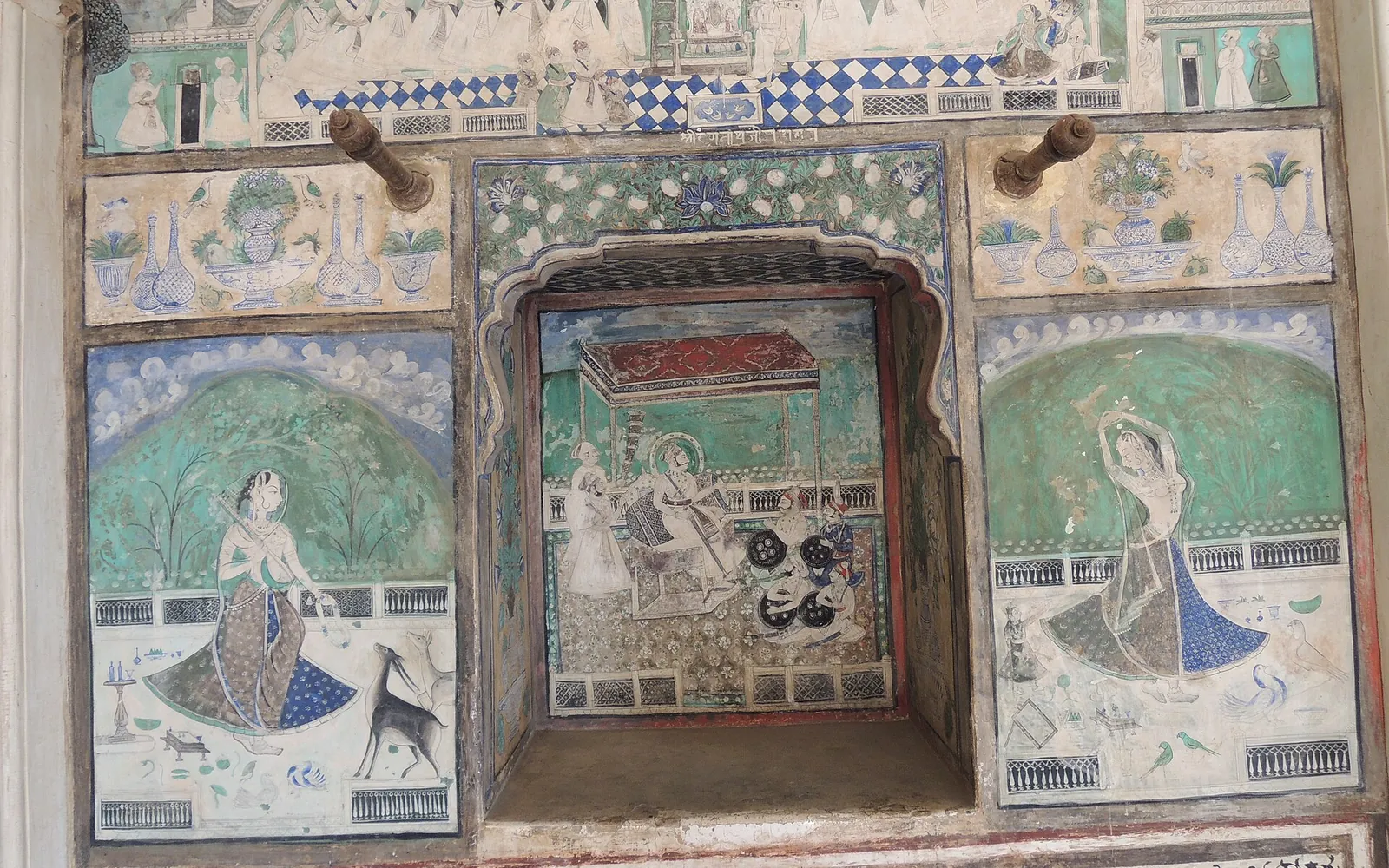
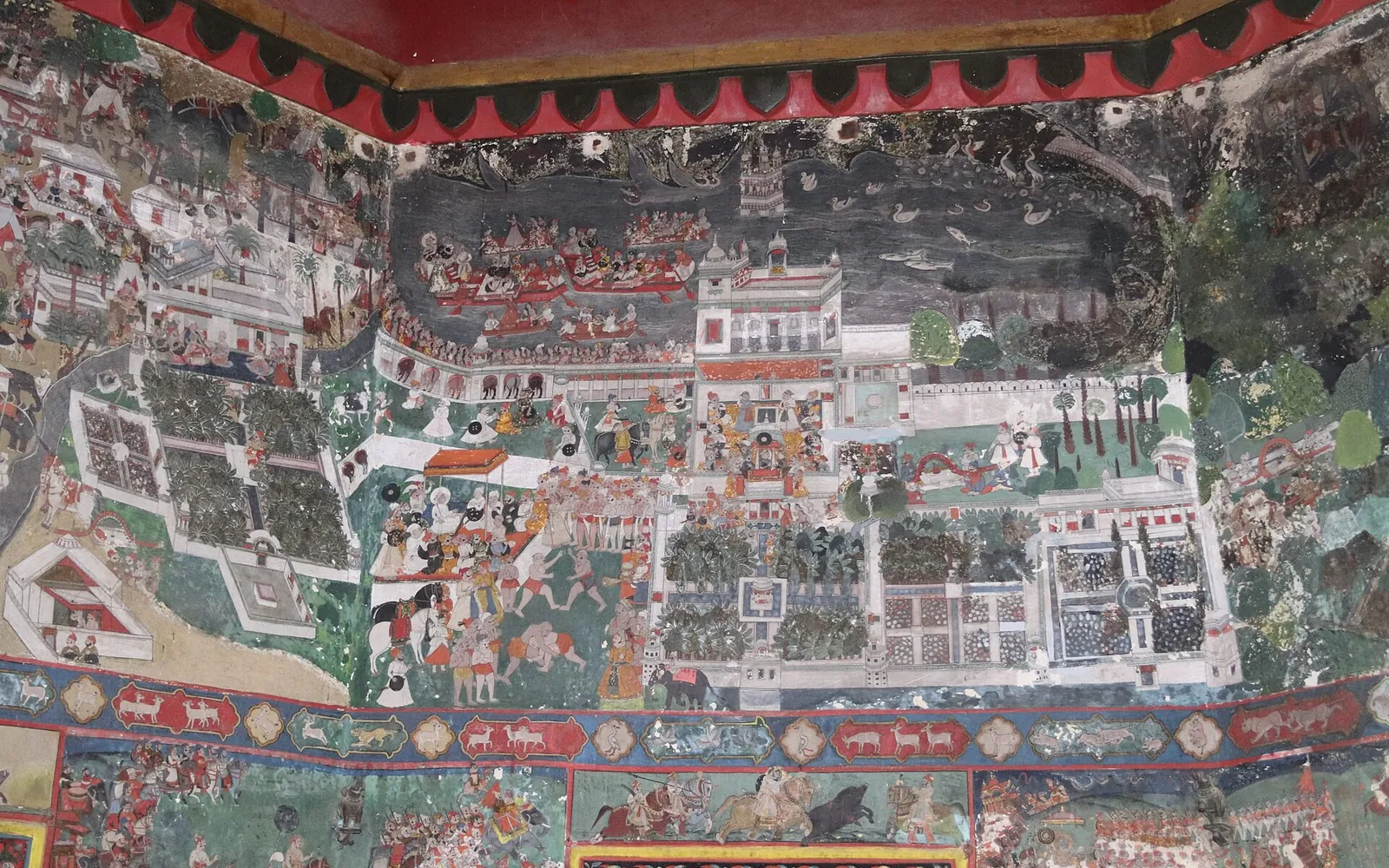
The Bundi school of painting is one of the most lyrical traditions of Rajput art, and its finest surviving murals are just 36 km from Kota, in the hillside Garh Palace of Bundi. Green landscapes, blue-and-white borders, Krishna and Radha, ladies on palace terraces, elephants in procession: Bundi’s painters turned the walls of their rulers’ palace into a picture book. This guide explains where the style came from, what it looks like, how it relates to the Kota school and where you can see it today, from a short trip out of Kota.
Where Bundi painting came from
Bundi was the first capital of the Hada Chauhans, the clan that gave the Hadoti region its name. In the late 16th century its rulers were drawn into the service of the Mughal emperors, and they saw the imperial painting workshops at first hand.
A key early document is the Chunar Ragamala, a set of paintings dated 1591. It was probably painted for a member of the Bundi royal family, and three of its artists say they had been trained in the imperial workshop by Mir Sayyid Ali and Abd al-Samad, the masters of Akbar’s studio. Art historians describe it as a rough but vigorous and inventive adaptation of the Mughal style, and it became a model for later Bundi painters.
From there the story can be followed in the palace itself. Some of the most refined early wall paintings survive in the part of the palace built by Rao Bhoj Singh (r. 1585-1607), and under Rao Ratan Singh (r. 1607-31) the development of Bundi painting can be traced through dated miniatures and murals. Later rulers kept adding painted rooms for more than a century.
What Bundi paintings look like
Every painting is different, but a few things recur:
- Ragamalas. Bundi painters had a lasting preference for ragamalas, sets of paintings that personify musical modes (ragas and their “wives”, the raginis), each linked to a mood, a season and a time of day. A raga might appear as a lover waiting in a pavilion, a prince with musicians or a woman in a forest during the rains.
- Krishna and Radha. Religious and literary subjects, above all the love of Radha and Krishna, are everywhere, as Rajasthan Tourism notes of the Chhatra Mahal murals.
- Court life. Processions, durbars, ladies on terraces, festivals and hunting appear alongside the devotional scenes.
- Animals, especially elephants. Elephants in procession and in battle are a favourite subject.
- Colour and line. Writers on Bundi painting point to its refined line and controlled palette. In the palace murals, greens, blues and turquoise dominate, set against white grounds and patterned borders, as in the photograph above.
Bundi and Kota: one family of styles
Kota was part of the Bundi kingdom until it became a separate state in the 17th century under Rao Madho Singh, and art historians treat Bundi and Kota painting as one closely related idiom. The bridge is the artist known as the Hada Master, a specialist in elephants and hunting scenes who moved from Bundi to Kota. From then on Kota developed its own personality, famous for dramatic hunts in dense jungle, while Bundi leaned towards ragamalas, literature and court life. Read our Kota school of painting guide for the Kota side of the story.
The Chitrashala and the painted palace
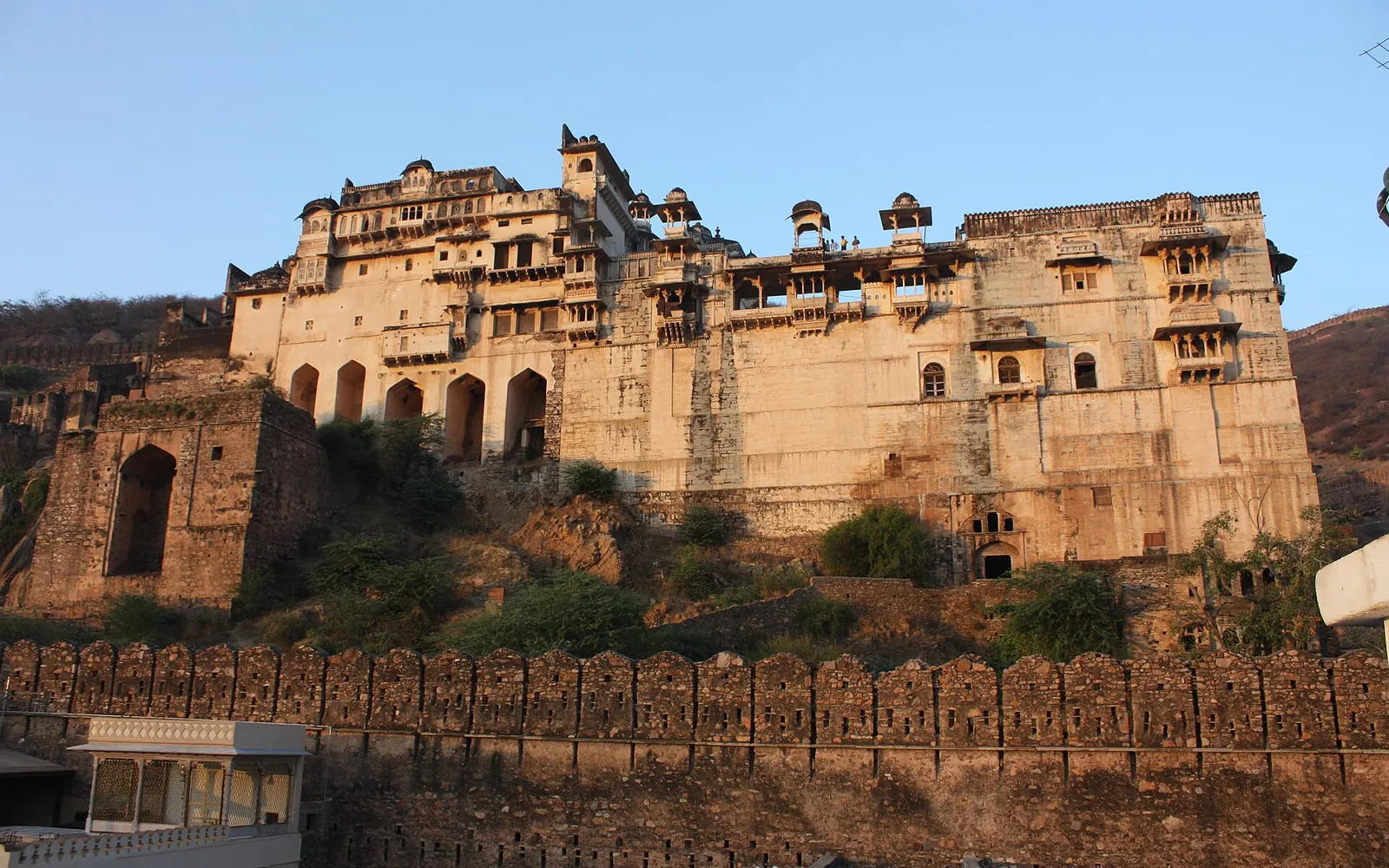
Rajasthan Tourism describes the Garh Palace of Bundi as one of the largest palaces in India, though less known than many, built by different rulers over about three centuries. Painting is everywhere, but three parts matter most:
- The Chitrashala. The “picture gallery”, a pavilion and courtyard whose walls are covered with murals, made at the order of Rao Umed Singh of Bundi in the 18th century. Because the painted rooms are tucked away from direct sun and damp, the colours remain unusually vivid. Subjects include ragamalas, Radha and Krishna, court processions and festivals.
- The Chhatra Mahal. Built by Rao Chhatrasal (r. 1631-58), with murals of gods and goddesses, battle scenes, elephants and Radha-Krishna.
- The Badal Mahal. The “palace of clouds”, attributed to Rao Bhoj, with some of the finest early wall paintings.
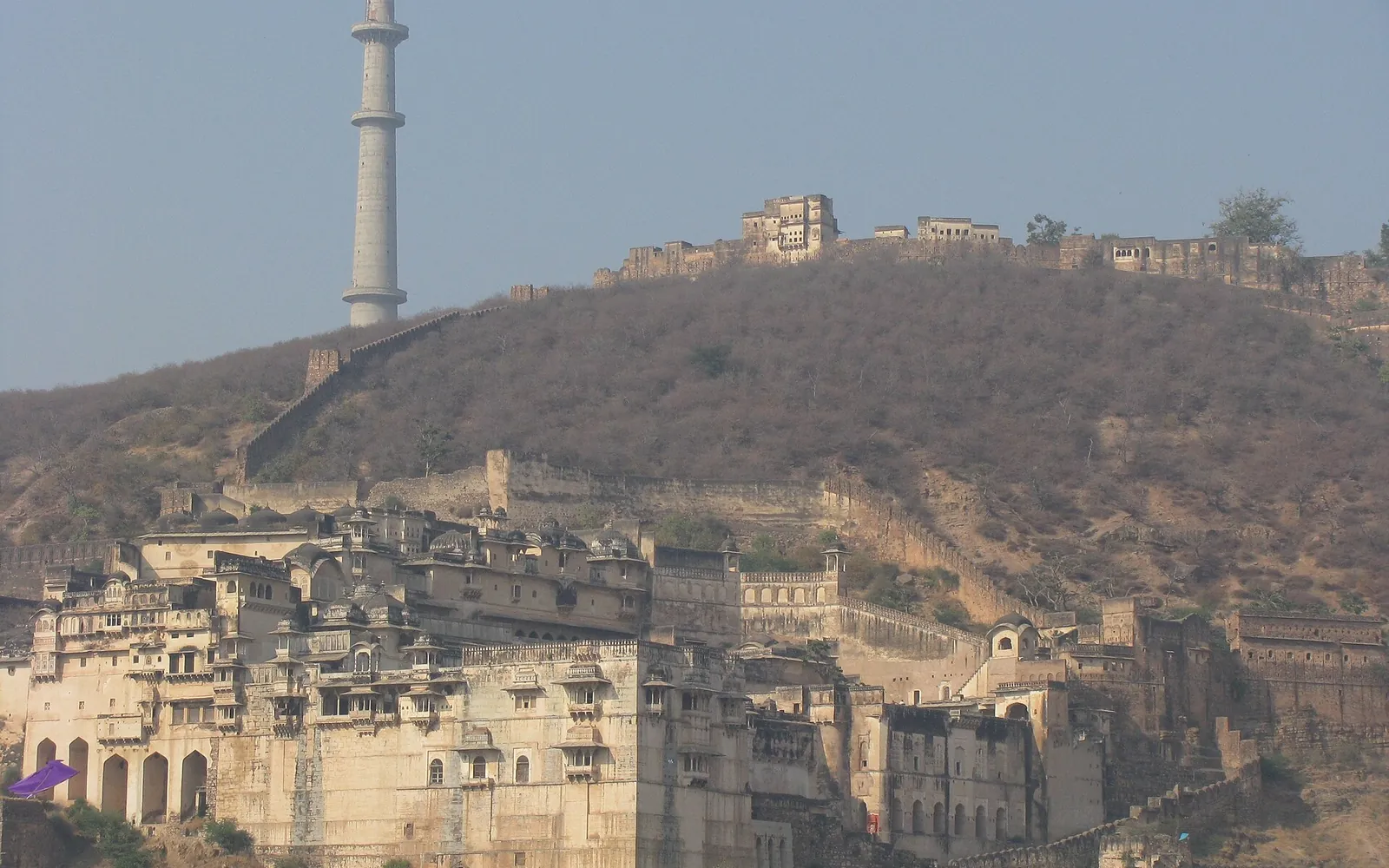
See our Bundi Palace page for the palace as a whole, and climb on to Taragarh Fort above it if you have the energy.
Other places to see Bundi painting
- Sukh Mahal museum, Bundi. The museum in the Sukh Mahal compound, opened in 2016, displays miniatures of both the Kota and Bundi schools, with themes such as Krishna Lila, royal portraits, nayaka and nayika, and hunting scenes, alongside Hadoti sculpture and arms.
- Garh Palace, Kota. The Rao Madho Singh Museum and the painted apartments of Kota’s Garh Palace let you compare the two styles on the same day. Our museums in Kota guide covers the options.
- Museums elsewhere. Bundi miniatures are held by major museums in India and abroad, and many have put their collections online, which is a good way to prepare for a visit.
Visiting from Kota
Bundi is about 36 km from Kota by road, so the painted palace makes an easy half-day or day trip by car, taxi or bus. A good plan is to reach the Garh Palace when it opens, spend unhurried time in the Chitrashala, then walk down through the old town to Raniji ki Baori and the Sukh Mahal by the lake. Our weekend in Bundi guide has a full route, and the November Bundi Utsav adds processions and crafts.
Practical points:
- Hours and tickets are set by the palace management and can change; check at the gate.
- Hire a guide at the entrance if you want the stories behind the scenes; Rajasthan Tourism notes that guides are available.
- Bring a torch or use your phone light for darker corners, but do not use flash on the murals and never touch the painted surfaces.
- Go slowly. The pleasure of Bundi painting is in the details: a bird on a balcony, a deer under a tree, a border of tiny flowers.
Why it matters
The Bundi murals survive in situ, on the walls where they were painted, which is rare for Rajput art. Seeing them in the palace for which they were made, a short drive from Kota, is one of the great cultural experiences of Hadoti and the natural partner to the history of Kota.
Frequently asked questions
What is the Bundi school of painting?
A style of Rajput painting associated with the Hada rulers of Bundi in southeastern Rajasthan, practised in miniatures on paper and in wall paintings in the palace. It is closely related to the Kota school, which branched off from it in the 17th century.
What are the main themes of Bundi painting?
Ragamalas (paintings of musical modes), literary and religious subjects, especially Radha and Krishna, and scenes of court life, processions, festivals, elephants and battles.
Where can I see Bundi paintings?
The Chitrashala in the Garh Palace in Bundi has the best-known murals, and other painted rooms survive in the palace. The museum in the Sukh Mahal compound displays Bundi and Kota miniatures. Major museums in India and abroad also hold Bundi miniatures.
How is Bundi painting different from Kota painting?
They share a common idiom. Art historians describe Bundi as leaning towards ragamalas, literature and court life, while Kota painters became famous for hunting scenes and animals.
How do I visit the Chitrashala from Kota?
Bundi is about 36 km from Kota by road. The Chitrashala is part of the Garh Palace complex; check current opening hours and tickets at the palace.
Sources
Editorial team
The KotaRajasthan.net team writes about the places, history and festivals of Kota and Hadoti, and corrects pages when readers point out changes.