Food and crafts
Kota Doria Sarees: The Delicate Weave of Kaithoon Village
Written by Kota Rajasthan Editorial Team · Updated
Hold a genuine Kota Doria saree up to the light and it almost disappears. The weave is so fine, so open, that you can read newsprint through it. Yet this gossamer fabric, born in the village lanes of Kaithoon near Kota, is one of the most prized handloom textiles in India, worn by brides and connoisseurs and protected by a Geographical Indication tag.
What makes Kota Doria special
The magic of Kota Doria lies in its structure. The fabric is woven with a distinctive square check pattern called the khat, created by alternating groups of fine cotton and silk threads in both the warp and the weft. This produces a light, airy, almost transparent cloth that is perfect for the punishing heat of a Rajasthan summer. Traditionally the counting is described in khats, and a higher number of khats means a finer, more valuable weave. Silk is usually added to the cotton in roughly a 20:80 ratio to give the open cloth strength, and that cotton-silk blend is the classic Kota Doria; pure silk versions are now popular too. A standard sari is about 6.5 metres long, including the blouse piece.
From turban cloth to sari: Masuriya
The fabric did not begin as a sari. The usual account is that weavers were brought to Kota from Mysore, and the cloth they made was first called Kota Masuriya after them. It was woven on narrow looms about 8 inches wide for the traditional paag (turban), and only later on broader looms for the light saris that made it famous. Accounts disagree on who invited the weavers and when: some credit Zalim Singh Jhala, who ran Kota from 1771, while others place the move in the late 17th century, when Kota’s rulers served the Mughals in the Deccan. We give both rather than pick one; see Zalim Singh Jhala and rulers of Kota for the people involved.
Kaithoon: the heart of the craft
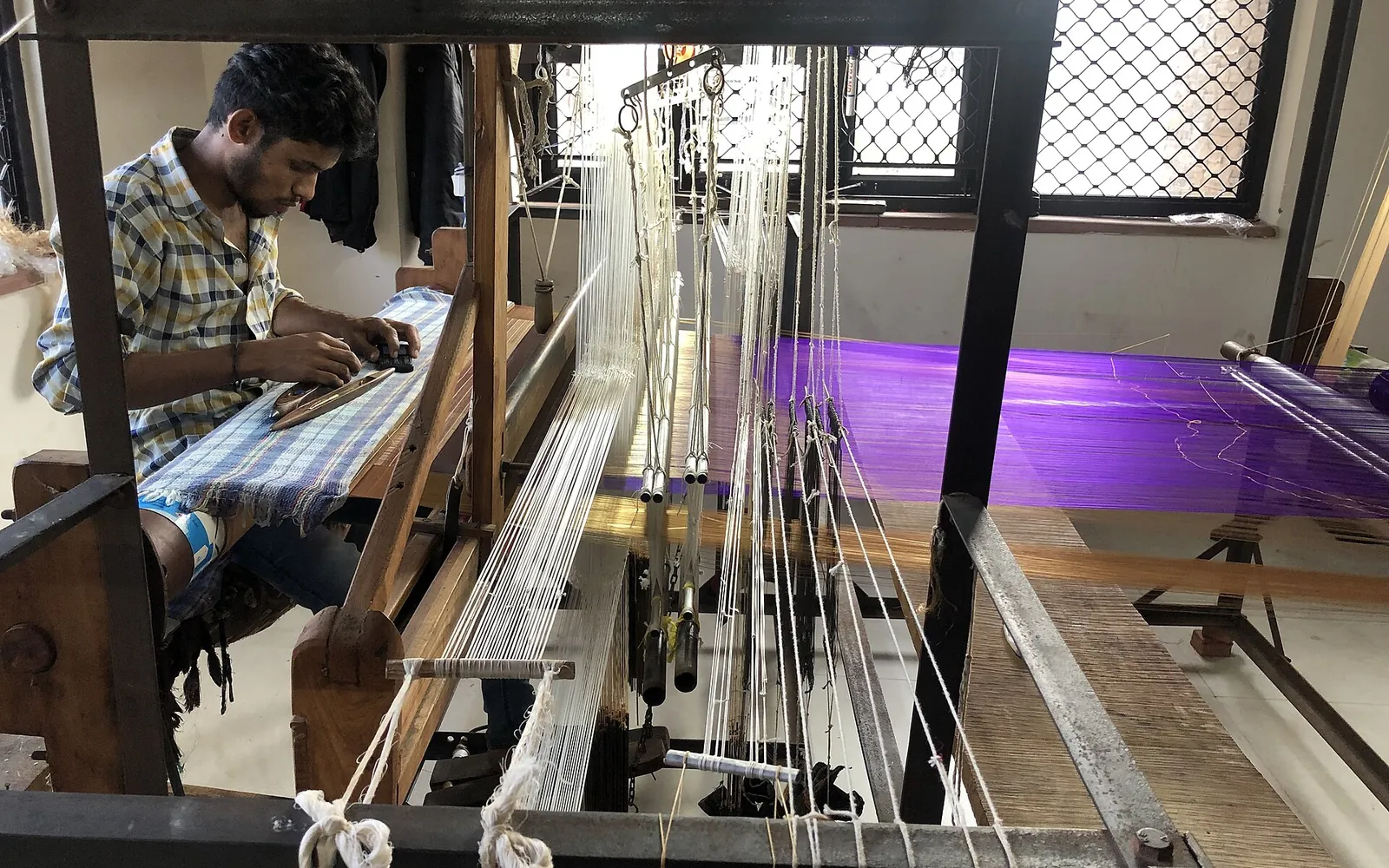
The home of Kota Doria is Kaithoon, a weaving town and municipality in Kota district about 15 kilometres from the city, and some surrounding villages. Here entire families work the pit looms, a craft passed down through generations, often led by women weavers. Walking through Kaithoon you hear the rhythmic clack of shuttles from house after house. It is said the weave was brought to the region centuries ago under the patronage of Kota’s rulers, and the community has carried it forward ever since.
From plain to opulent
While the classic Kota Doria is understated, contemporary weavers have expanded its range enormously:
- Zari and gold thread woven into the checks for festive elegance.
- Block-printed and hand-painted Doria with floral and traditional motifs.
- Embroidered versions with delicate thread and mirror work.
- Pure silk Doria for bridal and occasion wear, alongside the everyday cotton-silk blend.
How to spot a genuine Kota Doria
Because the name commands a premium, machine-made imitations abound. A few pointers help you buy the real thing:
- Look for the fine, uneven square khat pattern; power-loom copies tend to look too perfect.
- The handwoven fabric is feather-light and slightly irregular to the touch.
- Genuine handwoven Kota Doria is protected by a Geographical Indication (GI); a genuine piece should carry the GI mark woven into one corner. Buy from trusted cooperatives or weavers where possible.
- Be aware that much cloth sold as “Kota Doria” is made on power looms elsewhere, including in Surat and Varanasi, and then printed or embroidered.
- Buying directly in Kaithoon or from reputable Kota outlets supports the weavers and improves your odds of authenticity.
The making: weeks on a pit loom
A single Kota Doria saree can take days or even weeks to weave, depending on its fineness and ornamentation. The weaver sits at a traditional pit loom, legs in a pit below the ground, working the treadles by foot while the hands guide the shuttle. Fine cotton and silk yarns are set up in carefully counted groups to create the khat checks, and any zari or motif work adds further painstaking effort. It is slow, skilled, physically demanding labour, and much of it is done by women who have woven since childhood.
This is why a genuine handwoven Doria costs more than a machine-made imitation, and why it is worth paying for. You are not just buying cloth; you are buying weeks of a weaver’s craft and the survival of a centuries-old tradition. Every saree carries the small irregularities of the human hand, which is precisely what gives it soul.
A weave with royal roots
Tradition holds that the Doria weaving technique was brought to the Kota region generations ago, with the Kota rulers encouraging weavers to settle and practise their craft, particularly in Kaithoon. Over time the fabric became associated with the region so strongly that its very name carries the city, Kota Doria. Today the Geographical Indication tag formally recognises this link, protecting the name so that only genuine regional handloom can rightfully claim it. Buying an authentic piece is thus also a small act of protecting the heritage of an entire community.
Caring for your saree
The delicacy that makes Kota Doria beautiful also makes it demanding. Dry-clean pure silk and zari pieces; gently hand-wash cotton Doria in cold water with a mild detergent. Never wring it. Dry in shade, store with the folds changed occasionally, and keep it away from hooks and rough surfaces that can snag the open weave.
Wearing a piece of Kota
To drape a Kota Doria is to wear the summer air of Rajasthan itself, cool, light and quietly luxurious. Buying one is also a small act of preservation, helping keep the pit looms of Kaithoon clacking for another generation. If you visit Kota, set aside an afternoon for Kaithoon; watching a weaver conjure those tiny squares thread by thread will change how you see the finished saree forever.
Related reading
Read more about what Kota is famous for, the region’s household folk art, mandana, another famous product of the city, Kota Stone, and the markets of the old city around the Ghantaghar clock tower.
Comparing fabrics? Kota Doria vs Chanderi explains how the two light handloom sarees differ and how to recognise each.
Frequently asked questions
What is a Kota Doria saree?
It is a light, airy handwoven saree from the Kota region, known for its distinctive square check pattern called khat, made from fine cotton and silk threads.
Where are Kota Doria sarees made?
The craft is centred in Kaithoon village, about 15 kilometres from Kota, where families weave on traditional pit looms.
How do I know if a Kota Doria is genuine?
Look for the fine, slightly irregular khat checks, a feather-light feel, and Geographical Indication recognition. Buying from Kaithoon or trusted cooperatives helps ensure authenticity.
How should I wash a Kota Doria saree?
Dry-clean silk and zari pieces, and gently hand-wash cotton Doria in cold water with mild detergent. Never wring it, and dry in the shade.
Sources
Editorial team
The KotaRajasthan.net team writes about the places, history and festivals of Kota and Hadoti, and corrects pages when readers point out changes.