Hadoti day trips
Gagron Fort: The UNESCO Water Fort of Jhalawar Near Kota
Written by Kota Rajasthan Editorial Team · Updated
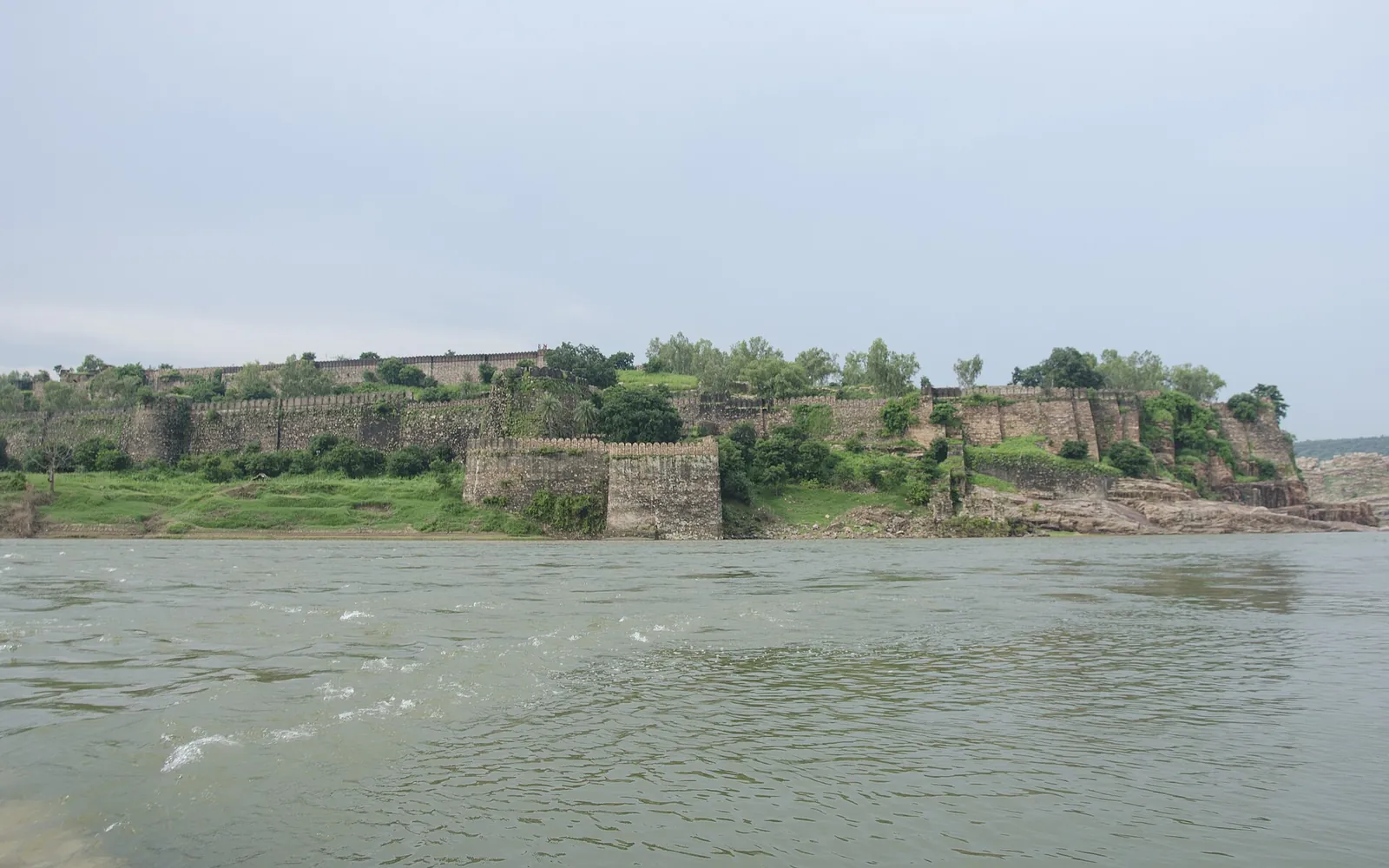
Most of Rajasthan’s great forts crown hilltops or command deserts. Gagron is different. This is a jaldurg, a water fort, ringed on three sides by the confluence of the Ahu and Kali Sindh rivers and backed by the Mukundara hills. That rare setting, both scenic and strategic, helped earn Gagron a place on the UNESCO World Heritage list as one of the Hill Forts of Rajasthan. It lies near Jhalawar, an easy excursion from Kota.
A fort defended by water
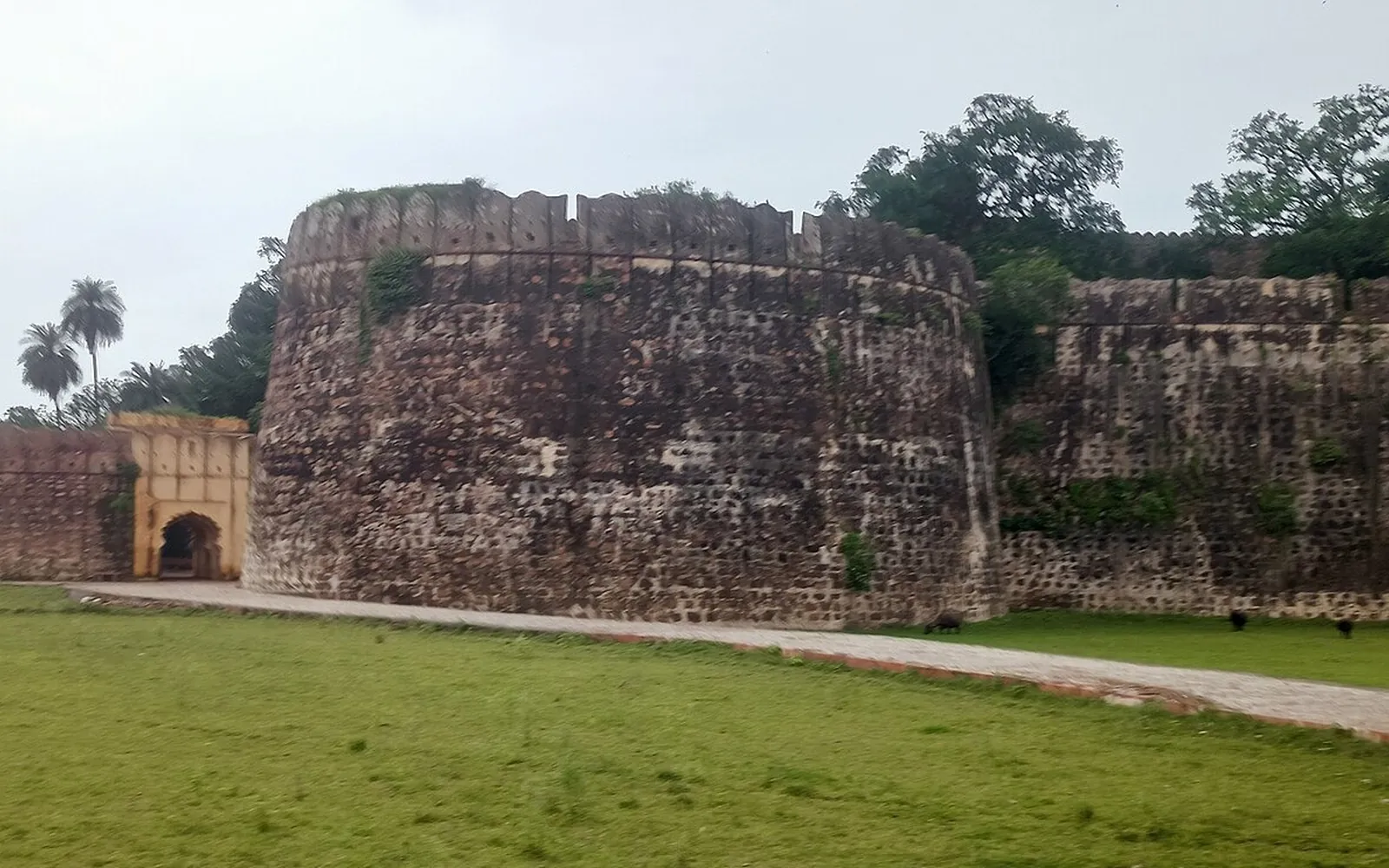
Gagron belongs to the small and prized category of water forts. Water protects it on three sides and a moat on the fourth, which is why it is called a jaladurg. The hill it stands on serves as its foundation, and unusually it has three lines of ramparts rather than the usual two. Two main gates lead in, one from the river side and one from the hill road. Approaching it, you understand instantly why it was so coveted: the water is both its beauty and its armour.
Layers of history
The exact date of construction is unknown; historians estimate that parts of the fort were built between the 7th and 14th centuries. Tradition credits its foundation to a Raja Madho Bhil, and it passed in the 12th century to Bijaldev, a Parmar (Dod) Rajput. For about three centuries it was held by the Khichi Chauhans.
The most famous episode came in 1423, when Sultan Hoshang Shah of Malwa besieged Gagron with a large army. The Khichi ruler Achal Das refused to surrender and died fighting, and the women of the fort committed jauhar. The fort is said to have seen 14 battles and two jauhars. It was later taken by Sher Shah and by Akbar, who reportedly used it as a headquarters before granting it to Prithviraj of Bikaner.
Gagron also produced one of the most unusual rulers in Rajasthan’s history: Sant Pipa Ji, the king who gave up the fort to become a Bhakti saint and whose hymn is in the Guru Granth Sahib. In 1838 the area became part of the new state of Jhalawar; see history of Jhalawar.
In June 2013, at the World Heritage Committee’s meeting in Phnom Penh, Gagron was inscribed with Amber, Chittorgarh, Jaisalmer, Kumbhalgarh and Ranthambore as the serial World Heritage Site Hill Forts of Rajasthan, recognised as examples of Rajput military hill architecture.
What to see inside
- Ganesh Pol, Bhairavi Pol and Kishan Pol, the gates you pass through on the way in, and the Nakkarkhana (drum house).
- Diwan-i-Aam and Diwan-i-Khas, the halls of public and private audience.
- Janana Mahal and Rang Mahal, the palace quarters.
- Madhusudan temple, within the fort.
- The dargah of Sufi saint Mitthe Shah, just outside the fort, venue of an annual fair during Muharram.
- The Pipaji monastery, across the confluence.
- The river views, panoramas over the confluence and surrounding hills, best in soft morning or evening light.
How to visit from Kota
Gagron Fort lies near the town of Jhalawar, roughly 90 to 100 kilometres from Kota, making it a comfortable day trip of a few hours’ drive each way. You can combine it with the town of Jhalawar and its attractions for a fuller day. A car or taxi is the most convenient way to reach it; the last stretch and the fort itself are best explored on foot.
The dargah and a fort of two faiths
One of the most moving aspects of Gagron is that it is sacred to more than one tradition. Near the fort lies the dargah of the Sufi saint Mitthe Shah, and each year an urs (festival) draws pilgrims who come to pay their respects. The presence of this revered Sufi shrine alongside the fort’s Hindu temples makes Gagron a place of shared devotion, a reminder of the layered, plural history of this part of Rajasthan. Standing where warriors once fought and where pilgrims of different faiths still gather, you feel the full weight of the fort’s long story.
Why the setting matters
Gagron’s rivers are not just scenery; they were its whole strategy. In an age of siege warfare, a fort surrounded by water was extraordinarily hard to attack. Enemies could not easily dig approaches, mount ladders against the walls, or cut off the defenders, and the rivers provided both a barrier and a resource. This is why water forts were so prized and so rare. Understanding this transforms the view from a pretty picture into a lesson in medieval military genius: every bend of the Ahu and Kali Sindh was part of the fort’s defence.
The Mukundara hills at Gagron’s back completed the natural fortress, funnelling any land approach into a narrow, defensible corridor. Nature and engineering worked hand in hand, which is precisely the quality that earned Gagron its UNESCO recognition as an outstanding example of the Hill Forts of Rajasthan.
Practical tips
- Visit in the cooler months (October to March) and preferably in the morning to avoid the midday heat.
- Wear comfortable shoes and carry water, as you will be walking on uneven stone.
- The fort is most atmospheric and photogenic when the rivers are full after the monsoon.
- Combine it with Jhalawar’s Garh Palace and Chandrabhaga temples for a rounded itinerary; our Jhalawar tourist places guide has a full-day route.
Combining Gagron with Jhalawar
Since you are travelling all the way to the Jhalawar area, it makes sense to turn Gagron into part of a fuller day. Jhalawar town itself has plenty to offer: the Garh Palace with its painted interiors, the Government Museum, and, a short distance away, the beautiful Chandrabhaga temple complex on the river, plus the atmospheric ruins of Jhalrapatan, the city of temple bells. Some travellers also visit the Kolvi caves in the wider region. Structuring your trip as Kota to Jhalawar, taking in Gagron Fort along with these nearby sights, gives you a rich, rewarding day out and justifies the drive far better than seeing the fort alone.
A World Heritage day out
Gagron is one of those places that photographs beautifully but feels even better in person, the sound of the rivers, the weight of the ramparts, the sweep of the hills beyond. As a UNESCO-listed water fort within easy reach of Kota, it is among the most rewarding heritage excursions in the Hadoti region. If you love history and dramatic settings, do not miss it.
Frequently asked questions
Why is Gagron Fort special?
It is a rare water fort (jaldurg), surrounded on three sides by the Ahu and Kali Sindh rivers, and is inscribed on UNESCO's list of Hill Forts of Rajasthan.
Where is Gagron Fort located?
Gagron Fort is near Jhalawar in southeastern Rajasthan, roughly 90 to 100 kilometres from Kota.
Is Gagron Fort a UNESCO World Heritage Site?
Yes. It was inscribed in June 2013, with Amber, Chittorgarh, Jaisalmer, Kumbhalgarh and Ranthambore, as the serial World Heritage Site Hill Forts of Rajasthan.
Who built Gagron Fort?
The exact date is unknown. Tradition names Raja Madho Bhil as founder; in the 12th century it passed to Bijaldev, a Parmar Rajput, and it was then held for about three centuries by the Khichi Chauhans.
How do I reach Gagron Fort from Kota?
Drive to Jhalawar, about a two to three hour trip by car or taxi, and explore the fort on foot. It pairs well with other Jhalawar attractions.
Sources
Editorial team
The KotaRajasthan.net team writes about the places, history and festivals of Kota and Hadoti, and corrects pages when readers point out changes.