Wildlife and the Chambal
Mukundara Hills Tiger Reserve: Kota's Wildlife Wilderness
Written by Kota Rajasthan Editorial Team · Updated
Just beyond Kota’s city limits, the land rises into rocky hills cloaked in dry deciduous forest, cut by rivers and dotted with ancient ruins. This is the Mukundara Hills Tiger Reserve, Rajasthan’s newer tiger reserve and Kota’s own slice of wilderness, a place where the Hadoti plateau reveals its wild heart.
What Mukundara is
Mukundara Hills Tiger Reserve stretches across the hills and valleys south of Kota, spanning parts of the Kota, Bundi, Chittorgarh and Jhalawar districts. It was declared a tiger reserve to create a protected corridor for tigers and other wildlife dispersing from Ranthambore. The terrain is classic Hadoti: rugged hills, plateaus, seasonal streams and forest, home to a range of species and a scattering of historic sites.
Key facts
- National park: declared in 2004, covering about 760 km².
- Made up of: the Darrah Wildlife Sanctuary, the Jawahar Sagar Wildlife Sanctuary (notified in 1975, about 195 km² along the Chambal between the Rana Pratap Sagar and Jawahar Sagar dams) and part of the National Chambal Sanctuary.
- Tiger reserve: notified in 2013.
- Rivers: the Chambal, Kali, Ahu and other streams cross the reserve; the Jawahar Sagar sanctuary section follows the Chambal between two dams of the Chambal Valley Project.
- Forest: dry deciduous forest typical of the Khathiar-Gir ecoregion, with dhok, khair, palash, mahua and tendu among the trees, and grassland patches between the hills.
- History: much of the forest was once the hunting ground of the rulers of Kota.
Wildlife you may encounter
- Tiger, the reserve’s flagship species, part of ongoing efforts to establish a viable population.
- Leopard, elusive but present in the hills.
- Deer and antelope, sambar, chital, nilgai and chinkara.
- Wild boar, sloth bear and smaller carnivores.
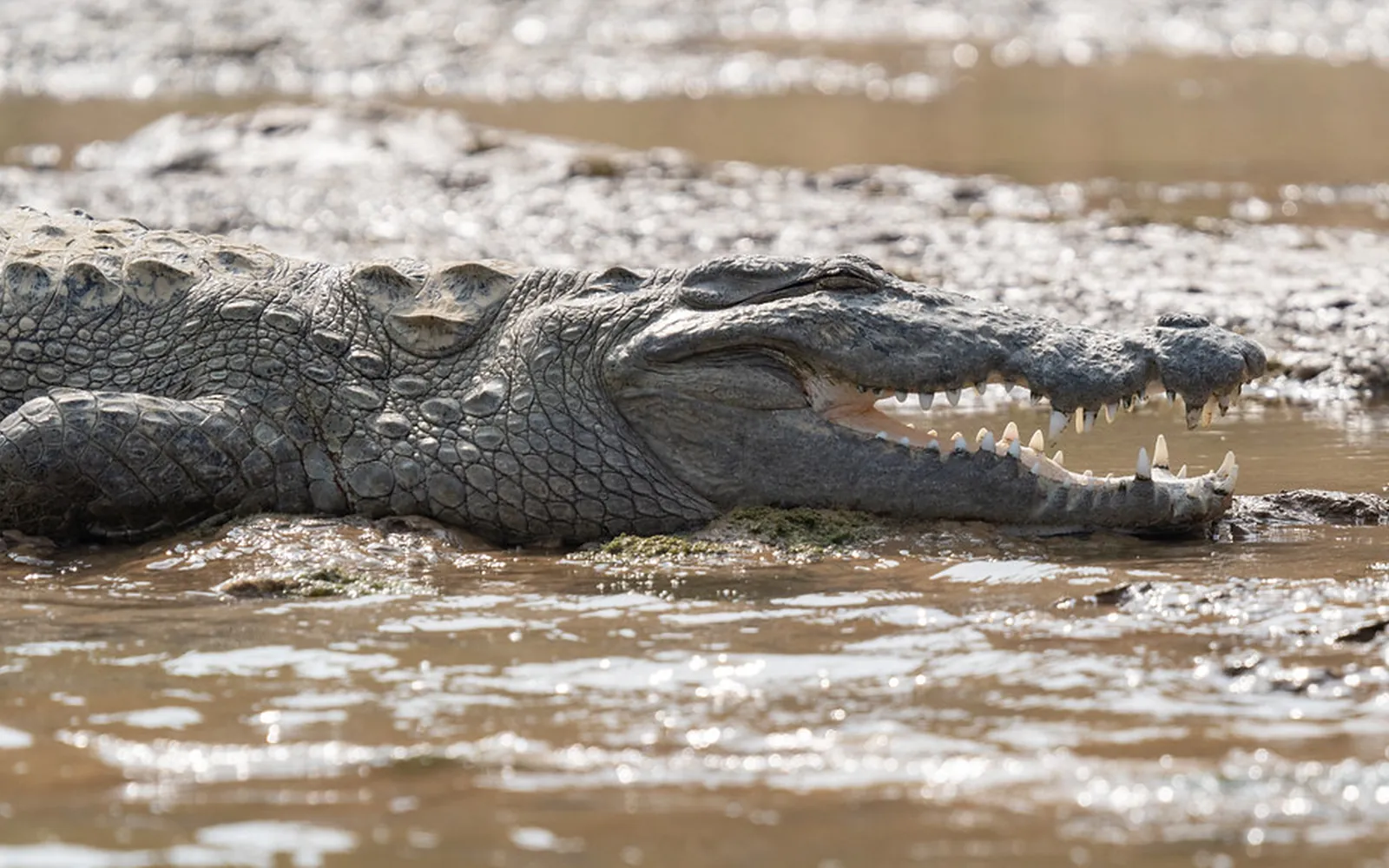
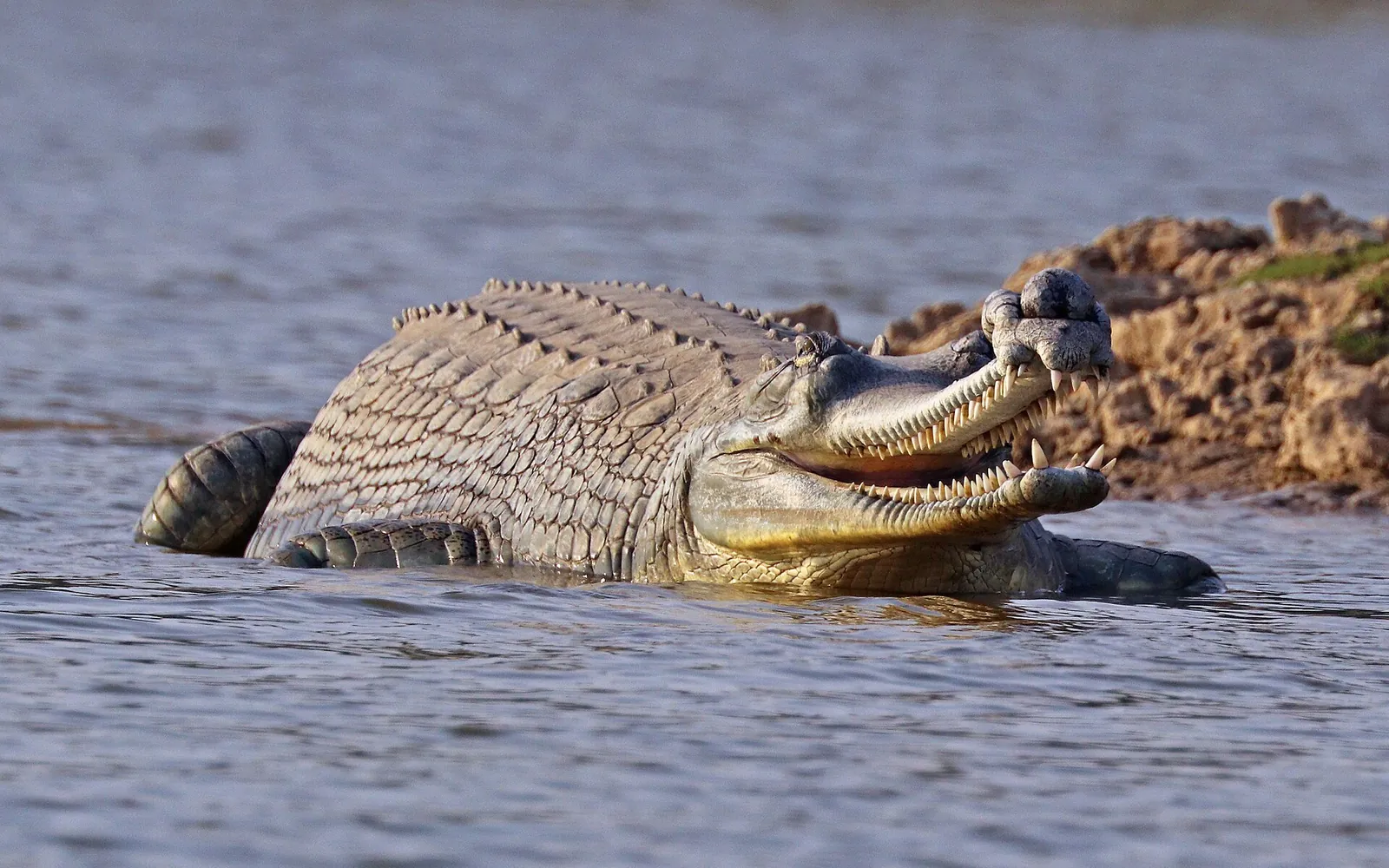
- Birds and reptiles, a rich variety across the forest and water bodies.
As a younger reserve building up its predator population, tiger sightings are not guaranteed, so approach a visit as an immersion in wild landscape rather than a checklist safari.
The landscape and history
Part of Mukundara’s charm is that nature and history intertwine here. The hills hold old temples, stepwells, hunting lodges and remnants of the past, echoes of the rulers who once hunted and worshipped in these forests. The dramatic Chambal gorge at Garadia Mahadev lies in this broader landscape, adding scenic grandeur to the wilderness.
Visiting the reserve
- Safaris: jeep safaris run into designated zones; check current timings, permits and booking arrangements before you go, as these can change.
- Best season: the cooler, drier months from roughly October to March are most comfortable and best for wildlife activity.
- What to bring: binoculars, a camera with a zoom, neutral-coloured clothing, a hat and water.
- Guidance: go with authorised guides and vehicles, and follow all reserve rules.
Tigers in Mukundara: the record so far
Tigers were moved into Mukundara from Ranthambore from 2018, in an attempt to establish a breeding population. In mid-2020 the reserve suffered heavy losses: press reports at the time recorded the deaths of adult tigers and cubs within a few weeks, and another tiger later went missing. Efforts to rebuild the population have continued, but the number of tigers present at any time has been small and has changed often. Treat any figures you see online with care, check the current position with the Rajasthan Forest Department, and see Mukundara vs Ranthambore if a tiger sighting is your priority.
Why the reserve was created
Mukundara’s story is tied to the success of Ranthambore, Rajasthan’s famous tiger reserve to the north. As Ranthambore’s tiger population grew, young tigers needed new territory to disperse into, but they faced roads, villages and fragmented forest. Mukundara Hills was declared a tiger reserve to provide a protected corridor and second home, part of a wider strategy to give the state’s tigers room to expand safely. Establishing a viable tiger population is slow, painstaking work, involving habitat restoration, prey-base recovery, anti-poaching measures and sometimes the careful relocation of tigers. Mukundara represents that patient, long-term investment in conservation, a reserve still growing into its purpose.
A landscape steeped in the Hadoti past
What makes Mukundara unusual among tiger reserves is how much human history it contains. The hills were long a hunting ground and retreat for the rulers of the region, and they are scattered with old temples, stepwells, hunting lodges, gates and other remnants of the past. Wandering the reserve, you sense the deep entanglement of nature and history that defines Hadoti: the same rugged terrain that shelters leopards and deer once sheltered kings and pilgrims. This layering of wilderness and heritage gives a visit here a distinctive, contemplative quality.
What to expect on a visit
Set your expectations correctly and Mukundara will not disappoint. This is not a reserve where tiger sightings are common, so treat any big-cat encounter as a rare bonus and come instead for the whole experience: the drama of the hills, the play of light across dry forest, the calls of birds, the tracks of animals in the dust, and the sheer pleasure of being in wild, uncrowded country close to a busy city. Patient, quiet visitors are rewarded with sightings of deer, nilgai, birds and, with luck, more elusive residents, along with a genuine sense of wilderness.
Responsible wildlife tourism
A young reserve like Mukundara depends on careful, low-impact tourism. Keep noise down, never litter, do not pressure guides to approach animals, and respect the forest as a living ecosystem under restoration. Your visit, done responsibly, supports the case for protecting these hills.
Pairing Mukundara with Garadia Mahadev
One of the great advantages of Mukundara is that it sits within the same wild landscape as Garadia Mahadev, the spectacular Chambal gorge viewpoint often called Rajasthan’s Grand Canyon. This makes it easy to combine a visit to the reserve with a sunset at the gorge for a full day immersed in the Hadoti wild. You can spend the cooler morning hours exploring the forested hills and looking for wildlife, break in the middle of the day, and then position yourself at Garadia Mahadev to watch the light turn golden over the deep river bend. Together they showcase the two faces of this landscape, its dense, secretive forest and its dramatic, sculpted geology, and make for one of the most memorable natural excursions anywhere near Kota.
Why go
Mukundara Hills offers something Kota’s city sights cannot: raw, open wilderness on the city’s doorstep. Even without a tiger sighting, the reserve rewards you with rugged beauty, birdsong, and the quiet thrill of being in a wild place. For travellers who want to pair Kota’s monuments with a taste of the Hadoti wild, Mukundara is the natural next step.
Frequently asked questions
Where is Mukundara Hills Tiger Reserve?
It lies south of Kota, spanning parts of the Kota, Bundi, Chittorgarh and Jhalawar districts in the Hadoti region of Rajasthan.
Can you see tigers at Mukundara?
Mukundara is a younger reserve still building its tiger population, so sightings are not guaranteed. Visit it as a wilderness experience rather than a certain tiger safari.
What is the best time to visit Mukundara?
The cooler, drier months from October to March are most comfortable and best for wildlife activity.
When did Mukundara become a tiger reserve?
The area was declared a national park in 2004 and notified as a tiger reserve in 2013. The Jawahar Sagar Wildlife Sanctuary, notified in 1975, is one of its constituent sanctuaries.
Is Mukundara better than Ranthambore?
For tigers, no: Ranthambore has a large, established population. Mukundara is closer to Kota, quieter and better for forest and gorge scenery. See our Mukundara vs Ranthambore comparison.
How do I go on a safari in Mukundara?
Visits are arranged by the Rajasthan Forest Department, through its online booking system (FMDSS) or the reserve office. Check current zones, timings and rules before you go, and use authorised guides and vehicles.
Sources
Editorial team
The KotaRajasthan.net team writes about the places, history and festivals of Kota and Hadoti, and corrects pages when readers point out changes.