History and people
Buddhist Caves in Rajasthan: Kolvi, Binnayaga and Hathiagor
Written by Kota Rajasthan Editorial Team · Updated
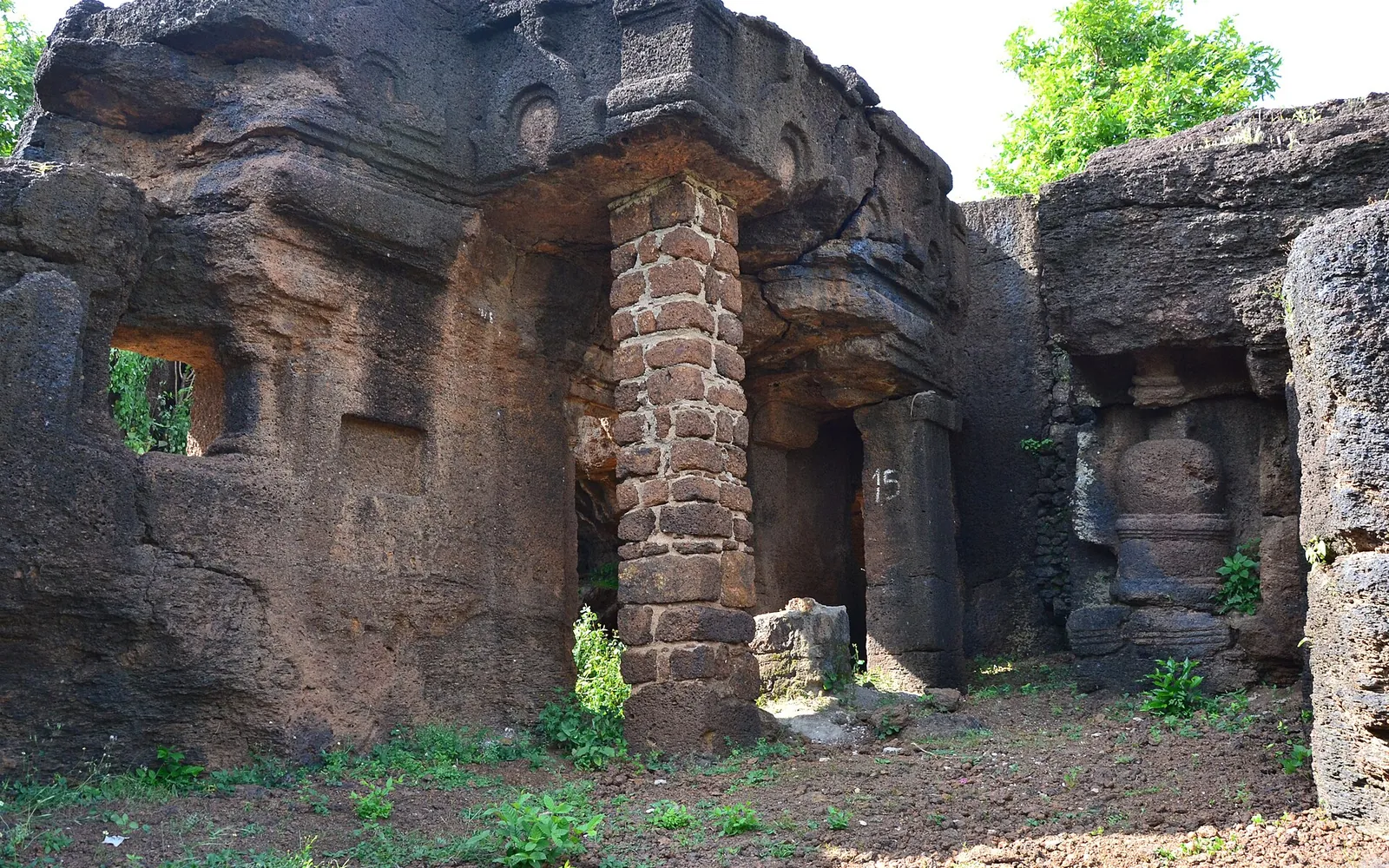
Few people expect to find Buddhist caves in Rajasthan, a state better known for Rajput forts and Jain temples. Yet in the south of the Hadoti region, around the small town of Dag in Jhalawar district, three groups of rock-cut Buddhist caves survive at Kolvi, Binnayaga and Hathiagor. Rajasthan Tourism describes Kolvi as perhaps the only, and certainly the biggest, group of rock-cut Buddhist caves in the state. This guide explains what they are, how old they are, how they relate to other Buddhist sites nearby, and how to visit them from Kota or Jhalawar.
Where the caves are
All three groups lie in the Dag area of Jhalawar district, close to the border with Madhya Pradesh’s Mandsaur district. The Archaeological Survey of India protects them as Monuments of National Importance, listed as “Buddhist Caves, Pillars, Idols” at Kolvi, “Buddhist Caves and Pillars” at Binnayaga, and “Buddhist Caves” at Hathiagor.
Kolvi is about 90 km from Jhalawar town, according to Rajasthan Tourism. From Kota it is about 155 to 160 km by the shortest road, or around 185 km if you drive through Jhalawar. It is a full day out either way.
Kolvi: the main group
Kolvi is the largest and best known of the three. The caves are carved into a hill of laterite, a soft, reddish, iron-rich rock that is easy to cut but weathers badly. Wikipedia records around 50 caves. Early reports counted the remains of 64 monks’ cells, of which the ASI has verified 45.
What you see today includes:
- Stupas carved from the living rock, some with a circumambulation path around them.
- Chaityas (shrines) with Buddha images, many of them now faceless from weathering.
- A standing Buddha about 12 ft tall in a preaching gesture, the largest image at the site.
- Seated Buddhas in meditation and a few multi-storey cave structures.
- Cells and verandahs, some with pillars, where monks once lived.
The caves were first reported by Dr Impey in 1854, and Alexander Cunningham described them a few years later. Cunningham was struck by one feature: the stupas here have a chamber cut into them to hold a statue of the Buddha, so the image occupies the place where relics sat in older stupas. In his words they are “no longer stupas, but real temples”. That later style is one reason the caves are usually dated to roughly 700 to 900 CE, later than the Bagh and Dhamnar caves in Malwa, and associated with the Mahayana tradition.
Our Kolvi Buddhist caves page has practical details for the site itself.
Binnayaga and Hathiagor
Rajasthan Tourism mentions the nearby villages of Vinayaka (Binnayaga) and Hathiagor (also spelled Hatiyagour) as having caves of their own. Both are smaller and much less visited than Kolvi, and published detail about them is thin. The ASI list records Buddhist caves and pillars at Binnayaga and Buddhist caves at Hathiagor, which tells you this was a wider monastic landscape rather than a single site. If you want to see them, ask in Dag or at Kolvi for the current approach, as tracks change with the season.
How they fit into India’s Buddhist history
By the 7th to 9th centuries Buddhism was in decline in much of India, but monasteries still flourished in parts of central India. The Kolvi group belongs to the same cultural world as two better-known sites across the border in Madhya Pradesh:
- Dhamnar caves, Mandsaur district: 51 rock-cut caves, also in laterite, with stupas, chaityas and large Buddha figures, dated to around the 5th to 7th centuries. A monolithic Vishnu temple was later cut at the same site.
- Bagh caves, Dhar district: nine monasteries cut in the 5th to 6th centuries, famous for their wall paintings.
Wikipedia notes that Kolvi is very similar to the Bagh caves, showing a cultural link with nearby Malwa. Once Buddhism faded, the caves were abandoned, and the region’s later history was written by Rajput dynasties and by Hindu and Jain temple builders, as at Jhalrapatan and the Chandrabhaga temples.
Bairat: Rajasthan’s oldest Buddhist monument
Rajasthan’s earliest Buddhist remains are not caves at all. At Bairat, on a hill near Viratnagar north of Jaipur, are the foundations of a circular Buddhist temple from the time of Ashoka in the 3rd century BCE, with a small stupa at its centre and a ring of wooden pillars around it. Two of Ashoka’s Minor Rock Edicts were found close by. It is considered the earliest circular Buddhist shrine in India, and it shows that Buddhism reached Rajasthan more than a thousand years before the Kolvi caves were cut.
How to read a rock-cut Buddhist site
If you have not seen a Buddhist cave site before, a few terms help you make sense of what is left:
- Stupa: a solid dome, originally a mound over relics. At Kolvi the stupas are carved out of the rock rather than built, and some have a niche or chamber holding a Buddha image.
- Chaitya: a shrine or prayer hall built around a stupa or image, often with a path for walking around it clockwise.
- Vihara: a monastery, made up of small cells for monks around a hall or verandah.
- Mudra: the hand gesture of a Buddha figure. The large standing Buddha at Kolvi is described as making the gesture of teaching, while the seated figures are in meditation.
Walk the hill slowly. The weathering means details are easiest to see in low, raking light in the morning or late afternoon, when shadows bring out the outlines of figures and stupas. A torch helps inside the darker cells.
A day route from Kota or Jhalawar
| Plan | Route | Notes |
|---|---|---|
| From Kota | Kota to Kolvi by the shortest road, then back | About 155 to 160 km each way; a long day |
| From Jhalawar | Jhalawar to Kolvi and Binnayaga, then back | About 90 km each way; easier with a night in Jhalawar |
| Two days | Day 1 Jhalawar, Gagron and Jhalrapatan; day 2 Kolvi | The most relaxed option |
Distances are approximate. Road conditions on the final rural stretch change with the season, so ask locally.
Visiting the caves
- Best time: October to March. In the monsoon, tracks can be muddy and the laterite is slippery.
- Getting there: a hired car is the only practical option. Combine with Jhalawar’s sights if you base yourself there; see Jhalawar tourist places.
- Facilities: minimal. Carry water, food and sun protection.
- Entry and hours: we have not found an official published fee; check locally.
- Care: the rock is crumbling in places. Do not climb on stupas, touch carvings or scratch names.
Seeing more early sculpture
Sculpture from temple and Buddhist sites around Jhalawar is kept in the Government Museum inside the Jhalawar Garh palace. In Kota, the Government Museum has early sculpture from across Hadoti; our guide to museums in Kota lists what to see. For the wider story of the region, read the history of Jhalawar and the Hadoti region overview.
Frequently asked questions
Where are the Buddhist caves in Rajasthan?
The main rock-cut groups are around Dag in Jhalawar district, in the south of the Hadoti region near the Madhya Pradesh border: Kolvi, Binnayaga and Hathiagor. The Archaeological Survey of India lists all three as Monuments of National Importance.
How old are the Kolvi caves?
They are generally dated to roughly 700 to 900 CE, the late phase of Buddhism in central India. The dating rests on their style, especially stupas with a chamber cut into them for a Buddha image, which is a later development than at older sites such as Bagh in Madhya Pradesh.
Are there Ashokan Buddhist remains in Rajasthan?
Yes, but not caves. At Bairat, near Viratnagar north of Jaipur, are the foundations of a circular Buddhist temple of the 3rd century BCE, and two of Ashoka's Minor Rock Edicts were found nearby.
How far is Kolvi from Kota?
About 155 to 160 km by the shortest road, which runs south largely on the Delhi-Mumbai expressway, and about 185 km if you go through Jhalawar. Rajasthan Tourism puts Kolvi about 90 km from Jhalawar town. Allow a full day.
Is there an entry fee at the Kolvi caves?
We have not found a published fee, and facilities on site are minimal. Check with the Jhalawar tourist office or the ASI before you go, and carry water and food.
Sources
Editorial team
The KotaRajasthan.net team writes about the places, history and festivals of Kota and Hadoti, and corrects pages when readers point out changes.