Lakes and viewpoints
Waterfalls Near Kota: 8 Monsoon Falls and How to Visit
Written by Kota Rajasthan Editorial Team · Updated
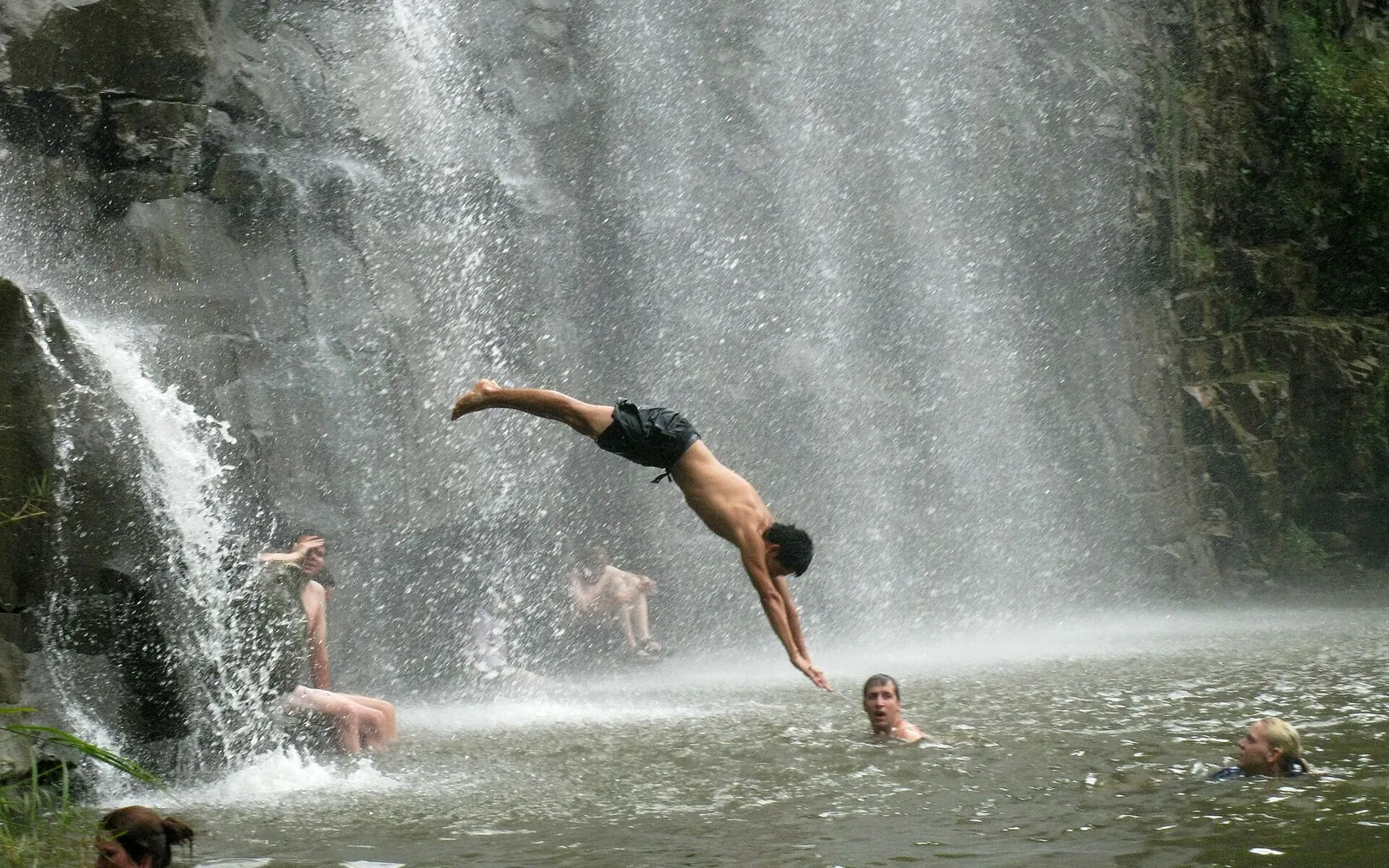
Looking for waterfalls near Kota? The Hadoti plateau around Kota is cut by deep gorges, and in the monsoon these fill with water that pours off rock ledges into green pools. The best-known falls are Geparnath close to the city, Bhimlat in the Bundi hills, Menal on the road to Chittorgarh and Chuliya in the Chambal gorge below the Rana Pratap Sagar dam. This guide lists the falls worth the drive, explains why most only flow for a few months, and covers the safety points that matter when the water is high.
When the waterfalls flow
Almost every waterfall near Kota is seasonal. The plateau is rocky with thin soil, so rain runs off fast into streams that drop over the edges of gorges. That gives you a short, dramatic season rather than year-round flow:
- Late July to September: the main season. After a few weeks of steady rain the falls are at their fullest and the gorges are green.
- October: still good after a wet monsoon, with clearer skies and less mud, but flow drops quickly.
- November to March: pleasant weather for walking, but most falls are a thin stream or a wet rock face.
- April to June: very hot, and several falls are dry.
The falls on the Chambal itself, such as Chuliya, behave differently: they depend on how much water the dams upstream are releasing. Our guide to the best time to visit Kota covers the seasons more broadly.
8 waterfalls near Kota worth knowing
1. Geparnath (Gaiparnath), about 22 km
The closest well-known fall to the city. Rajasthan Tourism describes Gaipar Nath as a big chasm with an old Shiva temple in a deep gorge of the Chambal valley, with a waterfall beside the temple. You walk down a long flight of steps to reach it, which also means a stiff climb back up. It is busy on monsoon weekends and on Shivratri. See the Geparnath waterfall guide.
2. Garadia Mahadev viewpoint, same side of the city
Not a waterfall as such, but the clifftop temple and viewpoint over a bend of the Chambal gorge is most dramatic in and just after the monsoon, when side streams run off the cliffs. Rajasthan Tourism calls it a must-visit in the monsoon. It pairs naturally with Geparnath. Read Garadia Mahadev.
3. Bhimlat Mahadev, Bundi district
Rajasthan Tourism describes Bhimlat as a waterfall about 140 ft high, roughly 35 km from Bundi, in a beautiful landscape, with a Shiva temple beside it. From Kota it is about 70 km by road. It is one of the most photographed falls in Hadoti when it is full. See Bhimlat Mahadev waterfall.
4. Menal, on the Kota to Chittorgarh road
At Menal a stream drops about 150 m into a V-shaped valley, according to Rajasthan Tourism, beside the Mahanal temple group, which the Archaeological Survey of India protects. It is roughly 90 km from Kota and is easy to combine with the temples at Bijolia on the same road. Read Menal waterfall and temples and our Kota to Chittorgarh road trip.
5. Chuliya Falls, near Rawatbhata
Chuliya is on the Chambal itself, about 1.6 km below the Rana Pratap Sagar dam and roughly 60 km from Kota. In the dry months you see striking water-carved rock channels; when the dam releases water in the monsoon, the gorge turns into a roaring torrent. Its flow is controlled by the dam, so it can change within hours. See Chuliya Falls and our Rawatbhata tourist places guide.
6. Bardha Dam, between Kota and Bundi
Bardha is an 1872 irrigation dam on the Talera river. In a good monsoon the overflow over the wall draws large crowds, and in winter the reservoir is good for waterbirds. It is a short detour on the Bundi road. Read Bardha Dam.
7. Rameshwar Mahadev, Bundi hills
A forest Shiva temple with seasonal falls, popular in the rains and on Mahashivratri. Access is on rural roads with a short walk at the end, so check conditions locally before you go. See Rameshwar Mahadev.
8. Kapil Dhara and Parajhar, further afield
Two less-visited falls are worth knowing if you are already in the area. Rajasthan Tourism lists Kapil Dhara, about 50 km from Baran, for its waterfall and a gaumukh (cow-mouth spout) near the falls. Near Rawatbhata, Parajhar is a waterfall with a cave shrine of Shiva where a fair is held on Mahashivratri; local reports note drownings there, so treat it with care. For more of Baran district see Baran tourist places.
Planning a waterfall day from Kota
The falls sit in three directions, so it pays to pick one per day:
| Direction | Falls and stops | Rough one-way distance |
|---|---|---|
| Rawatbhata side (south-west) | Geparnath, Garadia Mahadev, Chuliya, Baroli temples | 22 to 60 km |
| Bundi side (north-west) | Bardha Dam, Bhimlat, Rameshwar Mahadev, Bundi town | 25 to 70 km |
| Chittorgarh road (west) | Menal, Bijolia temples | about 90 km |
Distances are approximate road distances from central Kota and depend on your route. A hired car is the practical way to do any of these; buses reach the towns but not the gorges. If you want to add a river trip, the Chambal river safari runs from the city side, but boat trips can be suspended when the river is high.
Safety at the falls
Monsoon falls are beautiful and genuinely risky. Most of the serious accidents at Hadoti falls happen for the same few reasons, so a few rules go a long way:
- Stay off the streambed in heavy rain. Water can rise suddenly after rain upstream, and on the Chambal after dam gates open. If the water turns brown or starts rising, move to high ground.
- Do not swim or wade into pools. They hide rocks, ledges and strong currents.
- Keep back from unfenced edges. Gorge rims at Menal, Garadia and Bhimlat are open in places, and wet rock is slippery.
- Wear shoes with grip and carry water; steps at Geparnath are long and steep.
- Leave before dusk. Roads to several falls are unlit and pass through forest.
- Follow local instructions. Police and forest staff sometimes close approaches on busy or high-water days.
Respecting the sites
Most of these falls are also places of worship, with temples to Shiva at Geparnath, Bhimlat, Rameshwar and Menal. Dress modestly near the shrines, take your rubbish home and do not carve or paint on rocks. Menal’s temples are protected monuments, so do not climb on them. Our guide to Hadoti temple architecture explains what to look for in the older shrines.
More nature near Kota
If the falls are low, the gorges and forests are still worth a trip. Try the Mukundara Hills Tiger Reserve, birding at Sorsan, or the river views from the Chambal Riverfront. The safaris and wildlife hub lists everything in one place.
Frequently asked questions
Which is the nearest waterfall to Kota?
Geparnath (also written Gaiparnath), a Shiva temple and waterfall in a deep gorge about 22 km from Kota on the Rawatbhata side, is the closest well-known fall. You reach the bottom by a long flight of steps.
When is the best time to see waterfalls near Kota?
From about late July to September, after a few weeks of steady monsoon rain, with October still good in a wet year. Most falls shrink after the rains and several are dry by April to June.
Is Chuliya Falls always flowing?
No. Chuliya is on the Chambal about 1.6 km below the Rana Pratap Sagar dam, so its flow depends on how much water the dam is releasing. In the dry season you mostly see the carved rock channels; in the monsoon the gorge can fill fast.
Can you swim at the waterfalls around Kota?
It is not advisable. Pools hide rocks and currents, water rises suddenly after rain upstream, and people have drowned at several Hadoti falls. Paddle only where locals and officials say it is safe, and never during heavy flow.
Can I see several waterfalls in one day from Kota?
Yes, if you group them by direction: Geparnath and Garadia Mahadev on the Rawatbhata side, or Bardha Dam and Bhimlat on the Bundi side. Menal fits a day on the Kota to Chittorgarh road with Bijolia.
Sources
Editorial team
The KotaRajasthan.net team writes about the places, history and festivals of Kota and Hadoti, and corrects pages when readers point out changes.