Temples and worship
Hadoti Temple Architecture: How to Read the Old Temples
Written by Kota Rajasthan Editorial Team · Updated
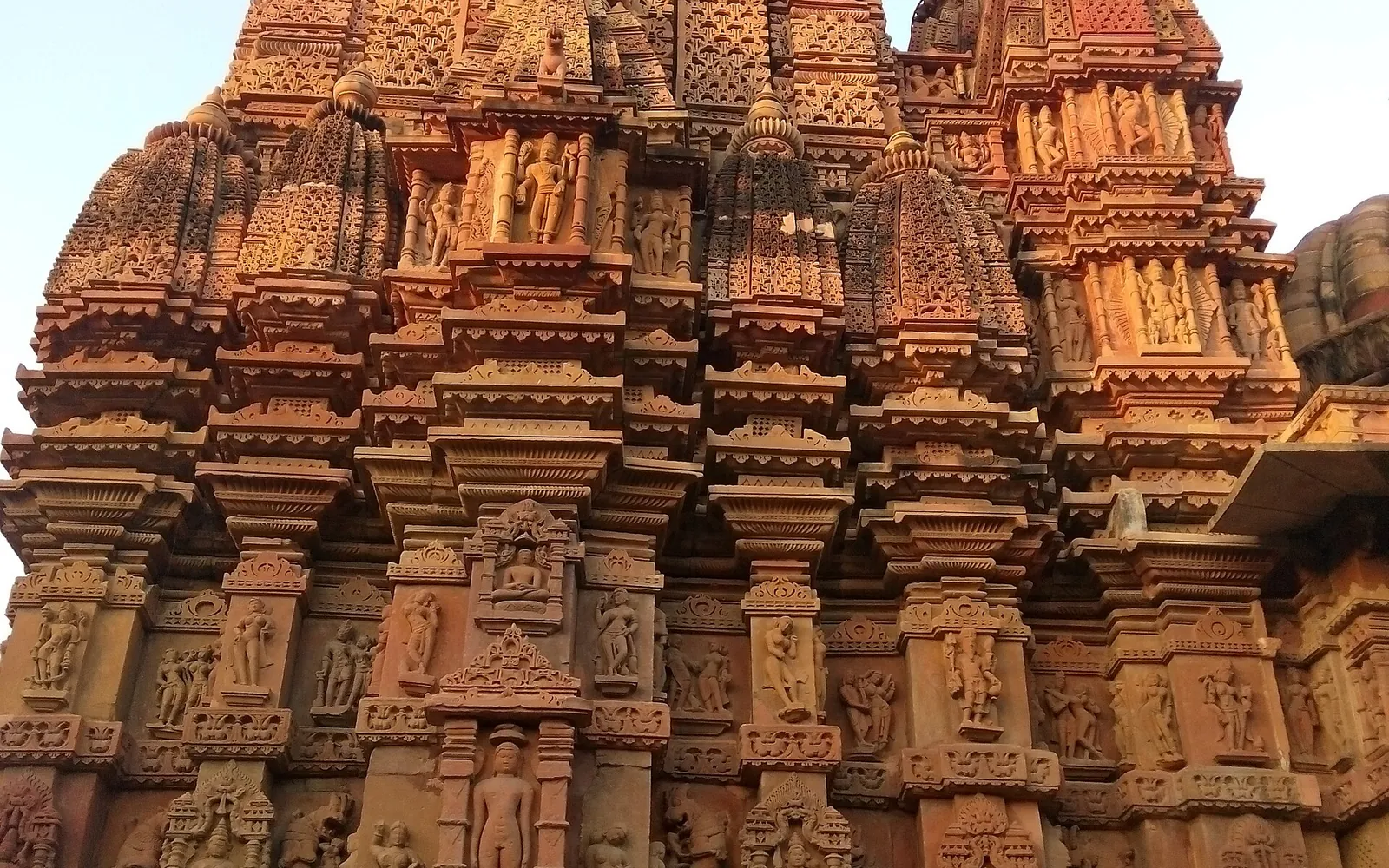
Hadoti temple architecture is one of the region’s great hidden strengths. Within a few hours of Kota there are temples from the 7th to the 12th century: the carved group at Baroli by the Chambal, the Sun temple and the Chandrabhaga shrines at Jhalrapatan, the weathered Bhand Devra inside the Ramgarh crater, and the temples of Menal and Bijolia on the road to Chittorgarh. Most visitors look at them as a blur of carving. This guide gives you a short vocabulary and a few things to look for, so that each site tells its own story. Dates and attributions are given as the sources state them, and many are approximate.
The basic plan of a Nagara temple
Almost every old temple in Hadoti belongs to the Nagara tradition of north India. Whatever its size, the temple is organised along an axis, usually from east to west, and moves from the open world to a dark inner room.
- Jagati or pitha: the raised platform or plinth on which the temple stands, often moulded in bands.
- Mandapa: the hall or porch in front, usually on pillars. Larger temples have more than one, including a dance hall (rangamandapa).
- Antarala: the short vestibule linking hall and sanctum.
- Garbhagriha: the “womb chamber”, a small square sanctum holding the main image or linga.
- Shikhara: the tall curving spire rising above the sanctum.
- Amalaka and kalasha: the ribbed, cushion-like stone disc and the pot finial at the very top.
On the outer walls, look for projecting niches with the main images of the god’s family, and on the doorway, the river goddesses Ganga and Yamuna standing as guardians at the base of the frame.
Three kinds of spire
The spire is the quickest way to tell styles apart, and Hadoti has examples of all three main north Indian types.
- The single curving spire (often called latina), one smooth tower marked with a mesh of arch motifs. The main temple at Baroli is described this way.
- The clustered spire, where miniature copies of the spire are stacked against the main tower so that it rises like a mountain range. Rajasthan Tourism’s description of Jhalrapatan’s Sun temple, with miniature towers clustered around the main tower, fits this type.
- The Bhumija spire, explained below, made of rows of small spires arranged in storeys.
A fourth form, a pyramid of flat horizontal slabs (phamsana), is used for halls and some smaller shrines.
Baroli: the Pratihara phase
The Baroli temples, on the rocky bank of the Chambal about 45 km from Kota near Rawatbhata, are one of the earliest temple complexes in Rajasthan. They are dated to the Gurjara-Pratihara period, around the 10th century. Eight temples stand in a walled enclosure with a ninth about a kilometre away, dedicated to Shiva, Durga, Vishnu, Ganesha and the Trimurti. All are protected by the Archaeological Survey of India.
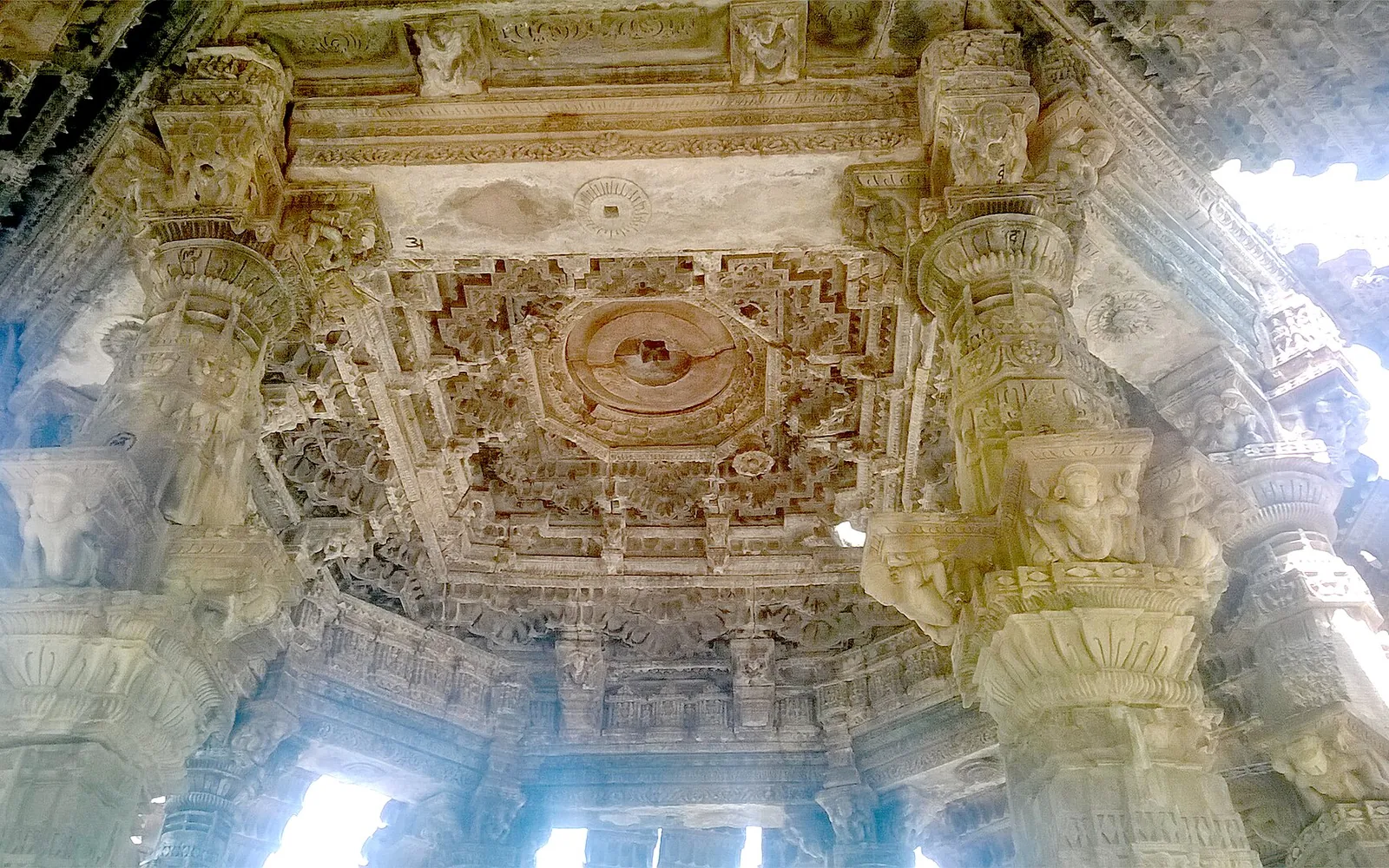
The Ghateshwar Mahadev temple is the one to study. It has an intact spire, a pillared entrance porch, carved wall niches and a later pillared dance hall raised on a decorated plinth. Inside, the sanctum ceiling is carved as a blossoming lotus; on the walls and lintel you will find Shiva as Nataraja and as the slayer of the demon Andhaka, and the fierce goddess Chamunda. The hall has Ganga and Yamuna as door guardians. Beside it is a stepped tank, and in another tank stands a small Shiva shrine in the water. Baroli is a reminder that the best carving in the region is often in the smallest places.
The Bhumija style: Malwa on Hadoti’s doorstep
Bhumija is a variety of Nagara temple that was developed in Malwa, in western Madhya Pradesh and south-east Rajasthan, around the 10th century under the Paramara kings. Instead of a single curving tower, the spire is built of rows of miniature spires running up each face, arranged in tiers (bhumi, meaning storey or ground). The plan of the spire is a square rotated around its centre, so the tower looks star-shaped from above. The style is discussed in the 11th-century architectural text Samarangana Sutradhara, which shows how established it had become.
Because Hadoti borders Malwa, Bhumija temples appear here. Lists of Bhumija examples include the Bhand Devra temple at Ramgarh in Baran district, the Mahanaleshwar temple at Menal and the Mandakini temple at Bijolia, both on the Kota-Chittorgarh road. When you visit, look for the vertical bands of small spires and the way the tower seems to step out at each level. See Ramgarh crater and Bhand Devra, Menal and Bijolia temples.
Jhalrapatan: the Sun temple and the Chandrabhaga group
At Jhalrapatan, 6 km from Jhalawar, two very different periods meet. The Sun temple (Padmanabha temple) is, according to Rajasthan Tourism, a 97-ft, 10th-century temple dedicated to Vishnu, restored in the 16th and 19th centuries; its tall spire with clustered miniature towers is one of the landmarks of Hadoti. Down by the river, the Chandrabhaga temples include the Sitaleshwar temple, usually dated to the 7th century, which makes it one of the oldest standing temples in the region. Comparing the plain early shrine with the soaring later spire is the clearest lesson in how Nagara temples grew. See Jhalrapatan Sun temple.
Ruined and fragmentary sites
Many temples survive only in part. At Kakoni on the Parvan river, Shaiva, Vaishnava and Jain shrines lie in ruins, and much of their sculpture is now in the Government Museum, Kota. At Kansua on the edge of Kota, the temple is valued as much for its 8th-century inscription as for its building. In these places, look at the loose sculpture, the doorframes and the plinth mouldings, which often survive when the spire has fallen.
How to look at a temple in ten minutes
- Walk round it clockwise first, from the outside, as worshippers do. Note the plinth bands and the main wall niches.
- Find the spire type: single tower, clustered, or rows of small towers.
- Read the doorway: river goddesses at the base, a small figure at the centre of the lintel (often the deity or Ganesha).
- Look up inside the hall for carved ceilings, especially lotus designs.
- Check the sanctum only if worship allows; many old temples are still in use.
Visiting tips
- Remove shoes where worship continues, and do not climb on plinths or touch carvings.
- Morning light is best for carving; afternoon sun flattens relief.
- Combine sites: Baroli with the Chambal gorge, Jhalrapatan with Gagron, Menal and Bijolia on the Kota to Chittorgarh road trip. For the official status of each site, see protected monuments in Hadoti, and for the Jain temples of the region, Jain temples in Hadoti.
Frequently asked questions
What style are the old temples around Kota built in?
The north Indian Nagara style, in several local forms. Baroli represents the Gurjara-Pratihara phase of around the 10th century, while some temples in Baran and on the Kota-Chittorgarh road use the Bhumija form of spire that developed in neighbouring Malwa.
What is Bhumija architecture?
A variety of Nagara temple in which the spire is made of rows of miniature spires arranged along the four faces, built up in storeys (bhumi). It was developed around the 10th century in Malwa under the Paramaras and spread into south-east Rajasthan.
Which is the oldest temple in Hadoti?
Among standing temples, the Sitaleshwar temple in the Chandrabhaga group at Jhalrapatan is usually dated to the 7th century. The Kansua temple in Kota is linked with an inscription of 738 CE. Dates for early temples are often approximate.
Why is Baroli famous?
For the quality of its carving. The Ghateshwar Mahadev temple, with its intact spire, pillared porch and later dance hall, is one of the best-preserved temples of its period in Rajasthan, and the whole complex is protected by the Archaeological Survey of India.
How much time do I need?
Baroli takes one to two hours and is an easy half-day from Kota. Jhalrapatan's temples fill a morning. Ramgarh, Menal and Bijolia are each a long day, best combined with other stops.
Sources
Editorial team
The KotaRajasthan.net team writes about the places, history and festivals of Kota and Hadoti, and corrects pages when readers point out changes.