Wildlife and the Chambal
Sorsan Bird Sanctuary: Grassland Birding Guide Near Kota
Written by Kota Rajasthan Editorial Team · Updated
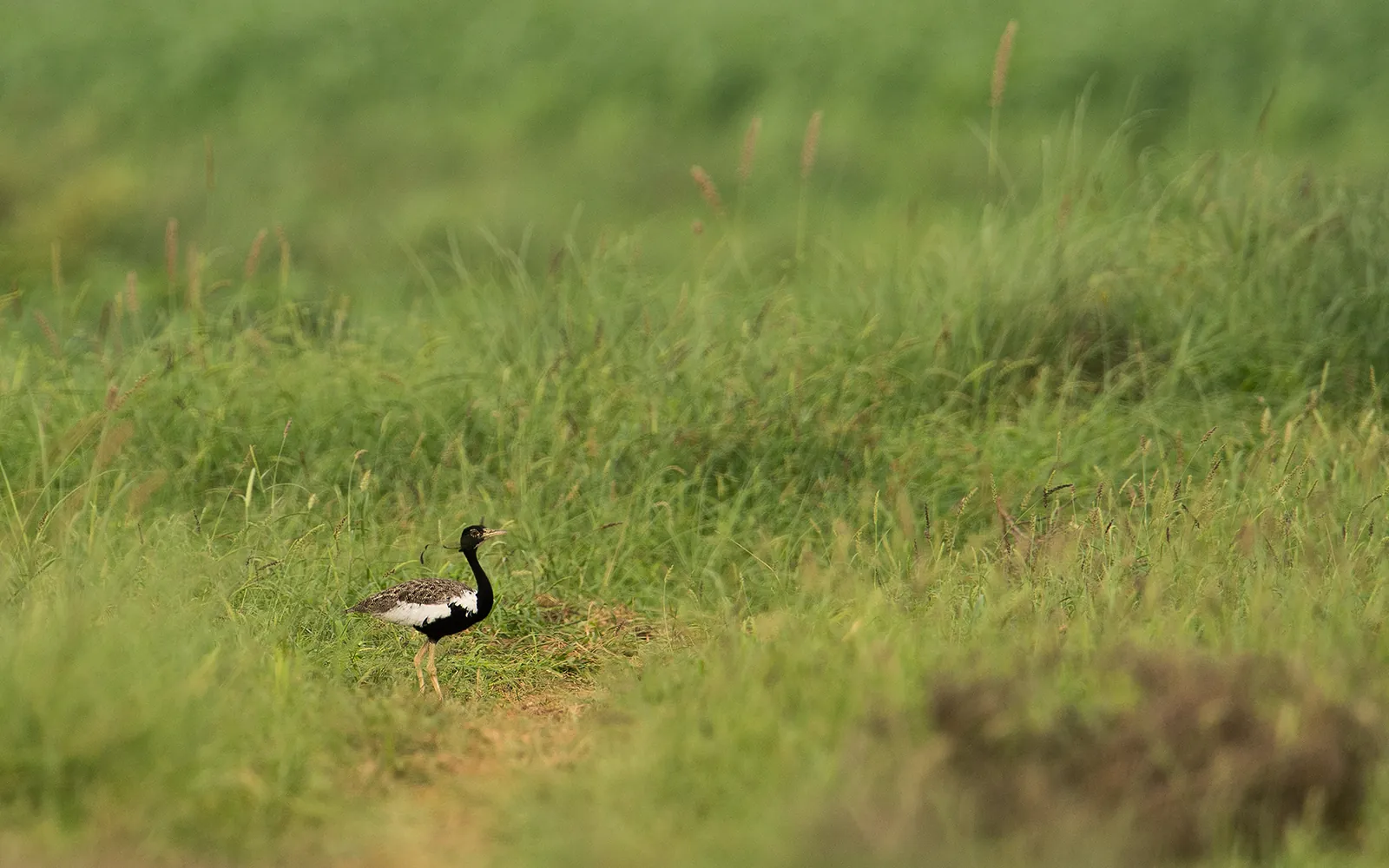
Sorsan bird sanctuary is the quiet alternative to the tiger reserves around Kota: a flat, open landscape of grass, thorny scrub and seasonal ponds in Baran district, about 50 km from the city, where the stars of the show are larks, quails, migrating ducks and herds of blackbuck rather than big cats. It has no grand gate, no jeep queue and very little infrastructure, which is exactly why birders like it. This guide explains what Sorsan is, why it is protected, what you can realistically expect to see, and how to plan a respectful morning visit from Kota.
What and where Sorsan is
Sorsan sits in the Hadoti region of southeastern Rajasthan, in Baran district, east of Kota. Rajasthan Tourism describes the Sorsan grasslands as a bird sanctuary of roughly 41 square kilometres, with scrub vegetation and several water bodies, and puts it about 50 km from Kota. The nearest landmark most people know is the Sorsan Mataji temple, also called Brahmani Mata, in Sorsan village about 20 km from Baran town.
You will see different area figures in different places, and it helps to know why. The 41 sq km figure is the long-standing tourism description of the wider grassland. In 2023 the Rajasthan government declared Sorsan a conservation reserve, and lists of India’s conservation reserves record it as three separate units (Sorsan I, II and III) that together cover a smaller area of around 21 sq km. Both describe the same landscape; they simply draw the line in different places.
Why a grassland matters
Grasslands are easy to overlook. They are not dramatic like the Chambal gorge or the forested hills of Mukundara, and for decades much of India’s grassland was treated as “wasteland” to be ploughed, planted with trees or built on. Yet a whole group of birds and animals depends on open, short-to-tall grass: bustards and floricans, larks, coursers, quails, harriers in winter, and antelope such as blackbuck.
That is why Sorsan matters. It is one of the few patches of this habitat left in Hadoti. When the state announced the conservation reserve in 2023, news reports said it was meant chiefly to protect the great Indian bustard and blackbuck, two species tied to open country.
The bustard question
Sorsan has long been associated with bustards, and you will find older references to it as bustard habitat. Be realistic, though. The great Indian bustard is one of India’s most critically endangered birds, and its remaining wild population is concentrated in western Rajasthan. Sighting one at Sorsan today would be exceptional, and some travel references say it is no longer found here at all.
The smaller lesser florican, another grassland bustard, is where Sorsan now plays a direct conservation role. A government conservation breeding programme for bustards in Rajasthan runs breeding centres for the great Indian bustard at Sam and Ramdevra in western Rajasthan, and a centre for the lesser florican at Sorsan. The breeding centre is a scientific facility, not a visitor attraction, so do not plan to see it.
Birds and animals to look for
Rajasthan Tourism’s list for Sorsan is a good starting point:
- Resident and common birds: orioles, quails, partridges, robins and weavers.
- Water birds on the ponds: greylag geese, common pochards, teals and pintails, mostly in winter.
- Winter migrants: warblers, flycatchers, larks, starlings and rosy pastors, which arrive in large flocks.
- Mammals: blackbuck and gazelle (chinkara) on the open ground.
Add to that whatever the season brings. Raptors hunt over open grassland in winter, and the ponds can hold waders when water levels drop. A field guide or a bird app helps; so does patience. Grassland birds are cryptic and spend much of their time hidden in the grass.
When to go
- November to February is the most comfortable and productive time. Mornings are cool, the migrant ducks and passerines are present, and visibility is good. See our best time to visit Kota for the wider climate picture.
- The monsoon and early autumn are when the grass is tall and green. This is the season grassland birds such as floricans display and breed, but tracks turn muddy and disturbance matters most then, so keep to roads and keep your distance.
- April to June is very hot. If you go, be out at first light and back before late morning.
How to visit from Kota
There is no official safari or ticket system for Sorsan that we could confirm, so treat it as a self-drive birding morning on public roads and tracks. Before you go, ask the forest office in Baran or the tourist office in Kota whether any part of the conservation reserve is closed to visitors.
Leave Kota before dawn. The drive towards Baran takes you through farmland that is itself good for birds. Once in the grassland, stop where you have a wide view over grass or water, switch off the engine and scan. Walking into the grass flushes ground-nesting birds and is best avoided, particularly in the breeding season.
On the way back, visit the Sorsan Mataji (Brahmani Mata) temple. Rajasthan Tourism notes that it keeps an akhand jyot, a lamp that local tradition says has burned continuously for some 400 years, and that a fair is held here on Shivratri.
Combining Sorsan with other places
Sorsan pairs naturally with the rest of Baran district. Our Baran tourist places guide covers the Ramgarh crater and Bhand Devra temple, the Shergarh fort on the Parwan and the forest shrine of Sitabari. If wildlife is your main interest, compare Sorsan with the river experience of the National Chambal Sanctuary and the Chambal river safari, or the forest of the Mukundara Hills tiger reserve. The safaris hub lists all of them.
Responsible birding at Sorsan
- Stay on roads and existing tracks. Ground-nesting birds are easily disturbed, and nests in the grass are invisible until you step on them.
- Do not chase blackbuck or drive towards herds. Watch from the vehicle and let them move on their own.
- No playback. Playing calls to attract birds stresses them, especially rare species.
- Respect the village. Sorsan is farmland and village as well as reserve. Ask before photographing people, and do not block field access.
- Take your rubbish back to Kota. There are no facilities in the grassland.
What to bring
Binoculars are essential; a telescope helps on the ponds. Carry water, a hat and sun protection even in winter, snacks, and a fully charged phone with offline maps, since signal can be patchy. Neutral-coloured clothing makes you less conspicuous. If you are a beginner, a local birder or a naturalist from one of Kota’s nature groups will find far more than you will alone.
Frequently asked questions
Where is Sorsan bird sanctuary?
Sorsan lies in Baran district in the Hadoti region of southeastern Rajasthan. Rajasthan Tourism puts it about 50 km from Kota. The Sorsan Mataji temple in Sorsan village is about 20 km from Baran town.
What birds can you see at Sorsan?
Rajasthan Tourism lists orioles, quails, partridges, robins, weavers, greylag geese, common pochards, teals and pintails, with warblers, flycatchers, larks, starlings and rosy pastors arriving in winter. Grassland specialists are the reason the area is protected.
Is the great Indian bustard still found at Sorsan?
Sorsan was historically known as bustard country, and the 2023 conservation reserve was announced with the great Indian bustard and blackbuck in mind. Do not expect to see one: the species is critically endangered and very rare in this part of Rajasthan.
When is the best time to visit Sorsan?
November to February brings the winter migrants and cool mornings. The monsoon and the weeks after it are when the grass is tallest and grassland birds such as the lesser florican are most active, but tracks can be muddy.
Is there an entry fee or safari at Sorsan?
We could not find an official ticketing or safari system for Sorsan. Ask the Baran forest office or the Kota tourist office about current access rules before you go, and stay on public roads and tracks.
Sources
Editorial team
The KotaRajasthan.net team writes about the places, history and festivals of Kota and Hadoti, and corrects pages when readers point out changes.