Hadoti day trips
Keshoraipatan Fort and Old Town: Chambal Views Near Kota
Written by Kota Rajasthan Editorial Team · Updated
Keshoraipatan is an old temple town on the bank of the Chambal in Bundi district, about 20 km from Kota. People come here first for the Keshav Rai temple and the river, but the town also keeps traces of its old fortifications above the water. This page covers what is known about them, and how to fit them into a visit to the town.
An earlier version of this page described a distinct riverside fort with ramparts and bastions and gave the distance from Kota as about 40 km. We could not find a reliable published history of a separate fort, and the commonly cited distance is about 20 km, so we have revised the page.
History of Keshoraipatan and its fortifications
Keshoraipatan’s history is long. A mound (teela) in the town has yielded coins and other old objects, and a Jain temple dedicated to Munisuvrata, the twentieth Tirthankara, is associated with the 10th-century Jain teacher Nemichandra, who is said to have composed his work Laghudravya Samgraha here.
The town’s most famous monument dates from the 17th century. Rao Raja Chattar Sal of Bundi, who came to the throne in 1632 and later died fighting at the Battle of Samugarh in 1658, built the Keshav Rai temple in 1641. It stands where the Chambal bends around the town in a half-moon, so that the river seems to embrace the temple.
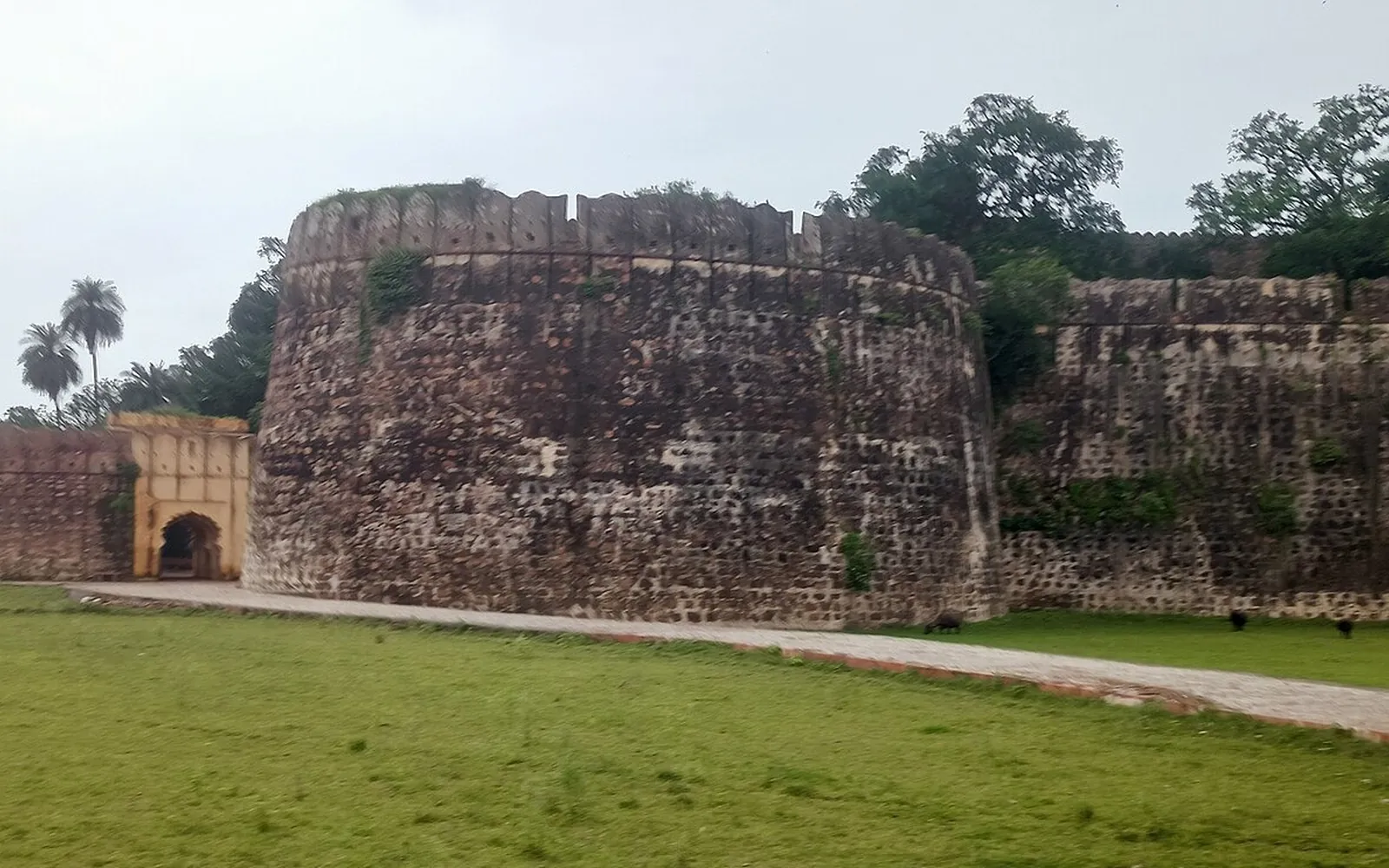
Towns on the Chambal in Bundi and Kota territory needed defences: river crossings were strategic, and the region was fought over by Mughal, Rajput and Maratha forces. The walls and gateways that survive at Keshoraipatan belong to that history, though we have not found a source that dates them precisely. If you want to know more, the temple priests and older residents are often the best local guides.
What to see at Keshoraipatan
- Keshav Rai temple (1641) on the bank of the Chambal
- The river bend, best seen from the ghats and the higher ground of the old town
- Remains of old walls and gateways above the river
- Jain Munisuvrata temple, admired for its architecture and sculpture
- Kalyan Rai temple and the Mrityunjaya Mahadev temple, other old shrines of the town
Tips for visiting
- Go early or late for softer light on the river and the temple spires.
- Dress modestly and remove footwear at temples; ask before photographing inside.
- Take care on the ghats, which can be slippery, and do not swim; stretches of the Chambal are a protected habitat for crocodiles and gharial (see the National Chambal Sanctuary).
- Kartik Purnima brings crowds of bathers; it is the most atmospheric day and the busiest. See the festivals calendar.
Visiting Keshoraipatan: practical details
| Detail | Information |
|---|---|
| Where | Keshoraipatan, on the Chambal, Bundi district |
| Distance from Kota | About 20 km |
| Best time to visit | October to March; Kartik Purnima for the bathing festival |
| Timings | Daylight hours for the old town; temples follow worship times |
| Entry | No ticket for the town or temples |
| Getting there | Car, taxi or bus from Kota; Keshoraipatan also has a railway station |
Distances are approximate road distances. Temple timings change with the seasons and festivals, so confirm them locally before you set out.
Make a day of it
Keshoraipatan combines well with Bundi, a short drive away, for the Bundi Palace, Taragarh Fort and Raniji ki Baori. Our weekend in Bundi guide has a route.
Combine Keshoraipatan with nearby places
- Keshoraipatan temple town: Our guide to the Keshav Rai temple, the ghats and the Kartik fair.
- Taragarh Fort, Bundi: A 14th-century hill fort above Bundi town, with sweeping views of the blue city below.
- Chambal River: The river that shapes Kota’s gardens, riverfront, wildlife and daily life.
- National Chambal Sanctuary: A protected stretch of the Chambal, home to gharials, muggers, turtles and abundant birdlife.
Frequently asked questions
Is there a fort at Keshoraipatan?
The town has remains of old fortifications above the Chambal, but we have not found a reliable published history of a distinct fort. Most visitors come for the Keshav Rai temple and the river, and see the old walls on the way.
How far is Keshoraipatan from Kota?
About 20 km, according to the commonly cited figure, which makes it an easy half-day trip by car, taxi or bus.
Who built the Keshav Rai temple?
Rao Raja Chattar Sal of Bundi, in 1641. The temple stands on the bank of the Chambal where the river bends around the town in a half-moon.
When is Keshoraipatan busiest?
On Kartik Purnima, when many devotees bathe in the Chambal. In 2026 Kartik Purnima falls on 24 November.
Sources
Editorial team
The KotaRajasthan.net team writes about the places, history and festivals of Kota and Hadoti, and corrects pages when readers point out changes.