Wildlife and the Chambal
Gharial vs Crocodile: How to Tell Them Apart on the Chambal
Written by Kota Rajasthan Editorial Team · Updated
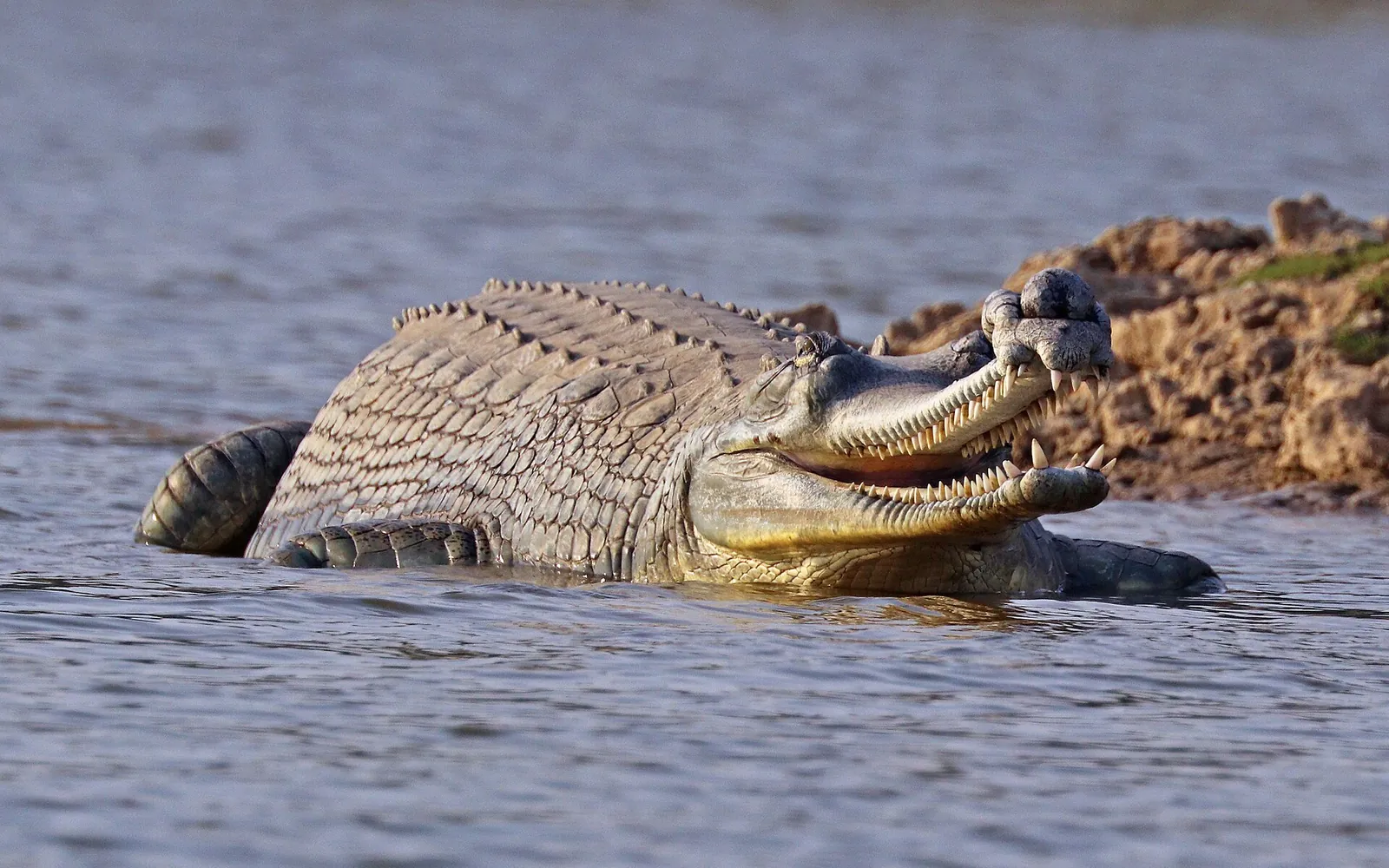
Gharial vs crocodile is the question almost everyone asks on a boat on the Chambal. The river that runs through Kota is one of the few places in the world where you can see two very different crocodilians in the same water: the gharial, a slim, fish-eating specialist found only in South Asia, and the mugger or marsh crocodile, a heavy, broad-snouted generalist. Once you know what to look for, telling them apart takes seconds. This guide explains the differences, why they matter for conservation, and how to watch both safely.
Two reptiles, one river
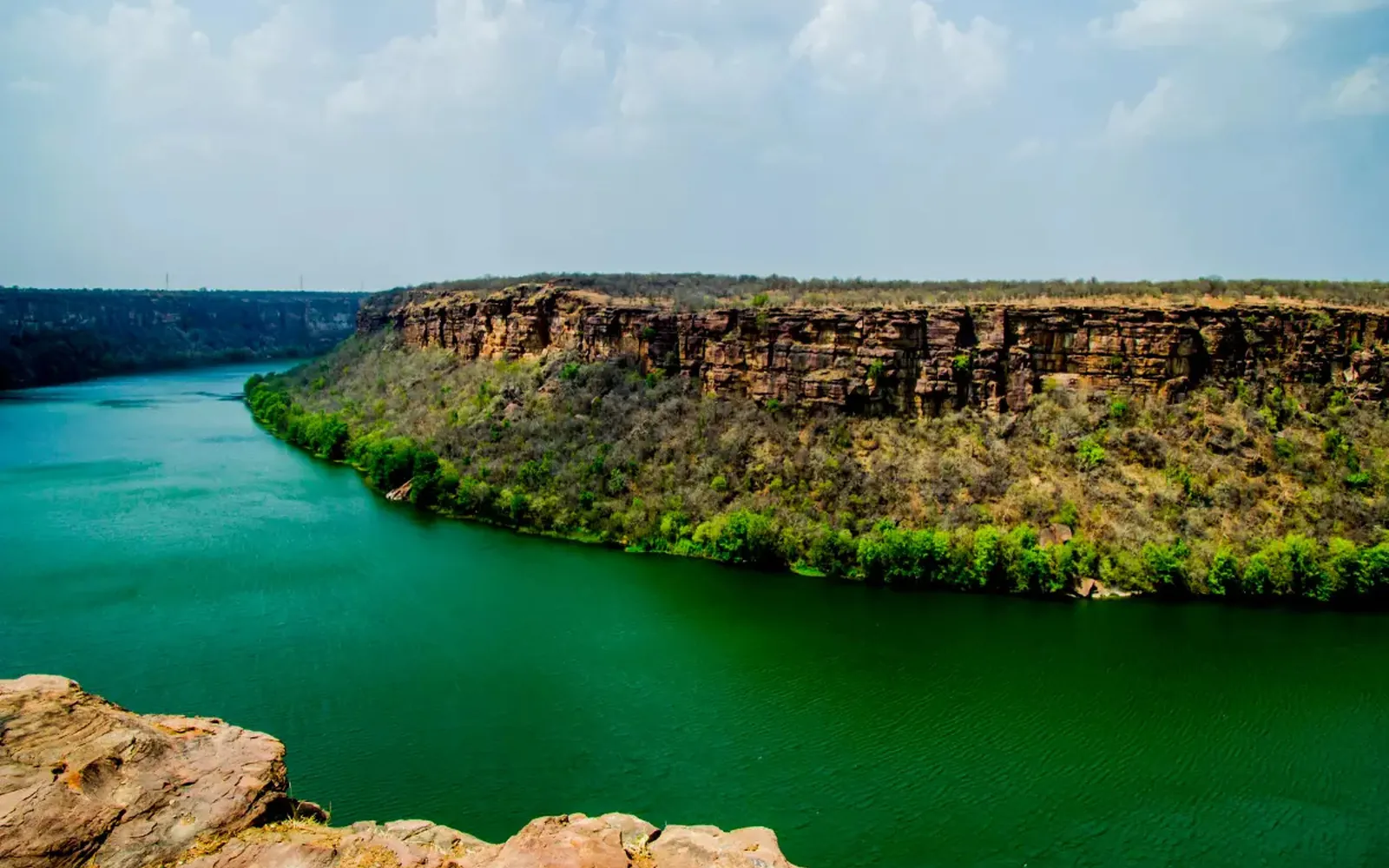
The Chambal around Kota is part of the National Chambal Sanctuary, set up in the late 1970s mainly to save the gharial. The river’s clean water, deep pools and sandbanks support both species. Muggers are found widely across the Indian subcontinent in lakes, marshes, rivers and even reservoirs and canals. Gharials are far more restricted: they need large, flowing rivers with open sandbanks, and today they survive in only a small fraction of their historical range. That makes the Chambal one of their most important refuges.
Gharial vs crocodile at a glance
| Gharial | Mugger crocodile | |
|---|---|---|
| Scientific name | Gavialis gangeticus | Crocodylus palustris |
| Family | Gavialidae | Crocodylidae (true crocodiles) |
| Snout | Very long and narrow | Short and broad, the broadest of any living crocodile |
| Distinctive feature | Adult males have a bulbous knob (ghara) on the snout tip | Rough head without ridges, heavy body |
| Size | Females about 2.6 to 4.5 m; males about 3 to 6 m | Rarely reaches 5 m; females usually 2 to 2.5 m |
| Diet | Mainly fish | Fish, reptiles, birds and mammals; also scavenges |
| Habitat | Large flowing rivers with sandbanks | Lakes, marshes, rivers, reservoirs, canals |
| On land | Leaves the water mainly to bask and nest | Climbs banks and rocks, walks overland in the dry season |
| IUCN status | Critically Endangered (since 2007) | Vulnerable (since 1982) |
Figures are from the species accounts listed in the sources.
The snout: the one feature to remember
If you remember only one thing, remember the snout. A gharial’s snout is extremely long and thin, almost like a pair of chopsticks, lined with many small, sharp, interlocking teeth. It meets little resistance in the water, so the gharial can sweep its head sideways to snap up fish. It swallows prey whole rather than tearing it.
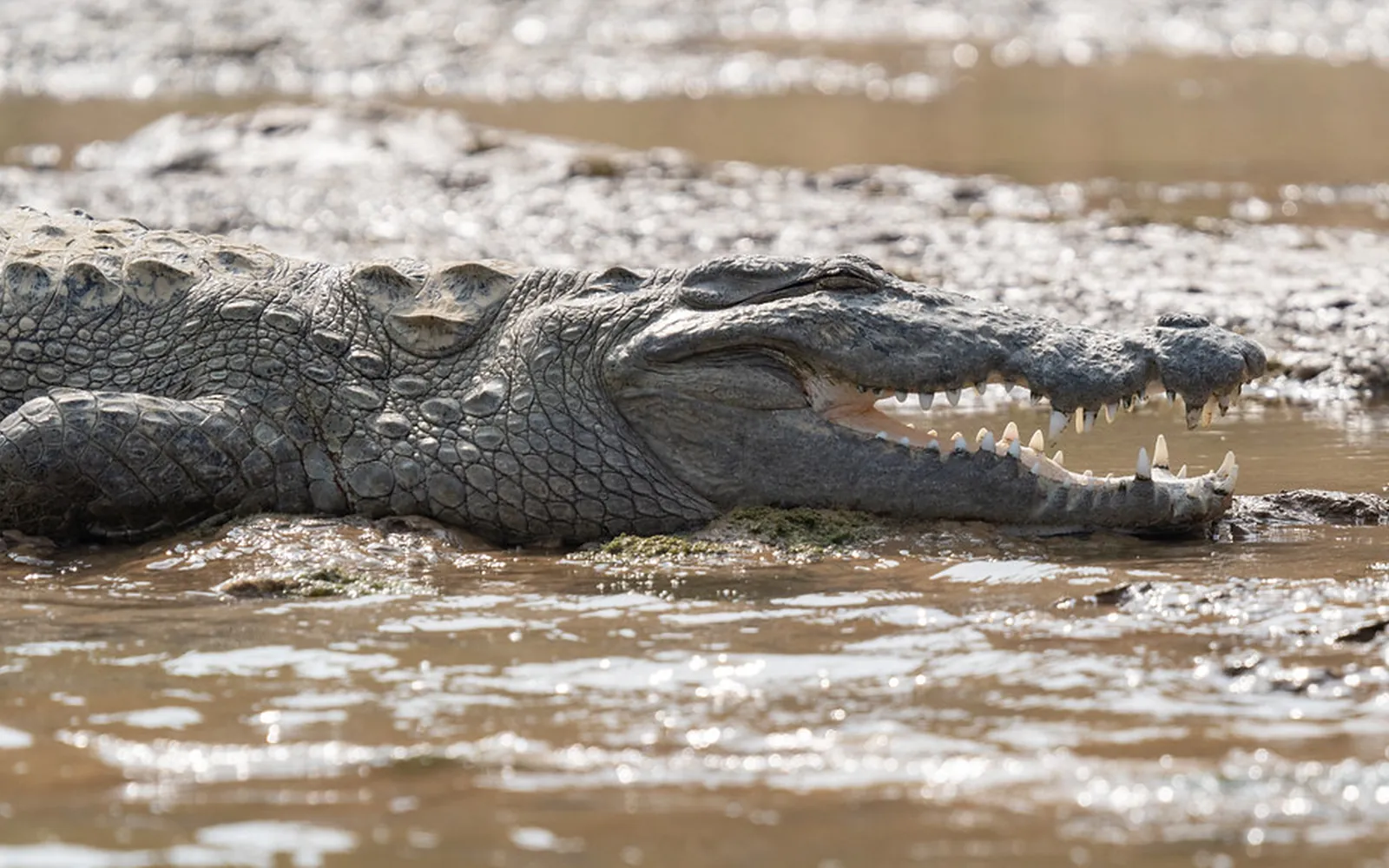
A mugger’s snout is short, broad and powerful. It is built for gripping and holding larger prey, which can include fish, turtles, snakes, birds and mammals. On the Chambal, muggers have been recorded attacking goats, cattle and water buffalo.
The ghara: why it is called a gharial
Adult male gharials grow a hollow, bulbous lump on the tip of the snout. It looks like an earthen pot, a ghara in Hindi, which gives the animal its name. It starts to develop as males reach maturity and is thought to signal that maturity and to help produce sounds and bubbles during display. Females and young males do not have it. If you see the knob, you are looking at an adult male gharial; no crocodile has anything like it.
Size and shape
Gharials are among the longest of all living crocodilians. Large males can reach about 6 m, though most animals you see will be much smaller. Despite their length they look slender, because the body and snout are narrow. Muggers are medium-sized crocodiles, rarely reaching 5 m, but they look much bulkier, with a heavy head and thick body.
Behaviour and where to look
Where you see the animal is a useful clue:
- Gharials are the most thoroughly aquatic crocodilians. They leave the water mainly to bask and to nest, and prefer low, sandy, moist banks right at the water’s edge. In the cold months, groups of gharials bask together on sandbanks, especially in the morning.
- Muggers also bask on sandy beaches, but they climb steep embankments and rocks and move farther from the water to bask and nest. In the hot, dry season they may walk long distances over land in search of water, and they dig burrows to escape extreme heat or cold.
The two species share some nesting grounds on the Chambal but choose different basking spots, which helps them live side by side.
Breeding seasons
Gharials court and mate towards the end of the cold season, from around mid-February. Females gather to dig nests in riverside sand, laying some of the largest eggs of any crocodilian, and the young hatch in about July, just before the monsoon floods. Females stay close to the nesting areas and guard the young.
Muggers begin courtship as early as November. Females dig nest holes in sand during the dry season, and both parents may protect the young. In both species, the incubation temperature affects whether hatchlings are male or female.
Why the gharial is in trouble
The gharial once lived in all the major river systems of the northern subcontinent, from the Indus to the Irrawaddy. Its wild population fell drastically during the 20th century; one estimate puts the decline at 96 to 98 percent between the 1940s and 2006. Since the late 1970s, conservation has focused on collecting eggs, raising young gharials and releasing them into protected rivers, including the Chambal.
The threats have not gone away. Sand mining strips the banks they need for basking and nesting, fishing nets drown them, and dams and water extraction change river flows. In the winter of 2007-08 more than a hundred gharials were found dead along the Chambal, a reminder of how fragile the population is. The mugger is more adaptable and much more widespread, but it too is listed as Vulnerable and suffers from habitat loss and conflict with people.
How to watch them safely and responsibly
- Go with a licensed boat operator or forest department trip; see our guide to the Chambal river safari and the wider wildlife safaris near Kota hub.
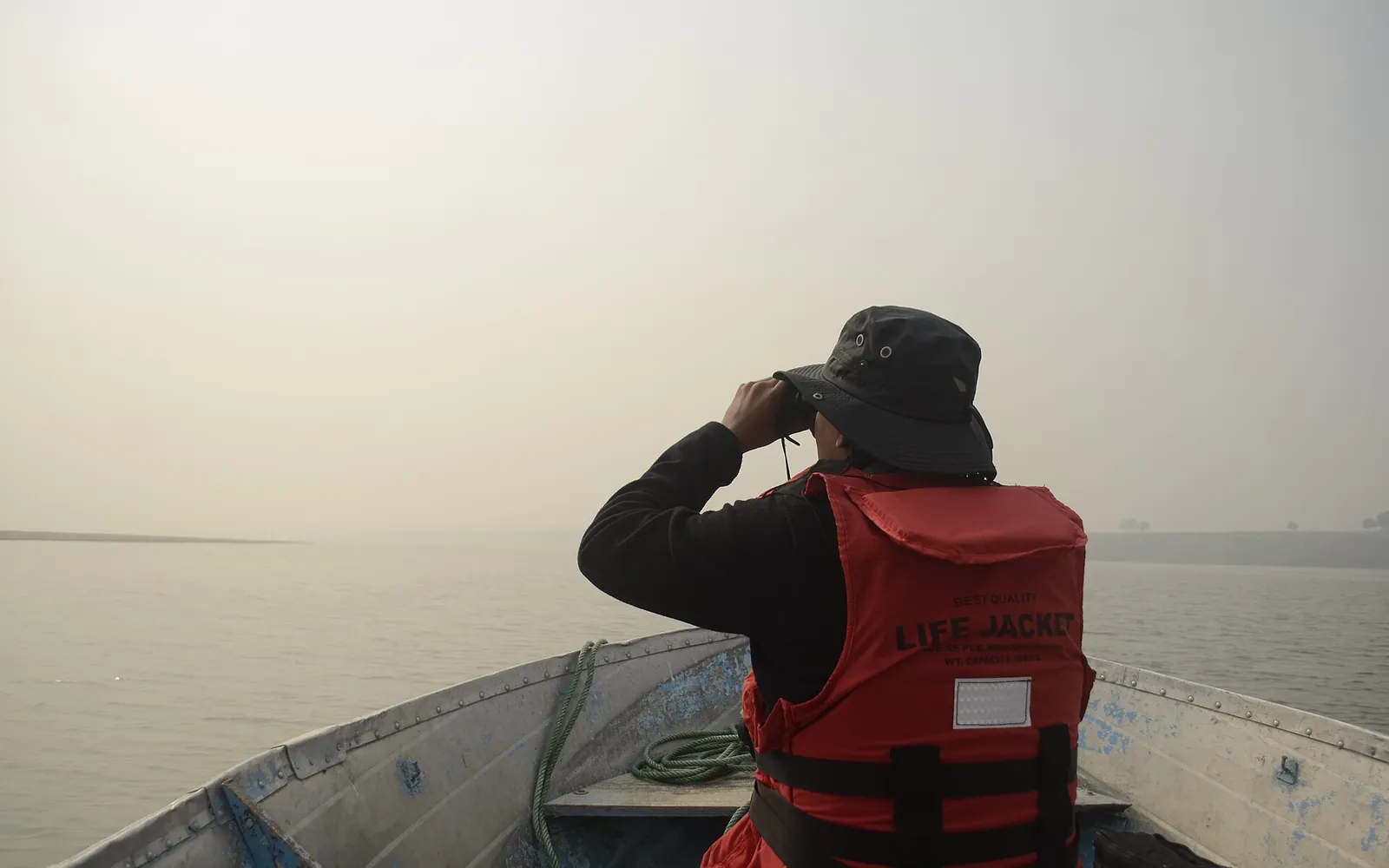
- Bring binoculars and a zoom lens. Basking animals slip into the water if boats come too close.
- Never approach crocodilians on foot along the bank, and do not swim or wade in the river. This is especially important with muggers. Our Chambal river page has more on river safety.
- Do not feed or disturb wildlife, and keep noise down near sandbanks.
- The cool months from about November to February are good for seeing basking reptiles.
Beyond crocodiles
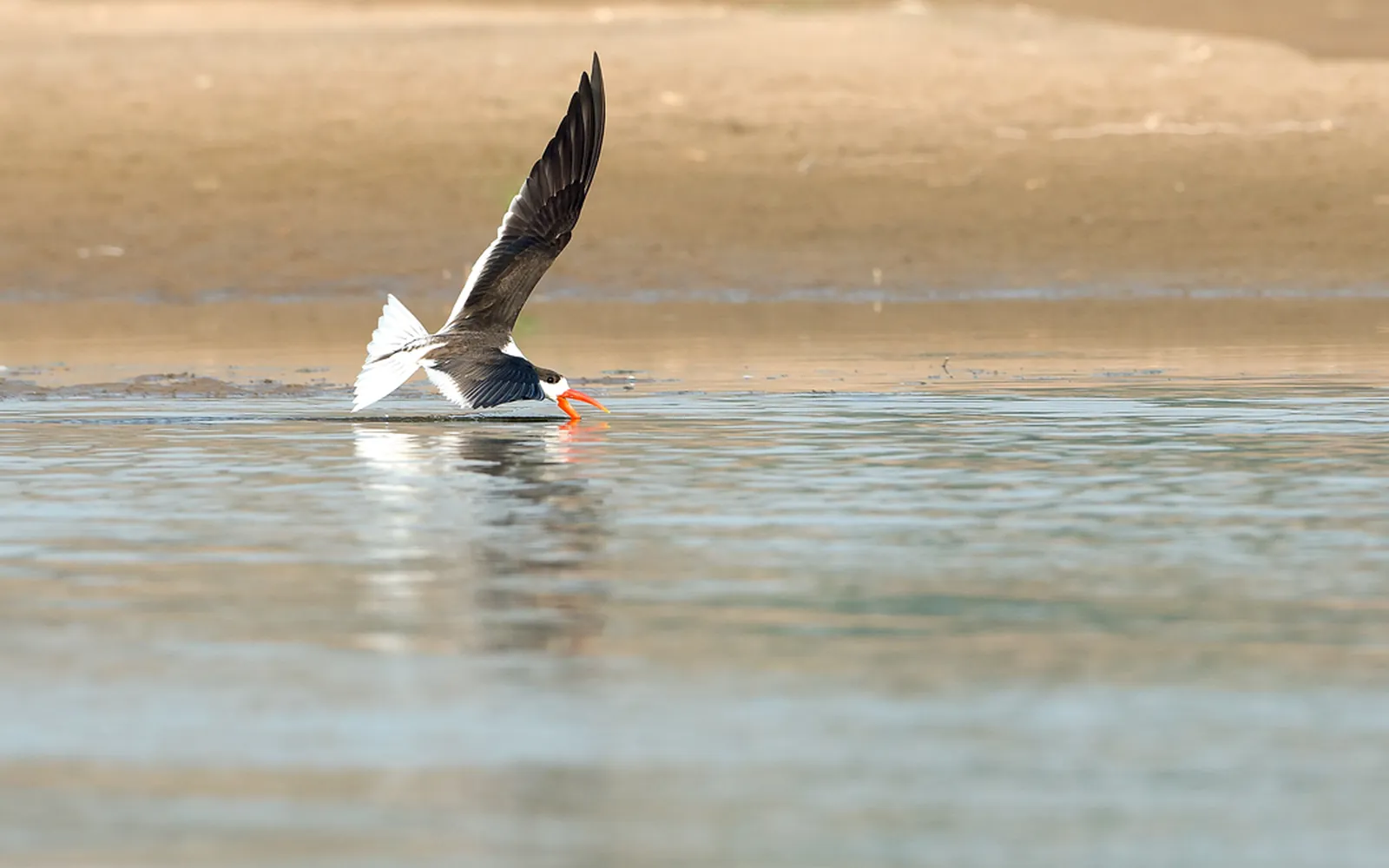
The same sandbanks are home to river birds, including the endangered Indian skimmer, as well as terns and waders. The Chambal Garden in Kota is an easy first look at the river, and the Chambal Valley Project page explains how the dams upstream shaped the river you are looking at.
Quick identification checklist
- Long, pencil-thin snout? Gharial.
- Pot-shaped knob on the snout tip? Adult male gharial.
- Broad, heavy snout and bulky body? Mugger.
- Basking high on a steep bank or rock, away from the water? Probably a mugger.
- Lying flat on a low sandbank at the water’s edge with others? Could be either; check the snout.
Frequently asked questions
Is a gharial a crocodile?
It is a crocodilian, in the same order as crocodiles and alligators, but it belongs to a different family (Gavialidae). The mugger is a true crocodile of the genus Crocodylus.
What is the main difference between a gharial and a crocodile?
The snout. A gharial has a very long, narrow snout with many sharp interlocking teeth for catching fish, and adult males grow a pot-shaped knob on the tip. A mugger has the broadest snout of any living crocodile and takes a much wider range of prey.
Are gharials dangerous to humans?
The gharial's narrow jaws are built for fish, and it is the most aquatic of the crocodilians. The mugger is a different matter: it is a powerful predator, and on the Chambal it has attacked livestock. Treat any crocodilian with caution and keep well back from the water's edge.
Where can I see gharials near Kota?
The Chambal around Kota is part of the National Chambal Sanctuary. Boat trips run on the river, but sightings vary by stretch, water level and season, so ask the forest department or licensed boat operators where animals are being seen.
Why are gharials endangered?
The wild population fell drastically during the 20th century. Loss of sandbank habitat to sand mining and farming, depleted fish stocks and drowning in fishing nets remain the main threats.
Sources
Editorial team
The KotaRajasthan.net team writes about the places, history and festivals of Kota and Hadoti, and corrects pages when readers point out changes.